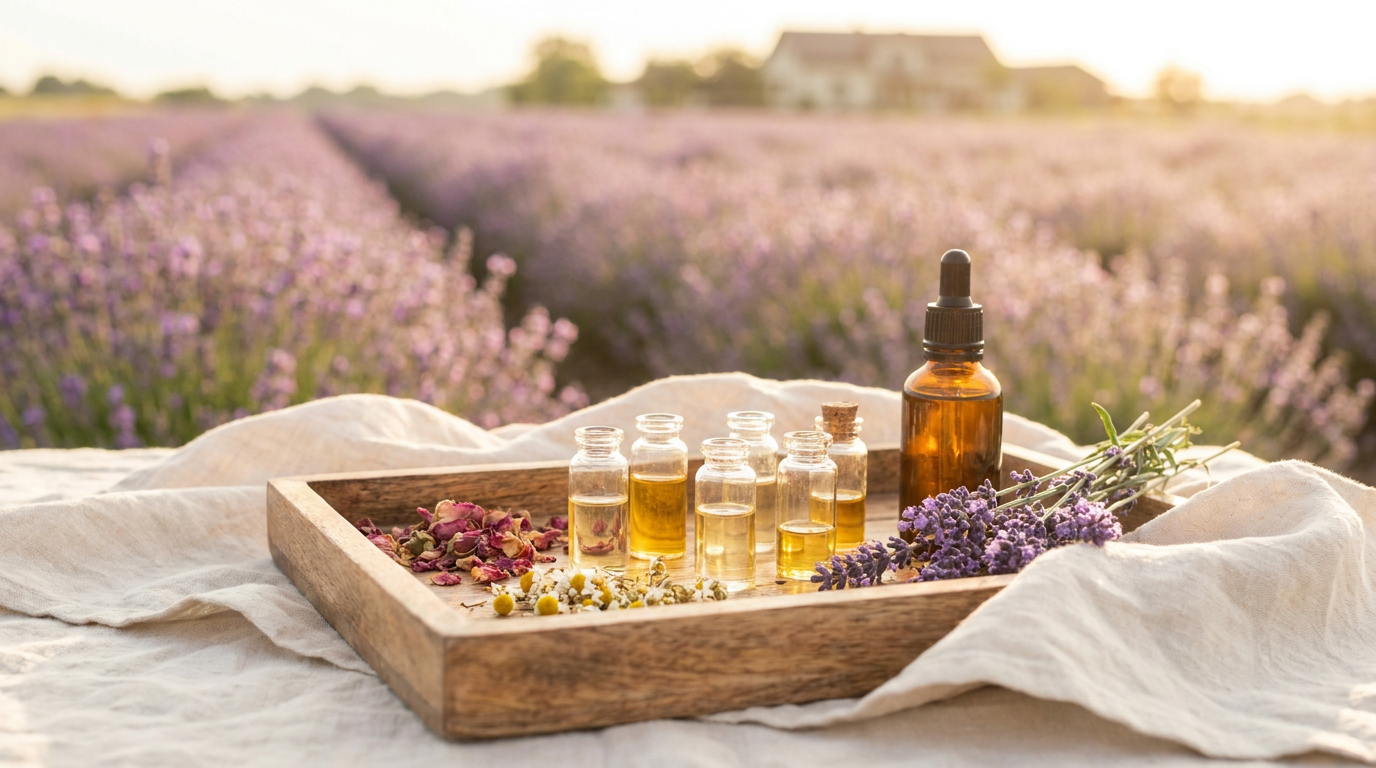
The Provence Row Blend: Lavender, Clary Sage and Bergamot in 4:2:1
Every lavender farm worth its rows eventually settles on a house blend, the combination the family reaches for without measuring twice because the ratio has already proven itself a hundred times over. Ours is called the Provence Row Blend, and it came together the way most good blends do: by accident first, then on purpose. A few years back we had a tray of true lavender curing next to an open bottle of clary sage and a bergamot someone had left uncapped by the workbench. The overlap in the air was good enough that we wrote the ratio down before we forgot it. It has stayed the same since: four parts lavender, two parts clary sage, one part bergamot.
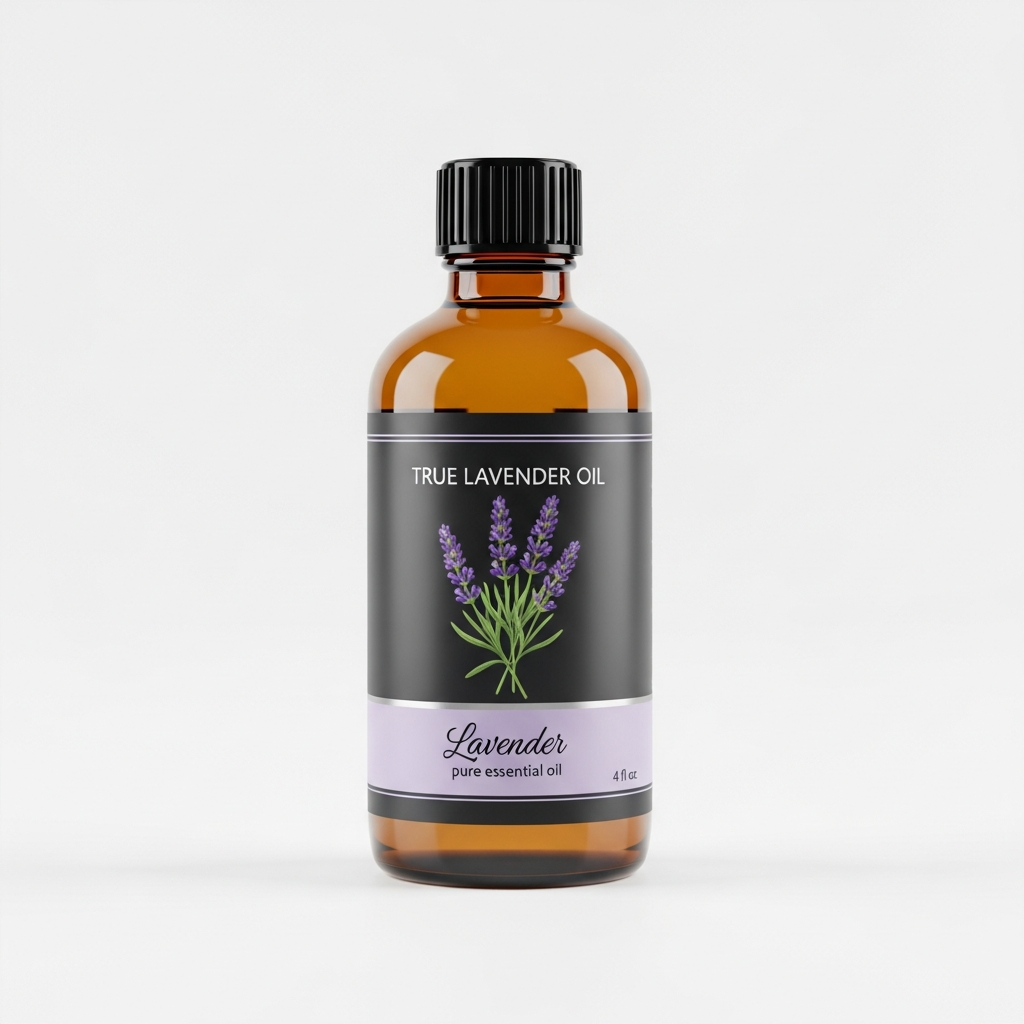
Lavender Essential Oil
Our own Lavender Essential Oil, in sizes from 0.5 oz to bulk.
From $10.99
Shop Now →This article walks through that signature lavender essential oil blend recipe in full: why the 4:2:1 ratio works the way it does, exact measurements in both drops and milliliters, step-by-step mixing instructions, dilution math for topical and diffuser use, and a few variations to make it your own once you've got the base down.
Why This Ratio, and Why These Three Oils
Lavender, clary sage and bergamot are old friends in aromatherapy circles, but the order and proportion matter more than most recipes let on. Lead with lavender and the other two become supporting characters instead of competing for the same space in the glass.
True Lavender Sets the Tone
At four parts, true Lavandula angustifolia is doing most of the talking here. Good true lavender carries a soft floral-herbaceous character with a faint sweetness underneath, quite different from the sharper, more camphorous profile of lavandin or spike lavender. That gentleness is exactly why it can carry a blend at this ratio without turning heavy or medicinal-smelling. If you've only ever smelled lavender from a big-box store diffuser oil, true lavender at this concentration is often the moment people say "oh, that's what it's actually supposed to smell like."
Clary Sage Adds Depth Without Taking Over
Clary sage brings a warm, slightly nutty, herbal-tea note that rounds out lavender's sweetness and keeps it from smelling one-dimensional. At two parts it's present but never dominant. Too much clary sage and a blend starts to smell more like a spice cabinet than a lavender field, which is why we keep it at half the lavender measure.
Bergamot Lifts the Top Notes
Bergamot is the smallest measure here for a reason. A little goes a long way. This citrus oil, cold-pressed from the rind of a bitter orange relative grown mostly in Calabria, adds a bright, slightly tea-like top note (the same note you'd recognize from Earl Grey) that keeps the whole blend from settling into something too heavy or old-fashioned. One part is enough to brighten the room without the citrus fighting the lavender for attention.
Together the three settle into a lavender clary sage bergamot blend ratio that reads as cohesive rather than layered. It smells like one thing, not three things stacked on top of each other, which is the whole point of building a named house blend in the first place.
Ingredients: Full Measurements
This recipe scales cleanly, so we've written it out at a standard 10 mL working batch (roughly 200 total drops, using the common essential oil dropper standard of about 20 drops per mL). Scale up or down as needed, keeping the 4:2:1 ratio intact.
| Ingredient | Drops | Milliliters (approx.) | Ratio Part |
|---|---|---|---|
| True lavender essential oil | 80 drops | 4 mL | 4 |
| Clary sage essential oil | 40 drops | 2 mL | 2 |
| Bergamot essential oil (bergaptene-free/FCF preferred) | 20 drops | 1 mL | 1 |
You'll also want:
- A 10 mL amber or cobalt glass bottle with an orifice reducer or dropper cap
- A small glass stirring rod or the capped bottle itself for shaking
- A blank label and fine-tip marker
For the lavender itself, sourcing matters more than any other ingredient in this recipe, since it's four-fifths of the volume. We built this house blend around our own small-batch true lavender, steam-distilled in single-cultivar runs, which you can read more about on the true lavender product page if you want to see how a given harvest's chemistry compares season to season.
Step-by-Step Blending Instructions
- Start with a clean, dry bottle. Any moisture or leftover residue from a previous blend can throw off both the scent and the shelf life of the finished oil.
- Add the lavender first. Measure 80 drops (4 mL) of true lavender directly into the bottle. Since it's the largest measure, doing it first gives you a visual reference for the rest.
- Add the clary sage. Measure 40 drops (2 mL) and add it to the bottle.
- Add the bergamot last. Measure 20 drops (1 mL). Bergamot is a fast, bright top note, and adding it last means you smell it as the final adjustment rather than losing track of it under the other two.
- Cap and roll gently. Rather than shaking hard, roll the closed bottle between your palms for about 20 seconds to combine the oils without introducing excess air.
- Let it rest. Set the blend aside in a dark, cool spot for 24 to 48 hours before your first real sniff test. Blended essential oils benefit from a short settling period, sometimes called maceration, where the individual notes round out and marry together. The blend you smell fresh off the mixing table is rarely the blend you'll smell a day later.
- Label immediately. Write the blend name, ratio, and date mixed on the bottle. It's an easy step to skip and the first one you'll regret skipping six months from now.
Dilution Ratios and Safety Notes
The 4:2:1 mixture above is a concentrated blend meant to be diluted further before use, not applied as-is. How much you dilute depends on the application.
For Diffuser Use
This is where the Provence Row Blend shines as a lavender bergamot diffuser blend recipe. In a standard ultrasonic diffuser, start with 4 to 6 drops of the finished blend per 100 mL of water. Run your diffuser in short cycles (30 to 60 minutes on, then off) rather than continuously, particularly in smaller rooms or spaces shared with pets.
For Topical Dilution
If you want to carry this blend on skin, such as in a roller bottle, dilute it into a carrier oil (sweet almond, fractionated coconut, or jojoba all work well) at a standard cosmetic dilution:
- 1% dilution (general everyday use): 6 drops of the Provence Row blend per 1 fl oz (30 mL) of carrier oil
- 2% dilution (a stronger scent presence): 12 drops of the blend per 1 fl oz (30 mL) of carrier oil
Patch Test First
Before applying any diluted blend to a larger area of skin, apply a small amount of the diluted mixture to the inside of your forearm and wait 24 to 48 hours, checking for any redness, itching, or irritation before wider use. This is a standard precaution for any essential oil blend, not just this one, and it's worth doing every time you introduce a new blend or a new oil into your routine, even one you've used before from a different bottle or supplier.
Other Safety Notes
- Bergamot and other cold-pressed citrus oils can increase skin sensitivity to sunlight (a property called phototoxicity). If your bergamot is not labeled bergaptene-free or FCF (furanocoumarin-free), avoid sun exposure on treated skin for at least 12 hours after topical application.
- Keep undiluted essential oils away from eyes, ears, and mucous membranes.
- Keep all essential oil blends out of reach of children and pets.
- If you are pregnant, nursing, or have any ongoing health questions, check with a qualified healthcare provider before introducing a new essential oil blend into your routine.
- Never take essential oil blends internally.
Storage and Shelf Life
Store your finished blend in a dark glass bottle, away from direct sunlight and heat, ideally somewhere with a fairly stable temperature like a linen closet or a drawer rather than a windowsill or a bathroom cabinet that gets steamy. Kept this way, the Provence Row Blend should hold its character well for 12 to 18 months.
Bergamot and other citrus oils tend to oxidize faster than lavender or clary sage, so if you notice the top notes fading or the blend starting to smell flat or slightly sour before the floral base does, that's usually the citrus component telling you it's time to mix a fresh batch. A small label with the mix date, as mentioned in the instructions above, makes this much easier to track than trying to remember when you made it.
Variations on the Base Blend
Once you've made the base Provence Row Blend a time or two and know how it smells on your own skin and in your own space, these variations are worth trying.
The Morning Row (Brighter, More Citrus-Forward)
Shift the ratio to 4:1:2, lavender to clary sage to bergamot, for a version with more lift. Good for a diffuser blend meant for a home office or a workspace during daylight hours, rather than an evening wind-down setting.
The Deep Row (Warmer, More Herbaceous)
Bump clary sage up to match lavender at a 1:1 ratio (keeping bergamot at the original one part, so roughly 4:4:1) for a warmer, denser blend better suited to a quiet evening room than a diffuser running all day.
The Second Cut (Cedar-Grounded)
Add a half part of cedarwood to the original 4:2:1 ratio (so roughly 4:2:1:0.5) for a woodsier base note underneath the lavender and clary sage. This variation tends to read as more grounded and less strictly floral, and works well in a bedside roller blend for the last hour before lights out.
A Final Note on Building Your Own House Blend
The 4:2:1 ratio here is the result of a lot of small adjustments over a lot of small batches, and it's meant as a starting point rather than a fixed rule. Once you understand why each oil is doing what it's doing at its given proportion, you have everything you need to nudge the Provence Row Blend toward your own preferences, or to build a named true lavender oil house blend entirely of your own from scratch. Keep notes as you go. The blend you land on six months from now might not look anything like the one you started with today, and that's exactly how a good house blend gets made.