
Lavender Oil Myths vs Facts: What the Label Really Tells You
Pick up almost any bottle of lavender essential oil and you will encounter a blizzard of claims: "therapeutic grade," "100% pure," "wildcrafted," "clinical strength." These phrases feel meaningful. They are designed to. But most of them carry no regulated definition, no third-party verification, and no legal weight whatsoever. Understanding lavender oil myths versus lavender oil facts is one of the most practical skills a buyer can develop, because the gap between marketing language and meaningful quality information is genuinely wide.
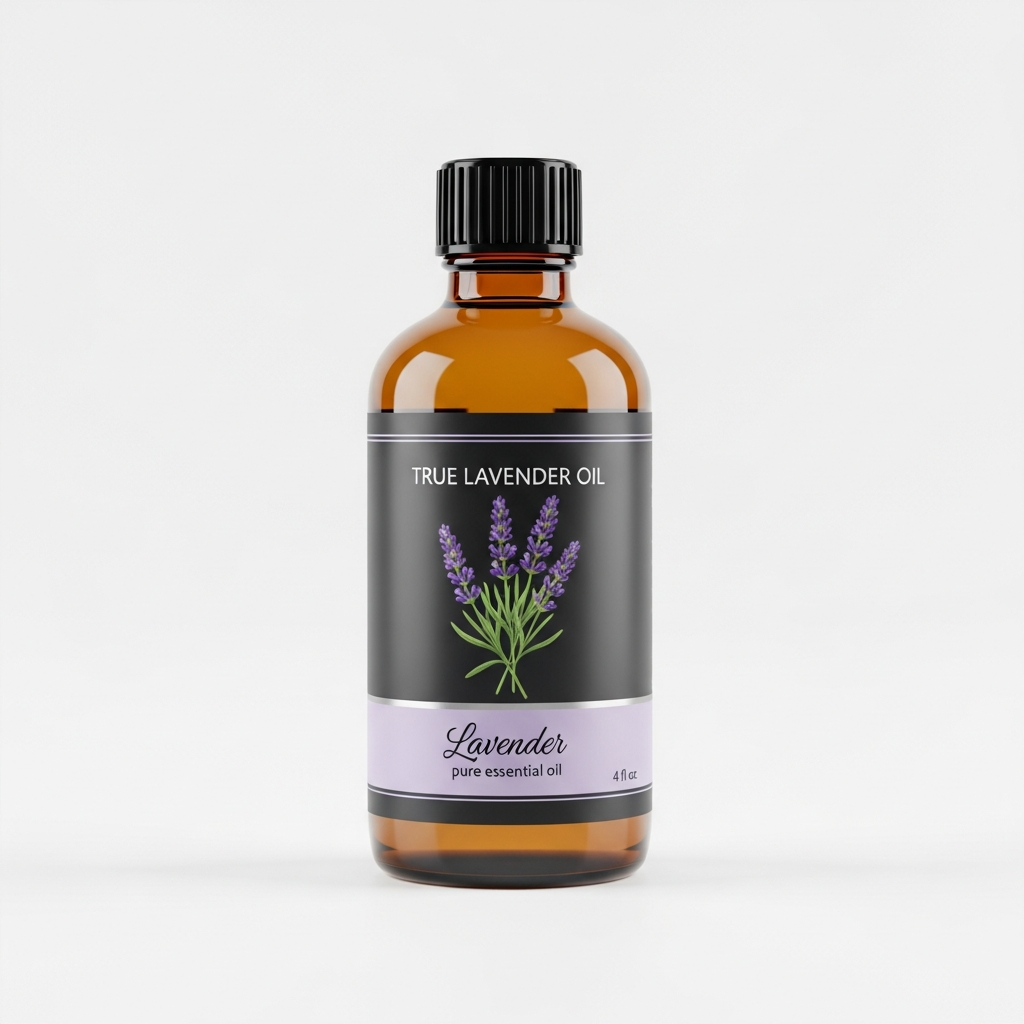
Lavender Essential Oil
Our own Lavender Essential Oil, in sizes from 0.5 oz to bulk.
From $10.99
Shop Now →This article walks through the most persistent myths circulating in the lavender oil market, explains why each one took hold, and points you toward the evidence that actually matters.
Myth 1: "Therapeutic Grade" Is a Regulated, Meaningful Standard
The Myth
If a label says "therapeutic grade," the oil has passed independent testing and met a recognized industry benchmark for purity and quality.
The Fact
No government body, no international standards organization, and no independent scientific authority defines or certifies "therapeutic grade" for essential oils. The phrase was coined by individual companies as a proprietary marketing term. Any brand can print it on a label today with no external oversight required.
The therapeutic grade myth is arguably the most stubborn lavender oil myth in circulation, and it persists because it sounds official. The term borrows the credibility of regulated pharmaceutical language without actually being subject to pharmaceutical scrutiny. Some multi-level marketing companies built entire compensation structures around their proprietary grading systems, which reinforced the impression that a universal standard existed.
What does exist: the International Organization for Standardization publishes ISO 3515, which specifies acceptable chemical composition ranges for Lavandula angustifolia oil. Gas chromatography-mass spectrometry (GC-MS) testing measures actual chemical constituents against those benchmarks. That is a real, verifiable standard. A "therapeutic grade" stamp is not. If you want to know more about reading the documentation that actually matters, our guide on how to read a GC-MS report for lavender oil before you buy explains exactly what to look for.
Myth 2: All Lavender Oil Is the Same
The Myth
Lavender oil is lavender oil. One bottle is interchangeable with another as long as both say "lavender" on the label.
The Fact
The word "lavender" covers a botanical family with significant chemical and aromatic variation. Lavandula angustifolia (true lavender) is a high-altitude species with a characteristically soft, floral scent profile and relatively high linalool and linalyl acetate content. Lavandula latifolia (spike lavender) contains camphor as a dominant constituent and has a sharper, more medicinal-smelling profile. Lavandin (Lavandula x intermedia) is a hybrid of the two: higher-yielding, easier to grow at scale, less expensive, and noticeably different in aroma and chemistry.
Here is the commercial reality: lavandin produces roughly five to ten times more oil per hectare than true lavender. That cost difference is real, and some suppliers absorb it by blending lavandin into bottles labeled simply "lavender oil" without disclosing the substitution. Research into essential oil adulteration suggests this practice is common enough to be a genuine consumer concern. Buyers who want Lavandula angustifolia specifically need to look for the full Latin name on the label.
A detailed breakdown of how these species differ and why sourcing matters is available in our article on lavender varieties and quality: true vs spike vs lavandin.
Myth 3: "100% Pure" on the Label Guarantees an Unadulterated Oil
The Myth
The phrase "100% pure" means the oil has not been stretched with carrier oils, synthetic compounds, or cheaper botanicals.
The Fact
"100% pure" is another unregulated claim. No certification body licenses its use. A supplier can print it freely. Evidence from essential oil quality research indicates that adulteration, including the addition of synthetic linalool, synthetic linalyl acetate, or lavandin fractions, can be virtually undetectable without GC-MS analysis. Some adulterants are added at such low concentrations that they alter the economics meaningfully without dramatically changing the aroma.
The only reliable way to verify that a lavender oil is genuinely unadulterated is through batch-specific GC-MS testing from an accredited laboratory, ideally made publicly available by the supplier. Responsible brands publish these reports or provide them on request. A bottle that carries only the words "100% pure" and no supporting documentation offers the buyer very little actual assurance.
| Label Phrase | Regulated? | What It Actually Means |
|---|---|---|
| Therapeutic Grade | No | Proprietary marketing term with no external standard |
| 100% Pure | No | Unverified claim; requires GC-MS confirmation |
| Certified Organic (USDA) | Yes | Third-party certified farming practices; does not verify oil chemistry |
| ISO 3515 Compliant | Voluntary standard | Chemical composition falls within published benchmark ranges |
| Latin Binomial Listed | No legal requirement | Strong indicator of botanical transparency |
| Batch GC-MS Available | No legal requirement | Highest available public evidence of composition and purity |
Myth 4: Organic Certification Guarantees the Highest Quality Oil
The Myth
A USDA Organic or equivalent certified-organic label means the lavender oil is the best available, purer than non-organic alternatives.
The Fact
Organic certification verifies farming and handling practices: no synthetic pesticides, no prohibited fertilizers, managed land documentation. It does not verify the chemical profile of the finished oil. An organic-certified lavandin oil and a non-certified true lavender oil from a small high-altitude farm are not equivalent products, and the organic label alone does not tell you which is which.
Organic certification is genuinely valuable context, and it is worth seeking out when possible. But it sits alongside species identification and GC-MS data, not above them. Some of the most carefully cultivated true lavender comes from small-batch growers in Kashmir or the English countryside whose operations are too small to carry formal organic certification, even when their farming practices are exemplary. Our article on Kashmir and English lavender oils: rare origins worth knowing explores what regional sourcing can tell you about quality.
Myth 5: A Strong Scent Means a High-Quality Oil
The Myth
The more intensely a lavender oil smells, the more potent and pure it is.
The Fact
Scent intensity is not a proxy for quality, purity, or chemical authenticity. Lavandin and spike lavender both tend to smell sharper and more forceful than true Lavandula angustifolia, largely because of their higher camphor content. A lavender oil with a softer, more nuanced floral character is not a weak oil. It may simply be a better one.
Additionally, synthetic fragrance compounds added to extend an oil or mimic a specific scent profile can produce a very strong smell. Research into adulteration suggests that some commercially sold oils are far more aromatic than pure botanical oils precisely because synthetic amplifiers have been introduced. The goal when evaluating true lavender is not maximum intensity but rather a balanced, characteristic scent: floral without being cloying, clean without sharp edges, with slight herbaceous and sweet undertones.
Myth 6: Price Is a Reliable Quality Indicator
The Myth
An expensive lavender oil is a good lavender oil. A cheap one is almost certainly adulterated or low quality.
The Fact
Price is a weak signal in either direction. High prices sometimes reflect genuine quality factors: small-batch distillation, high-altitude farming, single-origin sourcing, rigorous testing, and honest botanical labeling all add real cost. But high prices also sometimes reflect marketing budgets, celebrity-adjacent branding, or multi-level distribution markups that have nothing to do with the oil inside the bottle.
Conversely, some very honestly priced oils come from growers with low overhead who sell directly. Price becomes more meaningful when read alongside other signals: species disclosure, harvest region, distillation method, and published GC-MS data. If a bottle is suspiciously cheap and lacks any documentation, skepticism is warranted. But a high price tag without documentation is not reassurance. Our guide to where to buy true lavender oil online and what to look for covers how to evaluate suppliers beyond the price point.
What the Label Actually Should Tell You
Once you set aside the unverifiable marketing language, a genuinely informative lavender oil label is relatively straightforward. Here is what substantive transparency looks like:
- Full Latin binomial: Lavandula angustifolia (or the species specific to what you are buying). No Latin name is a red flag.
- Country and region of origin: Provenance matters. Altitude, climate, and soil profile all influence the chemical composition of the oil.
- Plant part and extraction method: For lavender, this should be flowering tops via steam distillation.
- Batch or lot number: This is what allows you to request or locate the corresponding GC-MS report.
- Supplier contact information: A company that stands behind its testing should be reachable with questions.
None of these pieces of information cost a supplier anything meaningful to provide. Their absence, particularly the Latin binomial and batch number, is meaningful in itself.
The Bigger Picture on Lavender Oil Facts
The lavender oil myths that circulate most widely exist because the essential oil market is largely unregulated at the label level. Suppliers have significant latitude in how they describe their products, and many use that latitude to create impressions of quality rather than to document it. The therapeutic grade myth is the most visible example, but the logic behind it runs through almost all the label claims examined here.
None of this means that good lavender oil is impossible to find. Quite the opposite. Honest suppliers who prioritize botanical accuracy, publish their testing, and disclose origins clearly do exist, and they are findable once you know what signals to look for. The lavender oil facts that matter most are not on the front of the bottle. They are in the documentation behind it.
A label that names the species, identifies the region, includes a batch number, and links to third-party GC-MS data tells you more in four lines than a dozen marketing claims ever could.
Developing a habit of asking for that documentation, or simply choosing suppliers who offer it without being asked, is the most reliable shortcut through all the noise. The bottle that says the least on the front and shows you the most on the data sheet is almost always the one worth buying.