
Lavender Oil vs Synthetic Lavender Fragrance: What's the Difference?
Walk through any candle shop, browse a bath-and-body aisle, or scroll through an online marketplace, and you will find lavender everywhere. On labels, in serums, in room sprays, in wax melts. The word "lavender" appears so often that it starts to feel like a flavor rather than a plant. But behind that single word sits a significant fork in the road: real lavender oil distilled from Lavandula angustifolia flowers, and synthetic lavender fragrance built in a laboratory from aroma chemicals.
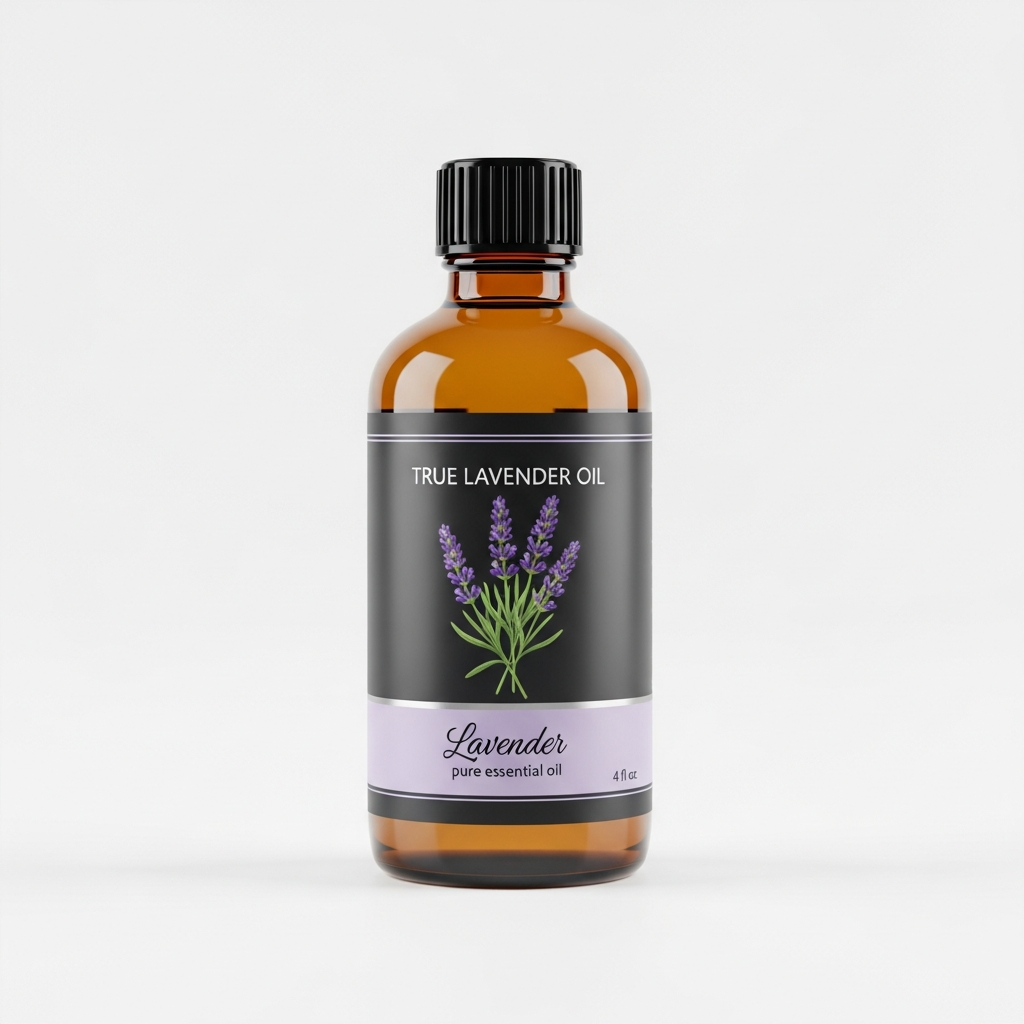
Lavender Essential Oil
Our own Lavender Essential Oil, in sizes from 0.5 oz to bulk.
From $10.99
Shop Now →These two things smell related. They are not the same thing. Understanding the difference matters whether you are building a skincare routine, sourcing candle supplies, or simply trying to get your money's worth from a bottle.
What Is Real Lavender Essential Oil?
True lavender essential oil (Lavandula angustifolia, sometimes called "fine lavender" or "English lavender") is produced by steam-distilling the flowering tops of the lavender plant. Heat and steam pass through the plant material, releasing volatile aromatic compounds. Those compounds are captured, condensed, and separated from the water. What remains is a concentrated, complex liquid that reflects the exact chemistry of that specific plant, grown in that specific place, harvested at that specific time.
The chemistry inside a quality bottle is genuinely intricate. Linalool and linalyl acetate are the two dominant compounds, but a good Lavandula angustifolia oil contains dozens of additional minor constituents: ocimene, terpinen-4-ol, lavandulol, lavandulyl acetate, and more. That complexity is what gives real lavender its layered, slightly herbal, almost floral depth. No two harvest years smell identical.
Sourcing and variety matter enormously here. High-altitude French lavender from Provence, Bulgarian lavender from the Balkan foothills, and Kashmiri lavender each carry distinct aromatic personalities within the same species. If you want to explore how variety and origin shape quality, our guide to lavender varieties and quality: true vs spike vs lavandin walks through exactly that.
What Is Synthetic Lavender Fragrance?
Synthetic lavender fragrance is a manufactured blend of aroma chemicals designed to approximate the scent of lavender. It may contain linalool and linalyl acetate (the same compounds found in the plant), but it also typically contains other synthetic molecules, fixatives, solvents, and extenders that have no presence in a distilled oil.
Fragrance formulas are protected as trade secrets under current regulations. A label that says "lavender fragrance" or "fragrance (lavender)" does not tell you what is actually inside the bottle. The blend could contain dozens of undisclosed ingredients. Some fragrance oils are largely nature-identical (built from isolated or synthesized versions of naturally occurring molecules). Others lean heavily on petrochemical-derived materials.
That opacity is worth keeping in mind, especially when you are applying something directly to skin.
Side-by-Side Comparison
| Attribute | True Lavender Essential Oil | Synthetic Lavender Fragrance |
|---|---|---|
| Source | Steam-distilled Lavandula angustifolia flowers | Laboratory-blended aroma chemicals |
| Ingredient transparency | Single-ingredient; verifiable by GC/MS testing | Formula protected as trade secret; full ingredient list rarely disclosed |
| Scent character | Complex, layered, slightly variable by harvest | Consistent, often brighter or sweeter; can smell "loud" |
| Scent longevity (diffused) | Moderate; dissipates relatively quickly in open air | Often stronger and longer-lasting due to synthetic fixatives |
| Typical cost | Higher per milliliter; reflects cost of farming and distillation | Lower per milliliter; easier to produce at scale |
| Skin application | Used in properly diluted skincare and body products | Generally not recommended for direct skin use; formulated for diffusion or candles |
| Candle and soap making | Performs variably; lighter scent throw | Strong scent throw; widely used in candle and soap industry |
| Aromatherapy traditions | Long history of use in aromatic practices | Not used in traditional aromatherapy practice |
| Certifications possible | Organic, wildcrafted; GC/MS report verifiable | Generally not organic-certifiable |
| Environmental footprint | Tied to agricultural land use; farming practices vary | Typically petrochemical-derived; manufacturing footprint varies |
Scent: The Detail That Surprises Most People
Many people who have only ever smelled synthetic lavender fragrance are genuinely surprised the first time they open a bottle of quality Lavandula angustifolia oil. Real lavender is quieter. It has an herbal, slightly camphoraceous undercurrent that synthetic versions often smooth away. It changes slightly as it dries down. It does not announce itself from across the room.
Synthetic lavender, by contrast, is built for impact. The scent is often sweeter, cleaner, and more consistent from bottle to bottle. For many applications, especially candles and home fragrance, that predictable intensity is exactly what a maker wants.
Neither character is objectively better. They serve different purposes. The question is whether you are buying one when you intended to buy the other.
Pros and Cons: True Lavender Essential Oil
Pros
- Full ingredient transparency: one plant, one process, verifiable chemistry
- GC/MS testing can confirm linalool and linalyl acetate percentages, and flag adulteration (see our guide on how to read a GC/MS report for lavender oil before you buy)
- Long tradition of use in aromatherapy and personal care applications
- Can be used in properly diluted topical formulations
- Scent has genuine complexity and natural variation that many people find more satisfying over time
- Supports agricultural supply chains and lavender farming communities
Cons
- Higher cost per milliliter
- Lighter scent throw in candles and soap without careful formulation
- Natural variation means batch-to-batch scent is not perfectly identical
- Shelf life is finite; requires proper storage (cool, dark, away from air exposure)
- Quality varies widely between suppliers; adulteration with lavandin or synthetic linalool is common in the industry
Pros and Cons: Synthetic Lavender Fragrance
Pros
- Significantly lower cost, especially at volume
- Strong, consistent scent throw: ideal for candles, soaps, and home fragrance products
- Batch consistency: every bottle smells the same
- Longer shelf stability in many formulations
- Wide availability through craft and wholesale suppliers
Cons
- Formula ingredients are not fully disclosed; you cannot verify what is inside
- Not appropriate for direct skin application in most cases
- Not used in traditional aromatherapy practice
- Scent, while pleasant, lacks the layered complexity of the actual plant
- Some synthetic fragrance ingredients are known sensitizers in certain individuals
- Cannot be certified organic
- Labels saying "natural lavender fragrance" or "lavender blend" may still be largely synthetic
Label Claims to Watch For
This is where things get genuinely confusing for shoppers. Terms like "lavender-scented," "lavender blend," "natural lavender fragrance," and even "lavender oil" are used loosely. A product labeled "lavender oil" may contain a blend of lavender essential oil and synthetic extenders. A product called "lavender fragrance oil" is almost certainly synthetic or mostly synthetic, but may not say so clearly.
The most reliable signals for real lavender essential oil are the Latin botanical name (Lavandula angustifolia) on the label, a country of origin, and ideally a GC/MS report available from the supplier. Our article on lavender oil myths vs facts: what the label really tells you goes deeper on exactly how to decode what you are reading before you buy.
Best-For Recommendations by Use Case
Personal care and skin use: Choose real lavender essential oil
If you are adding lavender to a lotion, serum, facial oil, or bath soak intended for skin contact, true Lavandula angustifolia essential oil (properly diluted, typically 1-2% in a carrier for most adult applications) is the appropriate choice. Fragrance oils are not formulated for skin use. Always perform a patch test before wider use, and consult a qualified professional if you have any specific sensitivities or are pregnant or nursing.
Candle making: Synthetic fragrance typically wins on performance
For soy, paraffin, or beeswax candles, synthetic lavender fragrance oil generally delivers a stronger, more reliable hot and cold scent throw. Essential oils can be used in candles, but require careful testing and often a higher usage rate, which raises cost. If your priority is a strongly scented, consistent candle at scale, synthetic fragrance is the practical choice.
Cold-process soap: Fragrance oil for consistency, essential oil for positioning
Lavender essential oil can be used in cold-process soap but may accelerate trace unpredictably with some formulations. Synthetic fragrance oils often behave more predictably in soap. That said, many artisan soapmakers prefer real lavender oil for positioning and ingredient integrity. Testing your specific formulation is essential either way.
Room diffusion and aromatherapy: Choose real lavender essential oil
For use in an ultrasonic or evaporative diffuser as part of an aromatherapy or wind-down routine, real essential oil is the correct choice. Fragrance oils are not designed for diffusion and may damage diffuser components or release undesirable compounds when heated or aerosolized.
Gift giving: Real lavender essential oil, well-sourced
When gifting lavender products, quality and story matter. A well-sourced, single-origin Lavandula angustifolia oil from a transparent supplier carries a genuine narrative. For gift ideas built around real lavender, our lavender oil gift guide: sets and pairings people actually want offers some thoughtful starting points.
The Adulteration Problem in the Middle
There is a third category worth naming: lavender essential oil that has been adulterated or stretched with synthetic materials. This is more common than many buyers realize. Lavandin (a hybrid of true lavender and spike lavender) is cheaper to produce, higher-yielding, and smells broadly similar. It is frequently added to or sold as true lavender oil. Synthetic linalool is another common extender.
A genuine GC/MS (gas chromatography/mass spectrometry) report from a reputable third-party lab is currently the most reliable way to verify that what you have is what the label says. Reputable suppliers make these reports available. If a supplier cannot or will not provide one, that absence is itself informative.
The Honest Verdict
Real lavender essential oil and synthetic lavender fragrance are genuinely different products with different appropriate uses. Neither one is universally better. They are better for different things.
If you want the actual plant, with its full chemical complexity, its verifiable origin, and its centuries of aromatic tradition, you want Lavandula angustifolia essential oil from a transparent, testing-backed source. Pay the extra cost. Ask for the GC/MS report. Know where it was grown.
If you want strong, consistent scent for candles, wax melts, or home fragrance products and budget is a real factor, a quality synthetic fragrance oil is a perfectly reasonable choice. Just do not confuse it for something it is not, and do not put it on your skin.
The real problem in this space is not that synthetic fragrance exists. It is that the labeling often blurs the line between the two. Read carefully. Ask questions. A supplier confident in their product will always have answers.