A Short History of Lavender: From Roman Baths to Modern Perfumery
Lavender has been cultivated, traded, and treasured for more than two thousand years. Its story runs through Roman aqueducts, medieval monastery gardens, the sun-baked hillsides of Provence, and the gleaming laboratories of contemporary fragrance houses. Understanding that history makes you a better buyer. It also helps explain why the sourcing and species behind any bottle of lavender oil matter so much more than the label alone.
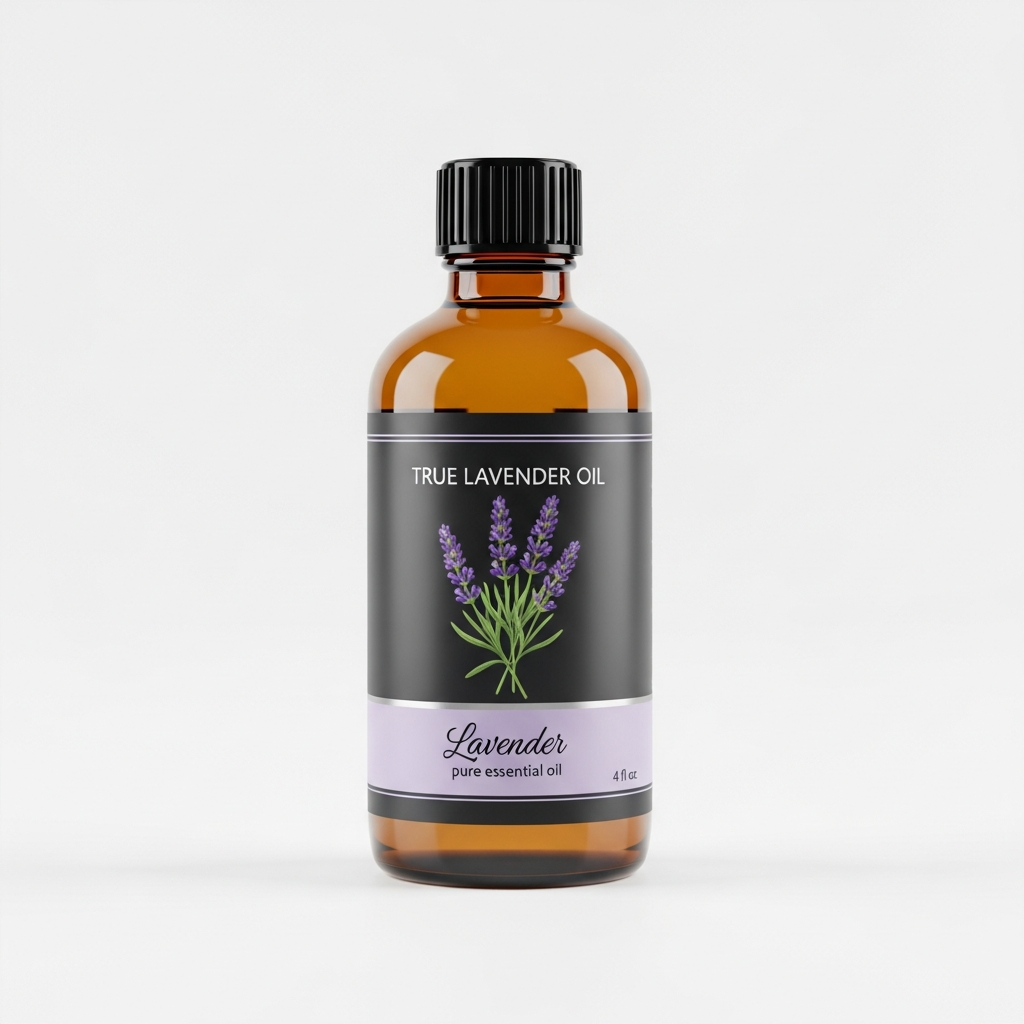
Lavender Essential Oil
Our own Lavender Essential Oil, in sizes from 0.5 oz to bulk.
From $10.99
Shop Now →Ancient Roots: The Mediterranean World
The word "lavender" almost certainly descends from the Latin lavare, meaning to wash. The Romans used lavender-scented water in their famous public baths, and the plant was already well established in North Africa and the Mediterranean basin long before the legions carried it northward into Gaul and Britain.
Ancient Egyptians may have incorporated lavender into their embalming practices. Some archaeological accounts suggest that traces of a lavender-like substance were found inside sealed alabaster jars recovered from Tutankhamun's tomb, though researchers continue to debate the exact plant species involved. What is clear is that aromatic plants with similar chemical profiles appear repeatedly in ancient Egyptian ritual and burial contexts.
Greek physicians also documented lavender traditions. Dioscorides, writing in the first century CE, described a plant he called Stoechas (now identified as Lavandula stoechas, a wild species still found on the islands off the French coast) and noted its use in various folk preparations. His observations were copied by scribes for more than a thousand years, which tells you something about how deeply lavender traditions embedded themselves into Western knowledge.
The Medieval Period: Monks, Markets, and the First Distillations
When the Western Roman Empire fragmented, much of its botanical knowledge migrated into monasteries. Benedictine and Cistercian monks maintained physic gardens throughout Europe, and lavender was a fixture in those spaces. Hildegard of Bingen, the twelfth-century abbess and naturalist, wrote about lavender in her text Physica, describing its scent and noting observations about its qualities that echo practices still recognized today.
Distillation technology changed everything. Early alembic stills, arriving in Europe largely via Arabic scholarship between the ninth and twelfth centuries, made it possible to capture volatile aromatic compounds in concentrated liquid form. By the late medieval period, lavender water and early versions of what we might recognize as essential oil were being sold at European markets and fairs.
The town of Grasse in southern France became the epicenter of European perfumery partly because of geography. The surrounding hills and plateaus offered ideal growing conditions for Lavandula angustifolia, the true lavender species. Tanners in Grasse had long used aromatic plants to improve the smell of cured leather gloves, and this practical trade eventually evolved into one of the world's most sophisticated perfume industries.
Lavender in Perfumery: From Grasse to Global Industry
By the seventeenth and eighteenth centuries, lavender had become a signature note in European fine fragrance. The English developed a particular affinity for it. "Lavender water" was a fashionable cologne during the Georgian and Victorian periods, and street vendors in London sold fresh-cut lavender well into the nineteenth century.
The French chemist René-Maurice Gattefossé is often credited with coining the term "aromatherapy" in the 1930s after reportedly plunging his burned hand into a container of lavender oil following a laboratory accident. Whether the details of that story are entirely accurate is debated by historians, but Gattefossé's subsequent research into aromatic plant extracts helped establish a framework for studying their properties scientifically. His work brought lavender to a new generation of researchers and popularized it far beyond traditional perfumery circles.
The twentieth century brought both expansion and complication. Demand for lavender oil grew faster than highland farms could supply it. Producers began planting Lavandin (Lavandula x intermedia), a hardier hybrid of true lavender and spike lavender, in much larger quantities at lower altitudes. Lavandin produces significantly more oil per hectare, but its chemical profile is noticeably different. It contains higher levels of camphor and lower concentrations of linalyl acetate. Today, lavandin accounts for the majority of "lavender" oil sold worldwide, and a great deal of it is further adulterated with synthetic compounds or rectified to mimic the scent of true lavender. This substitution is one of the most common questions buyers ask when they start reading labels more carefully.
The Chemistry Behind the Scent
True Lavandula angustifolia oil is a complex mixture of more than 100 identified volatile compounds. However, two dominate both its scent profile and its research record.
Linalool
Linalool is a naturally occurring terpene alcohol found across hundreds of plant species, but lavender is one of its richest sources. In high-quality Lavandula angustifolia oil, linalool typically accounts for 25 to 45 percent of the total composition. It is largely responsible for the soft, floral character of true lavender. Some research suggests that linalool may interact with certain neurological pathways in ways that support a sense of calm, though the mechanisms are still being studied. The full chemistry of linalool and its companion compounds is a fascinating subject in its own right.
Linalyl Acetate
Linalyl acetate is an ester formed from linalool, and it gives true lavender its characteristic sweet, slightly fruity depth. Well-grown highland lavender typically contains 25 to 47 percent linalyl acetate. This compound is one of the most reliable quality markers: lavandin oil and adulterated products almost always show a lower ratio of linalyl acetate relative to camphor. Gas chromatography-mass spectrometry (GC-MS) testing is the standard way to verify these ratios in a batch of oil.
Other Noteworthy Compounds
| Compound | Typical Range in L. angustifolia | Notes |
|---|---|---|
| Linalool | 25–45% | Primary floral terpene alcohol |
| Linalyl acetate | 25–47% | Key quality and scent marker |
| Ocimene | 1–6% | Contributes herbal brightness |
| Terpinen-4-ol | 1–6% | Also found in tea tree oil |
| Camphor | Under 1% | Low camphor distinguishes true lavender from lavandin |
| 1,8-Cineole | Under 1% | Higher levels suggest hybrid or spike lavender |
The International Organization for Standardization (ISO 3515) sets defined ranges for these compounds in certified Lavandula angustifolia oil. When a supplier shares a GC-MS report showing values that fall within those ranges, that is a strong indicator of genuine origin and minimal adulteration.
What Research Suggests
Modern researchers have investigated lavender oil and its constituent compounds with growing interest. A number of published studies have observed that inhaled linalool may support a calming atmosphere, and some small-scale human trials have noted that participants in lavender-scented environments reported lower subjective stress scores. These are observational findings, not definitive conclusions, and the research community continues to call for larger, more rigorous trials.
Some laboratory studies have examined the effects of lavender compounds on isolated cell cultures, but results from cell studies do not automatically translate to effects in the human body. It is worth reading any "research-backed" claim about lavender with that caveat firmly in mind.
What is well established is lavender oil's safety profile at appropriate dilutions and its long history of use in cosmetic formulations. Fragrance researchers have studied it extensively because it appears in so many commercial products worldwide.
Safety Profile and Contraindications
True lavender oil has a well-documented safety record when used appropriately. However, "natural" does not mean "risk-free", and a few important notes deserve attention.
Skin Application
Essential oils are highly concentrated and should be diluted in a suitable carrier oil before any skin contact. A general guideline for adults is a dilution of 1 to 2 percent (roughly 6 to 12 drops per ounce of carrier oil). A patch test on a small area of inner arm skin is always a wise first step with any new batch of oil, including lavender.
- Oxidized oil: Linalool and linalyl acetate oxidize over time when oil is stored improperly or kept past its shelf life. Oxidized lavender oil has a higher sensitization risk. Store your oil in dark glass, tightly capped, away from heat and light, and use it within one to two years of opening.
- Children and infants: Use extra caution with young children. Consult a qualified healthcare provider before using any essential oil on or around infants.
- During pregnancy: Pregnant and nursing individuals should consult a healthcare provider before using concentrated essential oils.
- Hormonal concerns: Some research suggests that repeated, prolonged topical exposure to linalool and linalyl acetate may have weak endocrine-modulating effects. The evidence is preliminary and primarily comes from in vitro studies, but it is worth discussing with a healthcare provider if you have concerns.
Inhalation
Diffusing lavender oil in a well-ventilated space is generally considered low-risk for most healthy adults. Avoid prolonged high-concentration diffusion in enclosed spaces, particularly around pets, infants, and individuals with respiratory sensitivities.
Internal Use
This article does not address internal consumption of essential oils. If you are curious about lavender as a culinary ingredient, culinary lavender buds and food-grade preparations are a very different subject from concentrated essential oil. Always consult a qualified healthcare provider before ingesting any essential oil.
Sourcing and Quality Indicators
The history of lavender in perfumery is inseparable from the question of origin. Altitude matters enormously. True Lavandula angustifolia grown above 800 meters in regions like the Haute-Provence plateau or the mountains of Bulgaria develops a higher linalyl acetate content and a more refined scent profile than the same species grown at lower elevations. The stress of cooler temperatures and thinner soils seems to concentrate the most desirable compounds.
When evaluating a lavender oil, look for:
- Full botanical name on the label: Lavandula angustifolia (sometimes listed as Lavandula officinalis or Lavandula vera). If the label says only "lavender oil", ask the supplier to confirm it is not lavandin.
- Country and region of origin: Provence, France; Drôme or Haute-Alpes departments; or Bulgarian highland regions are benchmarks. These are not the only good sources, but they are reliable reference points.
- Harvest year and batch number: Freshness matters. A supplier who shares this information is more transparent than one who does not.
- GC-MS report: A third-party GC-MS report should show linalool and linalyl acetate as the dominant peaks, camphor below one percent, and 1,8-cineole below one percent. Some suppliers post these reports publicly; others will share them on request.
- Distillation method: Steam distillation at lower pressure and shorter duration generally preserves the most delicate aromatic compounds. CO2 extraction produces a slightly different profile and is worth exploring, but traditional steam distillation remains the benchmark for classic lavender oil.
A GC-MS report is the closest thing to a passport for an essential oil. It tells you what is actually in the bottle, not just what the label claims.
Lavender Today: Where Tradition Meets Modern Demand
The lavender traditions that began in Roman bath houses survive in recognizable form today, though the industry has scaled enormously. Global demand for lavender fragrance compounds touches everything from household cleaning products to luxury perfumes. The challenge for anyone who genuinely values Lavandula angustifolia is learning to look past the noise of marketing language toward the verifiable facts: species, origin, chemical composition, and transparency of supply chain.
Lavender's long cultural persistence is itself meaningful. Few plants have maintained such consistent appeal across such different civilizations and time periods. Part of that appeal is certainly sensory: the scent is genuinely distinctive and widely pleasing. But part of it is also the associations that accumulate over centuries of use: cleanliness, calm evenings, monastery gardens, sun-warmed hillsides, and the meticulous work of small-farm distillation.
When you open a bottle of genuine highland lavender oil and take a moment to notice the scent, you are participating in a tradition that stretches back at least two thousand years. That seems worth knowing.