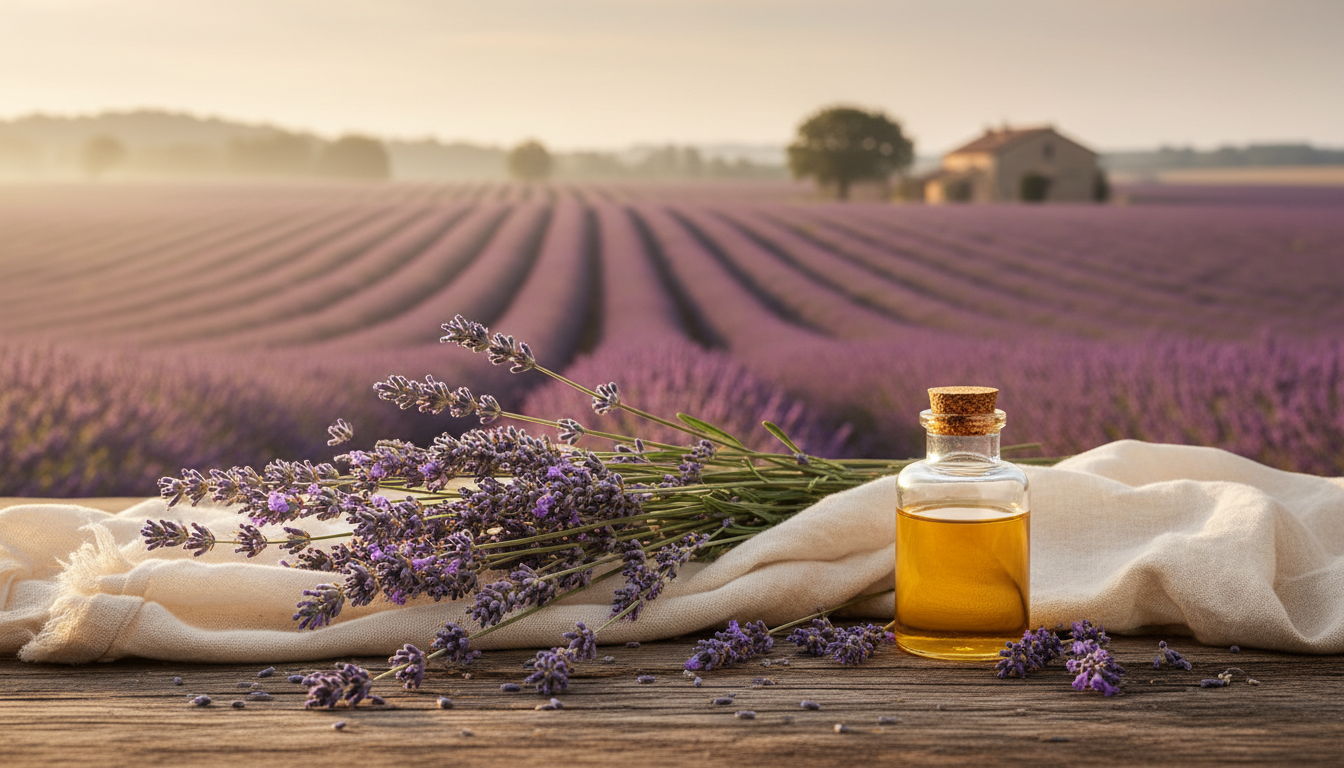
What Is Lavender Oil? A Complete Beginner's Guide
Key Takeaways
- Lavender essential oil is a concentrated plant extract steam-distilled from the flowers of Lavandula angustifolia, the true lavender species.
- Not all lavender oils are equal. Species, altitude, soil, climate, and distillation method all shape the final oil's quality and character.
- True lavender oil is among the most researched and widely used botanical oils in the world, with a recorded history stretching back thousands of years.
- Common uses include aromatherapy, skin-care formulations, home fragrance, and personal care routines.
- Safe use means proper dilution, patch testing, and consulting a healthcare provider before use, especially for children, pets, and during pregnancy.
- Quality shopping comes down to reading labels carefully: look for the Latin name, country of origin, and distillation method.
What Is Lavender Oil, Exactly?
Lavender oil is a concentrated essential oil extracted from the flowering tops of lavender plants. The word "essential" in this context does not mean vital or necessary in a nutritional sense. It refers to the "essence" of the plant: the aromatic, volatile compounds that carry its characteristic fragrance and biological properties. When someone refers to lavender essential oil in a quality context, they almost always mean the oil derived from Lavandula angustifolia, the species botanists and perfumers have long considered the gold standard.
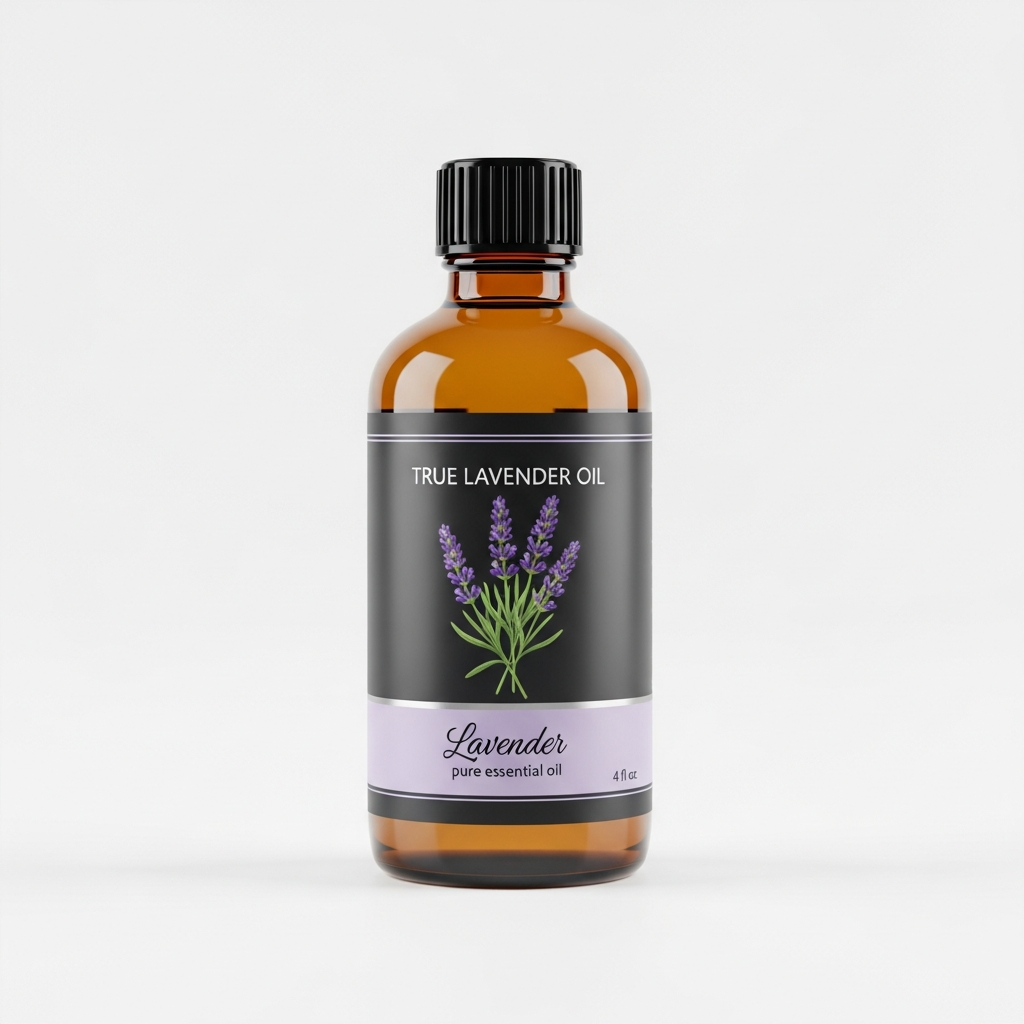
Lavender Essential Oil
Our own Lavender Essential Oil, in sizes from 0.5 oz to bulk.
From $10.99
Shop Now →Essential oils as a category are not the same as carrier oils (like jojoba or sweet almond) or fragrance oils. Carrier oils are fatty, non-volatile lipids pressed from seeds and nuts. Fragrance oils are synthetic blends designed to mimic a scent. True lavender essential oil is neither of these things. It is a pure plant distillate that captures hundreds of naturally occurring chemical compounds in a single, clear-to-pale-yellow liquid.
The concentration matters. To produce just one kilogram of true lavender essential oil, farmers typically harvest between 100 and 150 kilograms of fresh lavender flowers. That density of plant material packed into every small bottle is part of what makes a quality essential oil so potent, and why dilution before skin contact is non-negotiable.
If you are just beginning to explore this world, one of the most important things you can learn early is that "lavender oil" on a label tells you very little without knowing the species, the altitude where it was grown, the country of origin, and the distillation method. The lavender oil explained journey really starts with understanding these distinctions, and that is exactly what this guide walks you through.
The Lavender Family: Species That Matter
The genus Lavandula contains more than 40 recognized species, and dozens of cultivated hybrids exist on top of that. For a beginner, the landscape can look confusing fast. But for practical purposes, four main types show up in commercial essential oil production, and knowing them will immediately sharpen your label-reading skills.
Lavandula angustifolia (True Lavender)
Lavandula angustifolia is the species most serious lavender growers and aromatherapy practitioners point to when they say "true lavender." It grows naturally at higher altitudes (typically 600 to 1,500 metres above sea level in the Alps and Provençal highlands of France), and this altitude plays a direct role in the oil's chemical profile. Lower temperatures and shorter growing seasons at elevation slow the plant's development, which many producers believe concentrates the more delicate, floral-aldehydic compounds that define fine lavender oil.
The oil from L. angustifolia is typically high in linalool and linalyl acetate, two naturally occurring esters that contribute its signature soft, sweet, slightly herbaceous aroma. It is the species behind most of what is referenced in research literature and what premium brands use when they say "lavandula angustifolia oil" on their ingredient decks.
Lavandula latifolia (Spike Lavender)
Spike lavender grows at lower altitudes and is noticeably more camphoraceous in scent: sharper, more medicinal-scented, and less floral than L. angustifolia. Its oil contains higher levels of camphor and 1,8-cineole. While spike lavender oil has its own legitimate uses (particularly in certain artisan soap and cleaning formulations), it is not the same thing as true lavender oil, and the two should never be sold interchangeably. If a bottle is priced unusually low and labeled only as "lavender oil," spike lavender is one possible explanation.
Lavandin (Lavandula x intermedia)
Lavandin is a hybrid, a natural cross between L. angustifolia and L. latifolia. It is a vigorous plant that produces significantly higher oil yields per hectare than true lavender, which makes it a favorite for large-scale commercial production. The scent is bolder and less refined than pure L. angustifolia, with a stronger camphor note. Lavandin oil is widely used in household products, soaps, and lower-cost "lavender" items.
There is nothing wrong with lavandin as a product. The problem is when it is sold or labeled as true lavender oil without disclosure. An honest label will say Lavandula x intermedia (or sometimes Lavandula hybrida) rather than Lavandula angustifolia.
Lavandula stoechas (Spanish Lavender)
Spanish lavender has distinctive butterfly-like bracts at the top of each flower spike and a scent profile that leans heavily camphoraceous and almost fruity. Its oil contains particularly high camphor levels and is generally considered unsuitable for use around young children. It is rarely used in quality aromatherapy formulations for personal care, and a knowledgeable seller will always label it with its full Latin name.
Why Species Identification Matters
The practical takeaway is simple: when shopping for a lavender essential oil guide-worthy product, insist on seeing Lavandula angustifolia clearly printed on the label, ideally alongside the country of origin and the distillation date. Every other designation opens the door to a different product with different characteristics, different safety profiles, and different aromatic outcomes.
How Lavender Essential Oil Is Made
Understanding production is not just interesting background knowledge. It directly affects what ends up in your bottle. The method, timing, and conditions of distillation shape the final oil as much as any factor in the field.
The Harvest Window
True lavender is typically harvested in midsummer, often between late June and early August in the Northern Hemisphere, depending on the variety and elevation. Timing is precise because the oil content in the flowers peaks at a specific point in the bloom cycle. Harvest too early and the yield is low. Harvest too late, after full bloom, and some of the more delicate aromatic compounds begin to degrade. Many small-batch producers harvest by hand or use low-impact mechanical cutters to minimize damage to the delicate flower heads before distillation.
Steam Distillation
The dominant production method for true lavender oil is steam distillation. In this process, harvested plant material is loaded into a still (a large vessel), and steam is passed through it. The heat causes the tiny oil-containing glands in the flowers to rupture and release their aromatic compounds. Those compounds travel with the steam through a condensing coil, cool back into liquid form, and then separate from the water because oil and water do not mix. The resulting essential oil floats on top and is collected.
The water that remains after separation is not wasted. It is lavender hydrosol, sometimes called lavender water or floral water. It carries trace amounts of the oil's water-soluble compounds and has its own devoted following in skin-care circles.
Distillation Variables That Affect Quality
Not all steam distillation is equal. Key variables include:
- Pressure: Low-pressure distillation (sometimes called "slow distillation") is widely considered to yield a more complete, nuanced oil because it operates at lower temperatures that protect heat-sensitive aromatic compounds.
- Duration: Rushing a distillation to increase throughput can leave behind important secondary constituents. Longer, gentler runs often produce a more complex oil.
- Still material: Some producers use stainless steel stills; others use copper, which can subtly influence the final chemistry through catalytic interaction with certain sulfur compounds in the plant material.
- Fresh vs. partially dried material: Some distillers use freshly harvested flowers; others allow partial wilting first. Each approach produces a slightly different ester profile.
To go even deeper into the journey from field to bottle, our guide on how lavender oil is made covers each production stage in detail.
CO2 Extraction: An Alternative Method
A small number of producers use supercritical CO2 extraction, a more modern technique in which pressurized carbon dioxide acts as a solvent to pull aromatic compounds from the plant material. The CO2 then returns to gas form, leaving behind a concentrated extract. Proponents argue that CO2 extracts more closely represent the full chemical complexity of the living plant because it operates at lower temperatures than steam. However, the resulting product has a slightly different composition than steam-distilled oil and behaves somewhat differently in blends and formulations.
What Is NOT in Pure Lavender Oil
Authentic, unadulterated lavender essential oil contains no carriers, no preservatives, no synthetic fragrance compounds, and no additives of any kind. It is a single-ingredient product. When you see a long ingredient list on a bottle labeled "lavender oil," you are almost certainly looking at a blend, a diluted product, or a fragrance compound. That is fine if it is clearly disclosed, but it is a different product.
Scent Profile and Key Compounds
Lavender's scent is so widely recognized that it has become shorthand for "calm" in popular culture. But the actual aromatic picture is more layered than most people realize. True Lavandula angustifolia oil is not a single-note fragrance. It is a complex blend of over 100 identified chemical constituents working together.
The Primary Aromatic Compounds
| Compound | Typical Range in L. angustifolia | Aromatic Character |
|---|---|---|
| Linalool | 25% to 45% | Soft, floral, slightly spicy |
| Linalyl acetate | 25% to 45% | Sweet, fruity-floral, slightly herbaceous |
| Ocimene | Up to 6% | Herbal, woody, faintly sweet |
| Terpinen-4-ol | 1% to 6% | Earthy, slightly woody |
| Camphor | 0% to 1.2% | Sharply herbal (very low in true lavender) |
| 1,8-Cineole | 0% to 2.5% | Cool, eucalyptus-like |
| Lavandulol and lavandulyl acetate | Variable | Delicately floral, found mainly in L. angustifolia |
The high linalool and linalyl acetate content, combined with the notably low camphor level, is what separates fine true lavender from lavandin or spike lavender in both scent and character. When camphor climbs above roughly 1.5%, you are almost certainly smelling a hybrid or a different species entirely.
How Origin and Altitude Shape the Chemistry
High-altitude French lavender from Haute-Provence tends to produce oil with particularly high linalyl acetate levels, giving it an especially soft, almost creamy sweetness. Lavender grown at lower elevations, or in warmer climates, often shows a higher linalool ratio relative to linalyl acetate and may carry a slightly grassier, greener edge. Bulgarian lavender, another major producing region, frequently presents with a strong floral-sweet profile at a price point that can be more accessible than French highland oil.
Neither is universally "better." Your nose and your intended use will determine which origin you prefer. The important thing is knowing the origin so you can make an informed comparison.
For a deeper sensory exploration of exactly what true lavender smells like across different growing regions and harvest years, visit our dedicated guide on what lavender oil smells like.
What Gas Chromatography Testing Tells You
Reputable lavender oil producers publish GC/MS (gas chromatography/mass spectrometry) reports for their oils. This is an analytical test that identifies and quantifies each chemical compound in the oil. Reading a GC/MS report is a skill, but even at a basic level, it allows you to verify that the camphor content is within the expected range for L. angustifolia, that the linalool and linalyl acetate ratios look authentic, and that no synthetic adulterants are present. If a seller cannot or will not provide a GC/MS report on request, that is worth noting.
A Brief History of Lavender Oil
Lavender has been cultivated and used by humans for a remarkably long time. Evidence of its use stretches back at least 2,500 years across Mediterranean, Egyptian, and Roman cultures. The name "lavender" is widely believed to derive from the Latin lavare, meaning to wash, a reference to its early role in bathing and cleansing rituals.
Roman soldiers reportedly carried lavender on campaigns for wound cleansing and personal hygiene. Medieval European households dried lavender to scent linens, deter insects, and freshen living spaces. Perfumers in Renaissance-era Europe recognized lavender as a foundational ingredient, and by the 16th century, cultivated lavender farms had begun to appear in France's Provence region.
The modern essential oil industry, and the practice of steam-distilling lavender specifically for its concentrated oil, developed significantly in the 19th and early 20th centuries. French chemist René-Maurice Gattefossé, sometimes called the father of aromatherapy, famously documented his personal experience with lavender oil in the early 20th century after a laboratory accident, and went on to publish research that helped formalize the modern field of aromatic plant science.
Today, France, Bulgaria, and increasingly Australia, New Zealand, and parts of North America are among the leading lavender-producing regions. The global lavender oil market is substantial and growing, driven by demand from fragrance, personal care, and home product industries.
For a fuller telling of this fascinating story, our article on the history of lavender from Roman baths to modern day goes deep into how this plant became one of the most beloved botanicals in human culture.
Everyday Uses for Lavender Oil
Part of what makes lavender oil so enduringly popular is its versatility. It fits into a remarkable range of daily routines without requiring specialized equipment or expertise. Below are the main categories of everyday use that beginners tend to find most accessible.
Aromatherapy and Diffusion
Diffusing lavender oil is one of the simplest entry points. An ultrasonic diffuser disperses a fine mist of water and essential oil into the air, allowing the aromatic compounds to be inhaled. Many people incorporate lavender diffusion into their evening wind-down routines, using it to create a calm, settled atmosphere in the bedroom or living space before sleep.
Some people prefer steam inhalation: adding a few drops to a bowl of hot (not boiling) water, draping a towel over the head, and breathing slowly for a few minutes. Always keep eyes closed during steam inhalation to avoid irritation.
A basic room spritz is another low-barrier option. Combine distilled water, a small amount of high-proof alcohol (as an emulsifier), and 10 to 20 drops of lavender oil per 100ml in a spray bottle. Shake well before each use and mist into a room.
Topical Use in Skin Care
Lavender oil is one of the few essential oils that some experienced practitioners suggest can be applied neat (undiluted) on very small areas of skin, such as a single insect bite or a small blemish. However, for general skin-care use, dilution in a carrier oil is always the recommended approach. This reduces the risk of sensitization (where repeated exposure to an undiluted oil causes the skin to develop a reaction over time).
Common applications include adding lavender to a carrier oil for massage, incorporating it into homemade body butters or face serums, adding a few drops to an unscented lotion, or blending it into a bath oil. People who enjoy a relaxing bath often add 5 to 10 drops of lavender oil pre-diluted in a tablespoon of carrier oil or full-fat milk before adding it to the bathwater. Undiluted essential oil dropped directly into a bath does not disperse evenly and can sit on the skin surface in concentrated form.
Hair and Scalp Routines
Adding a few drops of lavender oil to an unscented shampoo or conditioner is a popular way to bring its scent into a hair-care routine. Some people also massage a diluted blend of lavender in a light carrier oil (such as jojoba, which closely resembles the scalp's natural sebum) into the scalp before washing. Anecdotal reports are generally positive, though individual results vary widely.
Home and Linen
Lavender's use in the home goes back centuries, and modern applications are plentiful. A few ideas:
- Add a few drops to wool dryer balls for lightly scented laundry (do not add directly to wet fabrics, as oil can stain).
- Place a drop or two on a cotton ball tucked into a drawer or linen closet.
- Add lavender to a DIY room spray or linen mist for freshening pillowcases and bedding.
- Use in a candle-making project (follow specific guidelines for maximum fragrance load in candle wax, as this varies by wax type).
- Incorporate into homemade cleaning sprays alongside other botanical ingredients for a pleasantly scented surface spray (note: lavender alone is not a registered sanitizing agent).
Personal Care and Rituals
Lavender oil blends beautifully with many other essential oils, making it a staple in personal scent blending. It pairs well with bergamot, geranium, cedarwood, frankincense, clary sage, and Roman chamomile, among many others. Creating a personal roll-on blend in jojoba oil is a satisfying beginner project and a good way to start developing your nose for how lavender interacts with other aromatics.
For a much more expansive list of ways to weave lavender oil into daily life, our guide to 25 everyday uses for lavender oil is a great next read.
How to Buy True Lavender Oil: A Beginner's Shopping Guide
The essential oil market is genuinely crowded, and quality varies more than most beginners expect. A few structured habits will protect you from buying something that does not match the label.
Read the Label Carefully
A quality lavender essential oil label should include:
- Latin name: Lavandula angustifolia (not just "lavender" or an unspecified common name)
- Country of origin: France, Bulgaria, and New Zealand are common high-quality sources, but origin alone does not guarantee quality
- Part of plant: Flowering tops (sometimes listed as "flowers" or "aerial parts")
- Extraction method: Steam distillation
- Single ingredient: The ingredient list should contain nothing other than Lavandula angustifolia flower oil
- Batch number and expiry or distillation date: Allows you to request a corresponding GC/MS report
Packaging Matters
Authentic essential oil should come in a dark glass bottle: amber, cobalt blue, or violet. Light degrades essential oils over time, and plastic can leach into concentrated oil or itself degrade when exposed to it. If you see lavender oil in a clear glass or plastic bottle at a low price, approach with caution. The bottle size for a pure essential oil is typically small: 5ml, 10ml, 15ml, and occasionally 30ml are standard. A very large bottle of "pure essential oil" at an unusually low per-milliliter price is a yellow flag.
Price as a Rough Quality Signal
True lavender oil is not the most expensive essential oil in the market (that distinction goes to oils like rose absolute or oud), but it is not cheap to produce properly. A 10ml bottle of authentic, high-altitude French L. angustifolia oil will generally cost more than a few dollars. If a price seems implausibly low, the oil may be lavandin, adulterated, or diluted without disclosure. That said, high price alone does not guarantee quality either. Do your homework on the brand.
Reputable Sourcing Practices
Look for brands that:
- Publish GC/MS reports (batch-specific, not just a generic one)
- Clearly identify their source farms or regions
- Have transparent distillation and testing practices
- Are willing to answer sourcing questions directly
- Do not make exaggerated health claims (ironically, overclaiming is a warning sign of an unsophisticated or dishonest seller)
Certified Organic: Is It Worth It?
Organic certification means the lavender was grown without synthetic pesticides or herbicides. For a product you are applying to your skin or diffusing in your home, many people find the certification worthwhile. However, organic certification adds cost, and some small, artisan farms practice organic growing methods without the formal certification (because the certification process itself is expensive and administratively demanding). A trustworthy small farm may produce a cleaner oil than a large certified-organic commercial operation. Getting to know your producer is often the best due diligence.
The Sniff Test
Your nose is a legitimate quality tool, once you have developed a baseline. Spend time smelling different lavender oils from different origins and producers. True L. angustifolia at its best is soft, sweet, floral, and complex. It does not smell sharp, camphoric, or harshly chemical. If a lavender oil makes you think of mothballs or cough drops, it is likely lavandin or spike lavender. If it smells flat, one-dimensional, or synthetic, it may be a fragrance oil or a heavily adulterated product.
Safety Basics Every Beginner Should Know
Lavender oil has a well-established safety profile compared to many other essential oils, but it is still a concentrated plant extract that commands respect. Skipping safety basics is the fastest way to have a negative experience with an otherwise wonderful oil.
Dilution: The Non-Negotiable First Rule
For routine topical use on adults, a dilution of 1% to 2% in a carrier oil is the standard recommendation. This means 1 to 2 drops of essential oil per teaspoon (roughly 5ml) of carrier oil. For face-focused applications, many practitioners suggest staying at 1% or below. For body massage, 2% is typical. Spot applications for specific areas may go slightly higher in some contexts, but only briefly and with caution.
Carrier oils that work well with lavender include jojoba, sweet almond, fractionated coconut oil, rosehip seed oil, and apricot kernel oil. Each carrier has its own texture, absorption rate, and shelf life, so choose based on your intended use.
Patch Testing
Before applying any new essential oil blend to a larger area of skin, always do a patch test first. Apply a small amount of your diluted blend to the inner forearm, cover loosely, and wait 24 hours. If you notice redness, itching, or any skin reaction, do not proceed with that formula. Even lavender, which is generally well-tolerated, can cause reactions in people with specific sensitivities or pre-existing skin conditions.
Children and Infants
Extra caution applies when using any essential oil around children, and especially infants. The general guidance from most aromatherapy safety authorities is to avoid topical essential oil use on children under three months entirely, and to use much lower dilution rates (0.5% to 1%) for young children. Avoid applying any essential oil near a young child's face, mouth, or nose. For detailed, age-specific guidance, our lavender oil safety guide covering patch tests, pets, and children covers this topic in depth. Always consult your pediatrician before using any essential oil with infants or young children.
Pets
Cats and dogs process aromatic compounds differently than humans do. Cats in particular lack certain liver enzymes needed to metabolize some essential oil constituents, making them more vulnerable to adverse reactions. Dogs have significantly more sensitive olfactory systems than humans. The safest approach is to diffuse only in well-ventilated spaces where pets can freely leave the room, and never to apply essential oils directly to pets without guidance from a veterinarian familiar with botanical safety. See our safety guide for more detail on this topic.
Pregnancy and Nursing
During pregnancy and nursing, the recommendation from most aromatherapy safety bodies is to use essential oils only under the guidance of a qualified healthcare provider. This is not a blanket prohibition, but it is a situation that requires professional input rather than general guidelines. Please speak with your midwife, obstetrician, or naturopathic doctor before incorporating any essential oil into your routine during this period.
Photosensitivity
Pure Lavandula angustifolia oil does not contain the furanocoumarins that cause photosensitivity in some citrus oils (bergamot being the most notable example). However, if your lavender blend includes citrus oils, sun exposure after application could be an issue. Check each oil in your blend individually.
Internal Use
This guide does not address or suggest internal use of lavender essential oil. Internal use of essential oils is a specialized area with significant safety considerations. If you are researching this topic, please consult a qualified aromatherapist or healthcare provider with specific training in essential oil safety.
Drug Interactions
If you take any over-the-counter or doctor-recommended medications, consult your healthcare provider before beginning regular essential oil use, particularly in topical applications over large areas of the body. Responsible aromatherapy practice always sits alongside, never in place of, qualified medical advice.
Storing Your Lavender Oil: Keeping It Fresh
Essential oils are volatile organic compounds, and they are susceptible to degradation from three main environmental factors: light, heat, and oxygen. Storing lavender oil correctly protects both its aromatic quality and its shelf life.
Optimal Storage Conditions
Store lavender oil in a cool, dark place away from heat sources. A drawer, a cabinet, or a dedicated essential oil storage box works well. Avoid the bathroom (too humid and temperature-variable), windowsills (too much light), or near stoves and appliances. Many committed enthusiasts store their essential oils in the refrigerator, particularly for long-term storage of expensive or delicate oils. Lavender tolerates refrigeration well; just allow the bottle to come to room temperature before opening to prevent condensation inside the cap.
Minimize Oxygen Exposure
Every time you open a bottle, oxygen enters and oxidation begins. Oxidized lavender oil loses its fresh, sweet character and may develop a slightly sharp or stale edge. Worse, oxidized essential oils are more likely to cause skin sensitization. Practical habits to slow oxidation:
- Keep bottles tightly capped when not in use
- Buy sizes that match your usage rate (a 50ml bottle is not economical if you only use a few drops a week and it takes you three years to finish)
- Consider decanting a small working bottle from a larger stock bottle to reduce how often you open the main supply
Shelf Life Expectations
Lavandula angustifolia essential oil typically has a shelf life of 2 to 3 years under good storage conditions, sometimes longer for well-stored oils with high ester content. This is longer than many other essential oils (citrus oils, for example, oxidize much faster). The distillation date on your bottle is the most useful reference point. "Best before" dates set by sellers are estimates; your nose is your most reliable judge of whether an oil is still at its best.
For a full breakdown of shelf life science, proper bottle types, and storage scenarios for different budgets, visit our dedicated article on how to store lavender oil.
Frequently Asked Questions
Is lavender oil the same as lavender fragrance oil?
No. Lavender essential oil is a pure plant distillate from Lavandula angustifolia flowers. Lavender fragrance oil is a synthetic or semi-synthetic aroma compound designed to smell like lavender. Fragrance oils are used widely in candles, soaps, and commercial perfumery, but they are not interchangeable with essential oil in an aromatherapy context.
Can lavender oil be used directly on skin without dilution?
Some practitioners allow for brief, small-area neat application in specific circumstances. But for general use, consistent undiluted application to the skin is not recommended because it increases the risk of sensitization over time. Dilute in a carrier oil as a standard practice.
What makes French lavender better than other origins?
High-altitude French lavender from regions like Haute-Provence is widely regarded as a benchmark for L. angustifolia quality, primarily because of its high linalyl acetate content and refined scent character. But "French" does not automatically mean superior. Origin labeling can be manipulated. A GC/MS report is more reliable evidence of quality than a country of origin claim alone.
How do I know if my lavender oil has gone off?
An oil that has oxidized or degraded will smell noticeably different from fresh lavender: flatter, sharper, or slightly rancid. If the scent makes you hesitate, trust that instinct. Degraded oils should not be used on skin, though they may still be acceptable for non-skin uses like scenting a trash bin or adding to homemade cleaning products.
Can I use lavender oil in cooking?
Culinary lavender is a recognized ingredient, typically using dried flowers or very small quantities of food-grade culinary-specific lavender preparations. Standard essential oil is highly concentrated: a single drop contains the aromatic equivalent of a very large quantity of plant material, and it is easy to overpower a dish. This guide does not address essential oil use in food preparation. For culinary lavender, seek out resources specifically focused on food-safe applications.
What is the difference between lavender oil and lavender absolute?
Lavender absolute is produced through solvent extraction rather than steam distillation. The process captures a broader range of aromatic compounds, including some that are too heavy or delicate to survive steam distillation. The result is a thicker, more intensely floral product, often used in high-end perfumery rather than aromatherapy. Absolutes may contain trace solvent residues, which is why they are generally kept out of therapeutic aromatherapy formulations and used primarily in fine fragrance.
Is lavender oil safe for dogs?
Use caution and consult a veterinarian before exposing any pet to essential oils. Dogs have highly sensitive olfactory systems, and what smells pleasant to us can be overwhelming or irritating to them. Never apply essential oils directly to a pet without veterinary guidance. See our full safety guide for a more detailed discussion of pets and essential oils.
What should a beginner's first lavender oil purchase look like?
Start with a small bottle (5ml or 10ml) of single-origin Lavandula angustifolia oil from a seller who provides a GC/MS report. Pick one origin (French or Bulgarian are common starting points) and get to know it well before branching out into comparisons. Buy a quality carrier oil alongside it, and commit to diluting before any skin use. Keep notes on what you notice about the scent. That disciplined beginning pays dividends later.
Is lavender oil vegan?
Yes. Pure steam-distilled Lavandula angustifolia essential oil involves no animal products or byproducts. It is inherently vegan. Some products that contain lavender oil (beeswax-based balms, honey-infused preparations) may not be vegan, but the oil itself is plant-derived.
Where to Go from Here
You now have a solid foundation for understanding what lavender oil is, where it comes from, how it is made, what it smells like, and how to buy, use, and store it responsibly. That foundation matters because the lavender oil market is full of shortcuts and substitutions, and the difference between an authentic, high-quality Lavandula angustifolia oil and a cheap hybrid or synthetic imitation is significant, both in the aromatic experience and in what you bring into your home and onto your skin.
The best next step is simply to smell the real thing. Find a reputable source, buy a small bottle, sit with it, and pay attention. Read the GC/MS report. Notice the softness, the sweetness, the way it evolves in the air after diffusion. That hands-on education will teach you more than any article can.
From there, explore. Our guide to 25 everyday uses for lavender oil is a practical companion for putting your new knowledge to work. Our deep dive into what lavender oil smells like will sharpen your nose for quality assessment. And when you are ready to go further into sourcing, how lavender oil is made tells the full story of the journey from field to bottle.
True lavender oil, grown at altitude, distilled with care, and honestly labeled, is one of the finest things a plant can offer. It rewards the people who take the time to understand it.