Lavender Oil for Sleep and Relaxation: The Complete Bedtime Routine Guide
Key Takeaways
- True Lavandula angustifolia essential oil contains naturally occurring linalool and linalyl acetate, the two compounds most closely associated with its famously calming scent profile.
- A consistent lavender evening routine works partly through scent association: your brain learns to pair the aroma with winding down, which may support a quicker mental shift toward rest over time.
- There are at least six distinct ways to weave lavender oil into a bedtime routine, from diffusing and bath soaks to pillow mists and topical application.
- Proper dilution (typically 1-3% in a carrier oil for adults) is non-negotiable for safe skin application.
- Not all lavender oil is equal. Lavandin (Lavandula x intermedia) and other adulterants are common in the market. Knowing how to read a GC/MS report protects your purchase.
- Some research suggests lavender aroma may promote a sense of calm in the evening, though it is not a substitute for professional guidance when deeper concerns are present.
Few aromas are as universally recognized as lavender at dusk. For thousands of years, people across Europe, North Africa, and the Middle East have tucked dried lavender into bedding, stirred it into bathwater, and burned it in the hours before rest. Today, a small brown bottle of pure Lavandula angustifolia essential oil sits on nightstands around the world doing very much the same job. The bottle is smaller. The science behind it is richer. The ritual, though, is remarkably unchanged.
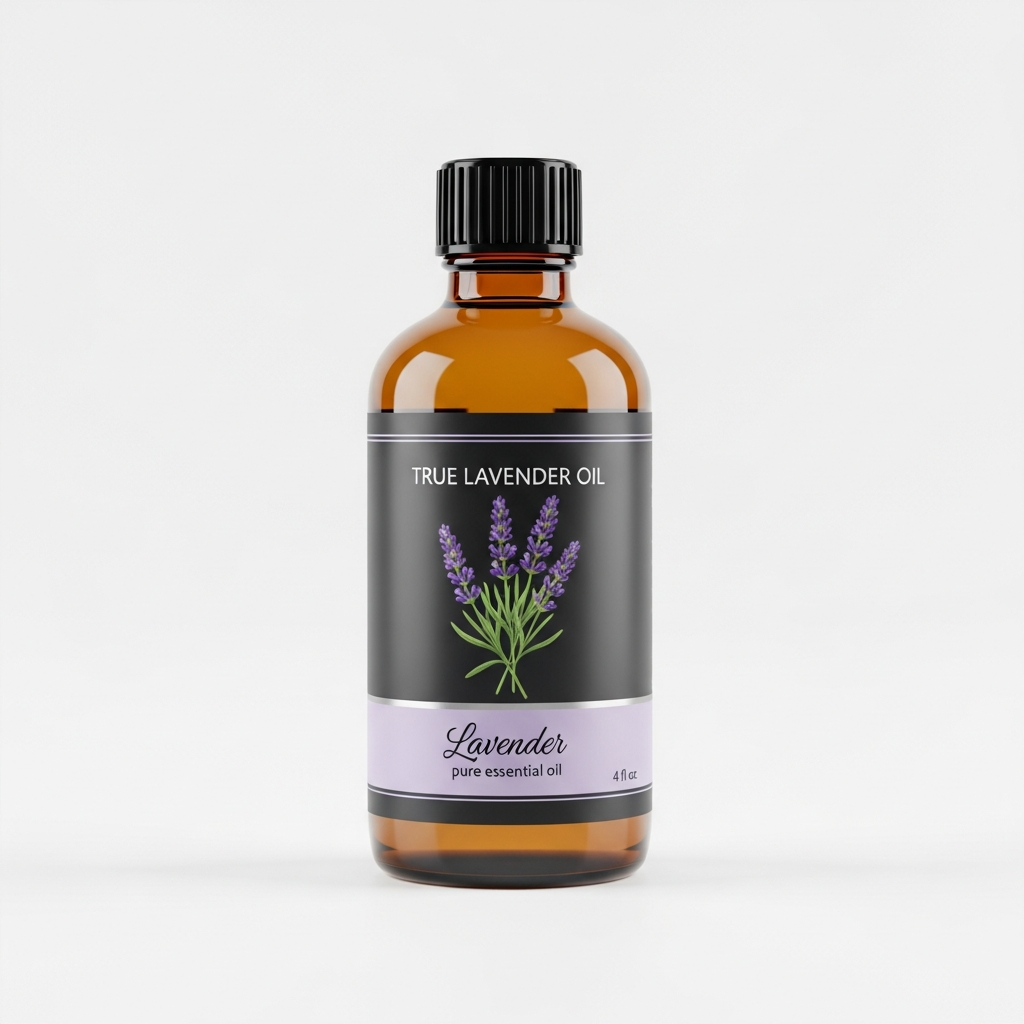
Lavender Essential Oil
Our own Lavender Essential Oil, in sizes from 0.5 oz to bulk.
From $10.99
Shop Now →This guide is about building that ritual intentionally. Whether you are new to lavender oil or you have been diffusing it for years without much structure, what follows is a thorough, practical framework for making your lavender oil bedtime routine as effective and enjoyable as it can possibly be. We will cover how scent works in the evening context, what separates a quality oil from a mediocre one, and exactly how to layer calming lavender rituals into a sequence that fits real life.
Why Lavender Has Earned Its Place on the Nightstand
Lavender is not popular simply because it smells pleasant. Its reputation for calm is old and cross-cultural. Ancient Romans added it to their baths. Medieval herbalists recommended it for the head and spirits. Lavender sachets in pillow cases are documented across at least a dozen European folk traditions. That kind of persistent, widespread use across unconnected cultures tends to point to something real, even if science is still filling in the details.
A Brief Botanical Note
True lavender, Lavandula angustifolia (also called English lavender or fine lavender), grows best at higher elevations, particularly in the Provence region of France, Bulgaria, and parts of the UK. The altitude and cooler temperatures produce a flower with a higher concentration of linalyl acetate, which gives true lavender its sweet, slightly floral, almost powdery quality. This is distinct from lavandin (Lavandula x intermedia), a hybrid grown at lower elevations that yields far more oil per acre but has a sharper, more camphoraceous scent. Both have their uses, but for a lavender oil for relaxation routine, true angustifolia is the benchmark.
What People Have Always Noticed
People who use lavender consistently in the evening often describe the same experience: the scent signals something to the brain. After a few weeks of pairing lavender aroma with bedtime, simply opening the bottle can start a perceptible shift in how the body feels. This is the power of conditioned scent association, and it is one of the most compelling reasons to anchor your lavender evening routine to a consistent time and set of behaviors.
Why the Bedtime Window Is Ideal
The hour or two before you hope to fall asleep is exactly when the body benefits most from deliberate signals that the day is ending. Screens, bright overhead lights, unfinished tasks, and stimulating conversations all work against that transition. A structured lavender oil bedtime routine works in the opposite direction. It introduces a sensory anchor, slows the pace of activity, and gives the nervous system consistent cues that rest is approaching.
The Science of Scent and Evening Wind-Down
Smell is the only sense with a direct anatomical link to the limbic system, the part of the brain associated with emotion and memory. Olfactory signals do not pass through the thalamus the way visual and auditory information does. They arrive at the amygdala and hippocampus almost immediately. This is why a scent can produce an emotional response before you have consciously identified what you are smelling.
Linalool and Linalyl Acetate: The Two Stars
True lavender essential oil is rich in two primary compounds. Linalool typically makes up 25-40% of the oil, and linalyl acetate often contributes another 25-45%, depending on elevation, harvest timing, and distillation method. Both compounds have been the subject of scientific research into calm and rest. Some research suggests that linalool may interact with GABA receptors when inhaled, which could partly explain the sense of ease that many people report during a lavender-scented environment. It is worth noting that this research is still developing, and much of it is preclinical or conducted in specific controlled settings. Lavender oil is not a clinical intervention, and it should not be approached as one.
The Role of Conditioned Response
Beyond any direct chemical effect, scent conditioning is a powerful and underappreciated mechanism. When you use the same lavender aroma in the same context night after night, your brain begins to associate that scent with the behaviors and physiological state that follow. Over time, the scent itself becomes a trigger for that state. This is why lavender oil for relaxation works best as a consistent ritual rather than a one-off application. Consistency is the engine.
What Some Research Suggests
Several small studies and observational reports have looked at lavender aroma in bedtime and rest-oriented contexts. Some research suggests that people in lavender-scented environments report a greater subjective sense of calm and may rate the quality of their rest more positively. Other studies have examined lavender in specific populations, including students before exams, new mothers, and older adults in care settings. The findings are generally encouraging but not definitive. Study sizes are often small, methodologies vary, and placebo effects with aroma are difficult to control for. We mention this not to dampen enthusiasm but to keep expectations accurate: lavender is a wonderfully effective addition to a calming evening atmosphere. It is not a substitute for professional support when serious concerns are present. Always consult a qualified healthcare provider about matters affecting your wellbeing.
Choosing the Right Lavender Oil: Quality Markers That Matter
This section may be the most important in the entire guide. The lavender essential oil market is flooded with adulterated, mislabeled, and misidentified products. Using a low-quality oil does not just mean a less pleasant experience. It can mean exposing yourself to synthetic compounds, lavandin sold as true lavender, or oils extended with cheap carrier oils without disclosure. For a calming lavender ritual that you plan to use nightly, quality matters enormously.
Lavandula angustifolia vs. Lavandin: Know the Difference
We touched on this above, but it bears repeating with more detail. Lavandula x intermedia (lavandin) contains significantly more camphor than true lavender, sometimes 5-10% or higher. Camphor is stimulating rather than calming, which makes lavandin a poor choice for an evening routine designed to ease you toward rest. Unfortunately, lavandin is far cheaper to produce and is routinely mislabeled or blended into products sold as "lavender oil" without qualification. Always look for the full Latin species name on the label.
| Feature | True Lavender (L. angustifolia) | Lavandin (L. x intermedia) |
|---|---|---|
| Primary growing regions | High-altitude Provence, Bulgaria, UK | Low-altitude Provence, Spain, China |
| Typical linalool content | 25-40% | 20-35% |
| Typical linalyl acetate content | 25-45% | 15-30% |
| Camphor content | Very low (under 1%) | Notably higher (5-10%+) |
| Scent character | Sweet, floral, slightly powdery | Sharp, fresh, slightly medicinal |
| Best use case | Evening rituals, calming blends | Cleaning products, daytime diffusion |
| Cost | Higher (lower yield per acre) | Lower (higher yield per acre) |
What to Look for on the Label
- Full Latin binomial: Lavandula angustifolia (not just "lavender")
- Country of origin: France (Provence, particularly above 800m), Bulgaria, and UK are the most respected sources for fine lavender
- Distillation method: Steam distilled is standard for high quality
- Harvest year or lot number: Indicates traceability
- GC/MS report availability: Gas chromatography/mass spectrometry testing verifies the chemical profile of the oil
- Single-origin: Blends from multiple origins can mask quality issues
How to Read a GC/MS Report
A GC/MS report is the gold standard of essential oil verification. It identifies and quantifies every compound in the oil. For true Lavandula angustifolia, a legitimate report should show linalool and linalyl acetate as the dominant peaks, with camphor at or near zero. If a supplier will not provide a GC/MS report on request, that is a meaningful signal. Reputable suppliers are proud to share this data. It is the equivalent of showing their work.
A Note on Price
Genuine Lavandula angustifolia from high-altitude French or Bulgarian farms is not cheap to produce. A small bottle priced suspiciously low almost certainly reflects quality compromises somewhere in the supply chain. That does not mean you need to spend extravagantly, but a too-good-to-be-true price for "pure lavender" is worth scrutinizing.
Six Calming Lavender Rituals to Build Into Your Evening
There is no single correct way to use lavender oil in the evening. Different delivery methods reach the body differently, suit different preferences, and fit different parts of the pre-bed sequence. Here are the six most effective calming lavender rituals, explained in detail.
1. Diffusing: The Anchor of the Whole Routine
An ultrasonic diffuser disperses fine water and oil particles into the air as a cool mist. This is the most passive and persistent way to fill your bedroom or wind-down space with lavender aroma. The scent builds gradually and lingers long after the diffuser cycles off, which means you can set it and let the room do its work.
For a pure lavender experience, 4-6 drops of true Lavandula angustifolia in a standard 100-200ml diffuser is a good starting point. Many people find that blending lavender with complementary oils deepens the evening atmosphere. Cedarwood, Roman chamomile, vetiver, and bergamot FCF (bergaptene-free, to avoid photosensitivity) are all classic companions. For full blend recipes and timing guidance, see our dedicated guide to lavender oil diffuser blends for a calming bedtime.
Practical tip: Start the diffuser 20-30 minutes before you enter your bedroom. This gives the aroma time to establish itself so the room feels ready when you walk in, rather than waiting for the scent to build while you are already trying to settle.
2. Lavender Bath Soak: The Transition Ritual
A warm bath roughly 60-90 minutes before bed is one of the most well-supported pre-sleep behaviors in sleep research. The warm water raises peripheral body temperature, and the subsequent cooling as you dry off and move through a cooler room mirrors the natural drop in core body temperature that the body undergoes when preparing for rest. Adding lavender to this bath deepens the sensory signal.
Never add essential oil directly to bathwater without a dispersant. Oil and water do not mix, which means undiluted drops will sit on the water surface and come into direct concentrated contact with sensitive skin. Safe options include dissolving your lavender oil in a tablespoon of whole milk, a small amount of unscented liquid castile soap, or a dedicated bath dispersant. Lavender bath salts are another elegant solution: the salt acts as a natural dispersant and adds its own softening quality to the water. Our collection of DIY lavender bath salt recipes walks through three variations with different carrier combinations.
Suggested dilution for a bath: 5-8 drops of lavender essential oil per tablespoon of dispersant, added to a full bath. This falls within a safe range for most adults. See the safety section below for specific cautions.
3. Lavender Pillow Mist: The Last Sensory Cue
A pillow mist is a light hydrosol-based or water-and-witch-hazel spray that you apply to your pillowcase and bedding just before lying down. The gentle aroma surrounds you at close range as you settle in, making it perhaps the most intimate of all the lavender delivery methods. Because your face is near the pillow, the scent association is particularly strong.
Pillow mists are easy to make at home and allow you to control exactly what goes into them. A simple formula uses distilled water, a small amount of witch hazel as an emulsifier and preservative, and true lavender essential oil. For a detailed recipe and guidance on how to adjust scent intensity, our guide to DIY lavender pillow mist for your nightly ritual covers everything you need.
4. Linen Spray: Layering the Scent Into Your Environment
A linen spray is similar in formulation to a pillow mist but is typically used more broadly: on bedsheets before making the bed, on pajamas fresh from the dryer, on a dressing gown, or on the curtains of your bedroom. It builds a layered aromatic environment rather than a single point-source of scent. Used a few hours before bed (so textiles have time to dry fully), it means the scent of lavender greets you every time you enter the room.
The key difference from a pillow mist is that you may use a slightly different concentration and may prioritize longevity over immediate intensity. Lavender hydrosol (the water byproduct of steam distillation, which carries its own gentle aroma) makes an excellent base for a linen spray that is safe even for delicate fabrics. Our 5-minute DIY lavender linen spray recipe is a great starting point.
5. Topical Application via Body Oil or Lotion
Applying diluted lavender oil to the skin during an evening massage or moisturizing routine adds a tactile dimension to the ritual. The act of self-massage, even brief and light, encourages the body to slow down. Applied to pulse points, the backs of the wrists, the temples, the soles of the feet, or mixed into a body lotion used all over, the scent stays close to you through the night.
Dilution is absolutely critical here. Essential oils must always be diluted in a carrier oil before any skin application. For adults using lavender in an evening body oil, a 1-2% dilution is a gentle and effective starting point, with 3% being a reasonable upper limit for localized application to small areas. That translates to approximately 6-12 drops of lavender essential oil per ounce (30ml) of carrier oil for a 1-2% dilution. Carrier options that pair well with lavender include fractionated coconut oil (lightweight, neutral scent), jojoba (technically a liquid wax, long shelf life), sweet almond oil (slightly richer), and rosehip oil (absorbs quickly). See the safety section for dilution guidance for children, during pregnancy, and for sensitive skin.
6. Lavender Chest Compress or Neck Wrap
This is a less commonly discussed but deeply grounding practice. A small warm towel or cloth warmed briefly (check temperature carefully before use) and infused with a drop or two of lavender diluted in water can be placed on the chest, the back of the neck, or over the forehead during the final quiet moments of your evening routine. The warmth encourages muscles to release tension, and the proximity of the scent means you are breathing it directly and steadily.
This ritual works particularly well as the final step before lights out, replacing or complementing screen time in the last 15 minutes of the evening. It pairs naturally with slow breathing or a body-scan relaxation practice.
How to Build a Complete Lavender Oil Bedtime Routine
The most effective lavender oil bedtime routines are not complicated. They are consistent. The sequence below is a suggested framework for a roughly 90-minute pre-bed window. Adjust the timing and components to fit your life, and do not feel pressure to use all six rituals every night. Even two or three, done consistently, will build the scent-association response that makes the whole system work.
The 90-Minute Lavender Evening Sequence
-
90 minutes before bed: Set the stage.
Dim overhead lights and switch to warmer, lower lamps. Start your diffuser with a lavender blend in your bedroom. If you plan to use a linen spray on your bedding, apply it now so the fabric has time to dry and the scent can settle. Step away from screens if possible. This is the environmental reset.
-
75-60 minutes before bed: The bath ritual.
Draw a warm (not scalding) bath and add your lavender bath salts or dispersed lavender oil mixture. Aim to stay in the bath for 15-20 minutes. Breathe slowly and deliberately. This is not the time for podcasts or scrolling. Let the warmth and aroma do their work. Exit the bath and dry off gently. The gradual cooling of your skin after a warm soak is part of the mechanism.
-
After the bath: The body oil ritual.
While your skin is still slightly warm and receptive from the bath, apply your pre-mixed lavender body oil or lotion. Work from the feet upward if you have time for a fuller routine, or simply apply to the soles of your feet, the backs of your hands, and any areas where you carry noticeable tension. This step takes 3-5 minutes and is deeply grounding.
-
30 minutes before bed: Wind-down activities only.
At this point you are in a lavender-scented environment, your body temperature is dropping naturally, and your skin carries the scent with you. This window is ideal for reading a physical book, gentle stretching or yoga, journaling, or quiet conversation. The lavender aroma in the room continues to work as a consistent background cue.
-
10-15 minutes before lights out: The pillow mist and final ritual.
Spray your pillow mist lightly over the pillow and top sheet from about 20-30cm above (to avoid wet spots). If you use a lavender chest compress or warm neck cloth, this is the moment for it. Settle into bed, close your eyes, and breathe with intention: a slow inhale through the nose for four counts, a pause, an exhale for six to eight counts. Let the scent guide each breath.
A Simplified Version for Busy Nights
Life does not always allow for 90-minute rituals. On tighter evenings, even a 15-minute version retains real value. Start the diffuser, apply two drops of diluted lavender to the backs of your wrists, spritz the pillow, and take five deliberate slow breaths before you close your eyes. Consistency matters more than duration. Doing a small version every night outperforms doing the full version once a week.
The Weekly Reset: A Longer Ritual
Once a week, especially on evenings before a day off, consider extending the routine into something more indulgent. A longer bath with a richer lavender salt soak, a full-body self-massage with warmed carrier oil, and perhaps a lavender-focused candlelit reading session can serve as both a deeply pleasurable experience and a reinforcement of all your nightly scent associations. For a fully fleshed-out version of this idea, our guide to an evening wind-down ritual with lavender oil provides a step-by-step walkthrough.
Safety, Dilution, and Who Should Take Extra Care
Lavender essential oil has an excellent safety record when used appropriately. That said, "natural" does not mean "without risk," and a few safety principles are worth taking seriously before making this a nightly practice.
Dilution Guidelines for Adults
The following dilution guidelines are drawn from widely accepted aromatherapy safety standards. Percentages refer to essential oil as a proportion of total product volume (essential oil plus carrier oil or dispersant).
| Application Type | Recommended Dilution | Drops per 1oz (30ml) Carrier |
|---|---|---|
| Full-body lotion or oil (adults) | 1-2% | 6-12 drops |
| Localized application (adults) | 2-3% | 12-18 drops |
| Bath (dispersed in carrier, per bath) | 5-8 drops total in dispersant | N/A (per full bath) |
| Diffusion (standard 100-200ml diffuser) | 4-6 drops total | N/A |
| Pillow or linen mist | 0.5-1% | 3-6 drops per 30ml water/witch hazel |
Children and Lavender Oil
Lavender essential oil is generally considered one of the more appropriate oils to use around children, but extra caution is warranted. For children aged 2 and above, dilution should be kept to 0.5-1% for skin application. Diffusion should be brief (no more than 30-60 minutes) in a well-ventilated room, and young children should never have undiluted oil applied to their skin. For infants under 2, consult a qualified healthcare provider before using any essential oil. Never use any essential oil around newborns without professional guidance.
Pregnancy and Nursing
Lavender is generally considered a lower-risk oil during pregnancy compared to many other essential oils, but individual responses vary and the research in this area is limited. If you are pregnant or nursing, please consult your healthcare provider before beginning any new aromatherapy practice. Keep diffusion sessions short and ensure good room ventilation.
Sensitization and Patch Testing
Even a gentle oil like lavender can cause skin sensitization in some people, particularly with repeated use of concentrations that are too high. Sensitization is different from a one-time reaction: it is a cumulative process where the immune system begins responding to a compound it did not previously react to. Once sensitization occurs, it tends to be permanent. Staying within recommended dilution rates and performing a patch test before introducing any new topical oil product is your best protection. To patch test: apply a small amount of your diluted blend to the inner forearm, cover with a bandage, and check after 24 hours. If you notice redness, itching, or any irritation, do not use that formulation on larger areas.
Diffuser Safety at Night
Many people wonder whether it is safe to run a diffuser all night. Most aromatherapy safety guidelines suggest intermittent diffusion (30-60 minutes on, then off) rather than continuous overnight diffusion in a closed room. Extended diffusion in an unventilated space can cause headache, nausea, or a sense of overwhelm even with gentle oils like lavender. If you want the scent present when you wake, setting a diffuser on a timer for 30 minutes at the start of the night and again briefly in the early morning is preferable to running it continuously.
Pets and Lavender Diffusion
Cats, in particular, lack certain liver enzymes that allow them to metabolize some essential oil compounds effectively. If you have cats, keep them out of rooms where you are actively diffusing and ensure the space is well-ventilated. Dogs are generally more tolerant but should always have the option to leave the diffused space. When in doubt, consult a veterinarian familiar with essential oil use around animals.
A note on professional guidance: Nothing in this guide is intended as medical advice. If you have persistent difficulty settling into restful evenings, or if your concerns feel significant, please speak with a qualified healthcare provider. Essential oils support atmosphere and ritual. They work alongside good self-care, not instead of professional support.
Troubleshooting Your Lavender Evening Routine
Even with good quality oil and the best intentions, lavender routines sometimes need adjusting. Here are the most common issues people encounter and how to address them.
"The scent is not doing much for me anymore"
Olfactory fatigue is real. When you smell the same compound consistently, your nose habituates and the signal becomes less prominent. A few strategies help. First, try taking a 3-5 day break from lavender diffusion to reset your olfactory baseline. Second, vary your blends: adding a small amount of a complementary oil (cedarwood, vetiver, Roman chamomile) keeps the blend interesting and may restore the sense of novelty. Third, check your oil quality. If you have been using the same bottle for 18 months or longer, oxidation may have reduced both the aromatic quality and the linalool content. Essential oils do degrade over time, particularly when stored in warm or brightly lit environments.
"The scent feels too strong and is keeping me awake"
More lavender is not always better. A very strong aroma can be stimulating rather than calming. Reduce the drops in your diffuser, shorten the diffusion session to 20 minutes before bed rather than running it continuously, or move the diffuser farther from your pillow. The goal is a gentle, present aroma, not a concentrated dose.
"I am not sure if my oil is actually angustifolia"
This is a legitimate and important concern. Check whether your supplier provides a GC/MS report for the specific batch you purchased. Look at the camphor number: if it is above 1-2%, you almost certainly have lavandin or a blend. A true high-altitude angustifolia should show camphor as a minor trace compound at most. If your supplier cannot or will not share this data, it may be time to source from a more transparent producer.
"I developed a small skin reaction"
Stop using the product that caused the reaction immediately. If the reaction is mild (slight redness, minor itching that resolves quickly), it may indicate that your dilution was too high or that a particular carrier oil did not suit your skin. Let things fully settle before reintroducing lavender at a lower dilution with a different carrier. If the reaction is more pronounced, blistering, or spreading, seek medical attention promptly.
"My routine is inconsistent and I keep forgetting"
Habit stacking is your friend here. Attach the lavender ritual to something you already do without thinking: brushing your teeth, turning off the television, charging your phone for the night. Place your diffuser and oil bottle somewhere completely visible in your bedroom so the visual cue is the reminder. Remove friction wherever possible: pre-mix your body oil so it is ready to use without measuring each night. The easier the ritual is to start, the more likely it is to stick.
Comparing Lavender With Other Evening Oils
If you are curious about how lavender compares to other oils traditionally associated with calm evenings, Roman chamomile is the most natural companion to explore. The two oils have distinct scent profiles (chamomile is sweeter, more apple-like, with a hint of hay) but share a reputation for supporting a gentle evening atmosphere. For a thorough side-by-side look at both, see our guide to lavender oil vs. chamomile oil for evening routines.
Frequently Asked Questions
How many drops of lavender oil should I put in my diffuser at night?
For a standard 100-200ml ultrasonic diffuser, 4-6 drops of lavender essential oil is a reliable starting point. If you find the scent too faint, add one more drop. If it feels overwhelming, reduce by one or two. Run the diffuser for 30-60 minutes before or at the start of your bedtime window rather than all night in a closed room.
Can I apply lavender oil directly to my skin?
No. Essential oils, including lavender, should always be diluted in a carrier oil before any skin application. Undiluted ("neat") application increases the risk of skin irritation and sensitization. A 1-2% dilution in a carrier oil is appropriate for a nightly body oil used over larger skin areas. Always patch test a new blend before widespread use.
What is the best carrier oil to use with lavender for a bedtime body oil?
This comes down to personal preference and skin type. Fractionated coconut oil is lightweight, absorbs quickly, and has a very long shelf life, making it a reliable all-rounder. Jojoba closely resembles the skin's own natural sebum and suits most skin types. Sweet almond oil is richer and slightly more nourishing, which many people prefer for a pre-bed ritual. Whichever you choose, look for cold-pressed, unrefined versions where possible for the best nutrient profile.
How long does it take to notice a difference from a lavender bedtime routine?
The conditioned scent association mechanism takes time to build. Most people who use lavender consistently in the same evening context report that the association feels noticeably established after 2-4 weeks of nightly use. The effect of the aroma itself is often perceptible from the first use, but the full benefit of a trained scent cue comes with repetition. Think of it like any habit: the results compound over time.
Is lavender hydrosol a good alternative to lavender essential oil for a pillow mist?
Yes, and in some ways it is preferable for pillow and linen use. Lavender hydrosol (also called lavender floral water) is the water-based byproduct of steam distillation. It carries a softer, gentler version of the lavender aroma and is already water-soluble, meaning it disperses evenly on fabric without the need for an emulsifier. It is also much gentler on skin and textiles than an essential oil spray. The trade-off is a lighter, more fleeting scent. For those who find lavender essential oil pillow sprays too intense, hydrosol is an excellent step down in concentration.
Can lavender essential oil go off?
Yes. All essential oils oxidize over time. Lavender essential oil typically has a shelf life of 2-3 years when stored correctly: in a dark amber or cobalt glass bottle, away from heat sources, with the cap tightly closed. As lavender oxidizes, the linalool content decreases and the oil may develop a slightly sharper, more camphoraceous quality. Oxidized oil is also more likely to cause skin irritation. Store your oil in a cool, dark drawer or cupboard, and note the purchase date on the bottle.
Can I use lavender oil in a bedtime routine for children?
For children aged 2 and above, brief, well-ventilated diffusion and properly diluted topical use (0.5-1% in a carrier oil for skin application) are generally considered appropriate by aromatherapy safety standards. For children under 2, always consult a qualified healthcare provider first. Never apply undiluted essential oil to a child's skin, and avoid diffusing in a closed, unventilated space where young children are sleeping overnight.
What if I do not enjoy the scent of lavender?
Scent preference is deeply personal and influenced by genetics, memory, and past experiences. If straight lavender does not resonate with you, try blending it with other oils that you do enjoy. Lavender combined with warm, woody cedarwood creates a noticeably different impression than lavender alone, softer and more grounded. Lavender with bergamot FCF shifts toward a citrus-floral direction that many people find more immediately appealing. You may find that your perception of lavender itself shifts once it is contextualised within a blend you enjoy. Start with a 70/30 ratio of your preferred oil to lavender and adjust from there.
Building Your Lavender Practice: A Few Final Thoughts
A lavender oil bedtime routine is, at its heart, a decision to end the day with intention. The oil itself is a tool. The ritual is the point. When you consistently create the same sensory environment, at the same time, with the same beautiful scent as the through-line, you are doing something that runs deeper than aromatherapy. You are teaching your nervous system that this is the signal: the day is done, the body can slow, the mind can quiet.
Start with one ritual, done consistently. Add another when the first feels established. Choose the best quality true Lavandula angustifolia you can access, keep your dilutions safe, and give the routine the two to four weeks it needs to become a genuine sensory anchor. The lavender has been doing this work for centuries. It will do it for you too.
Ready to go deeper? Explore the full collection of evening ritual guides: lavender diffuser blends for bedtime, DIY lavender bath salt recipes, DIY lavender linen spray, DIY lavender pillow mist, and our full step-by-step evening wind-down ritual.