Cooking With Lavender: Why Buds Beat Essential Oil
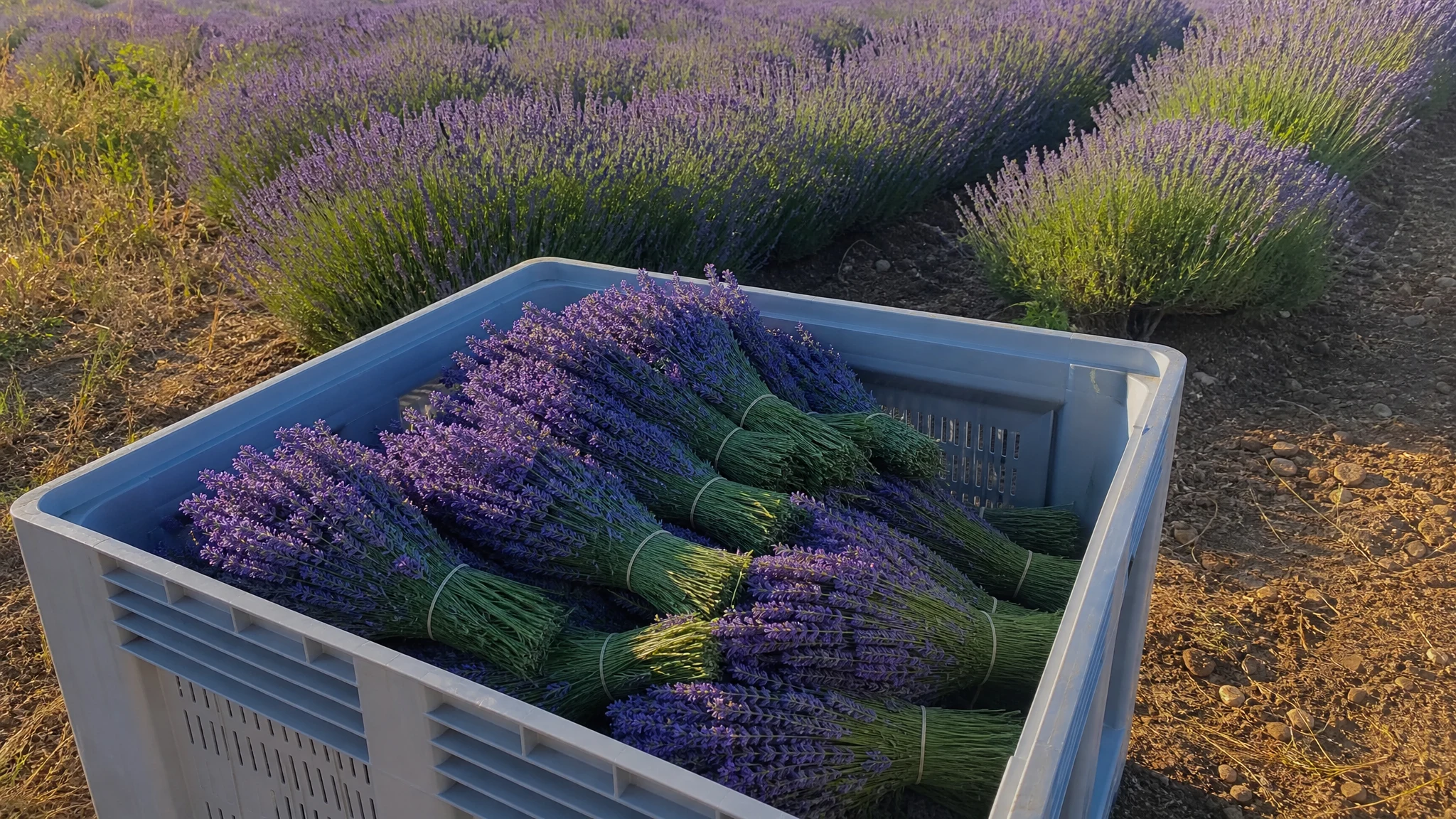
Lavender shortbread, lavender ice cream, a pinch in a sugar jar: cooking with lavender has real charm, and the secret is how little of it you use. Culinary lavender means dried flower buds sold as a food. The essential oil is a different, far more concentrated material, which is why the oils in our shop, sold neat and with cosmetic-style guidance, are not the thing to reach for in the kitchen.
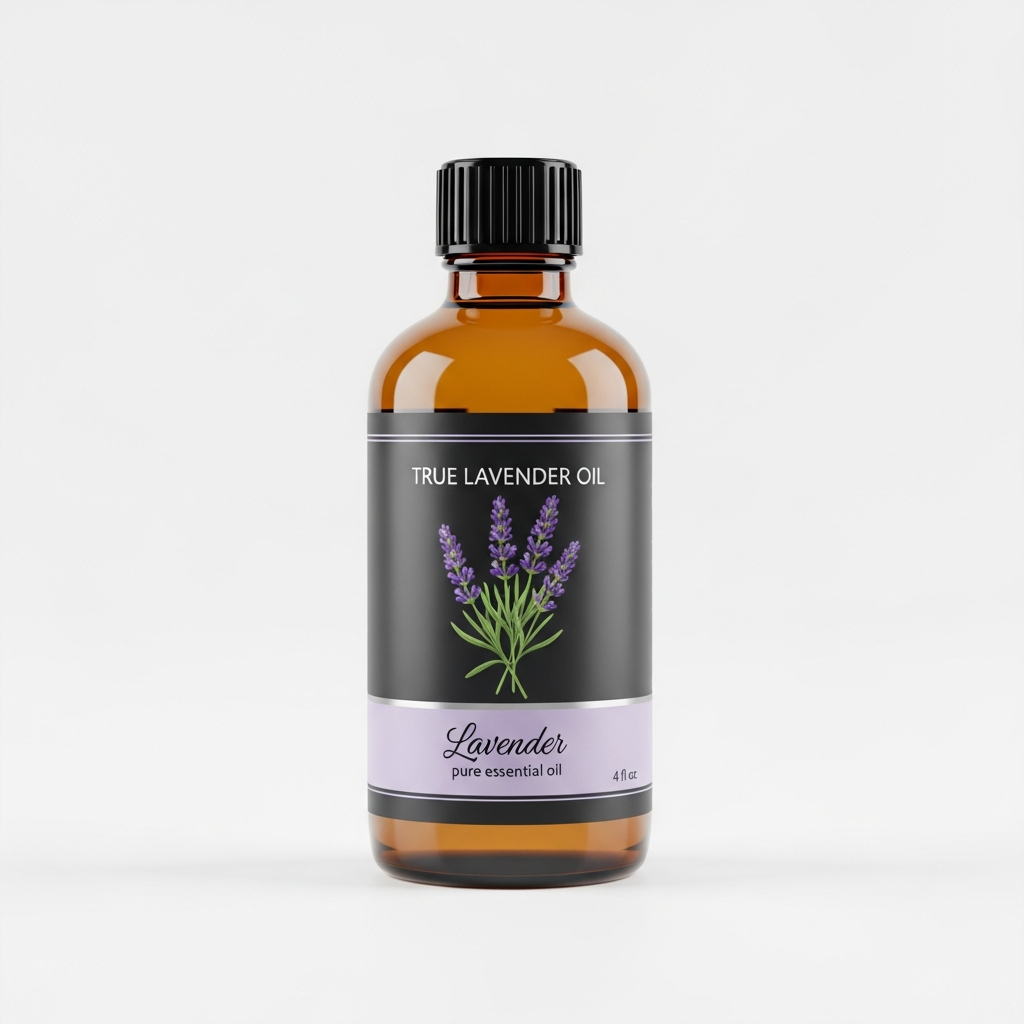
Lavender Essential Oil
Our own Lavender Essential Oil, in sizes from 0.5 oz to bulk.
From $12.99
Shop Now →How little oil is in a batch of shortbread
A 2026 review of culinary lavender (Uçuk et al.) notes that pharmacopoeial dried lavender flowers must contain at least 13 mL of oil per kg, about 1.3%, with typical contents of 1% to 3%. Working through a shortbread example, the authors calculate that 1 to 2 g of dried flowers across 16 to 24 biscuits delivers roughly 13 to 60 mg of oil in the whole batch, or about 0.5 to 4 mg per biscuit, before losses in baking.
Now put a drop of essential oil on that scale. A drop is not a measuring unit, and 20 drops to the millilitre is only a rough convention. As arithmetic, our angustifolia oil's one batch on the Certificate of Analysis we publish shows a relative density of 0.894, so 1 ml weighs about 0.894 g and a single drop about 45 mg. That one drop is already the oil of an entire shortbread batch, and a slip of the bottle puts in several. That is why "just a drop" is not a method, and why we do not point cooks toward our oils.
Why more tastes worse
Lavender fails in the kitchen at the high end. The same review says that too much gives a soapy or perfumed flavour, and that camphor-rich lavandin hybrids do the same. Culinary lavender generally comes from low-camphor Lavandula angustifolia, while L. stoechas, dominated by fenchone and camphor, suits regional teas and syrups more than baking. Our descriptions of spike lavender as sharp and camphoraceous, and of lavandin grosso as camphor-tinged, point the same way: those are not the profiles a baker usually wants.
The practical lesson is to infuse. Warming buds in milk, cream or sugar and tasting as you go gives control that concentrated oil cannot, and fatty, sweet foods soften lavender's edge.
When you pick up a pack of culinary buds, give it a smell and a rub between your fingers. Good buds smell clearly of flowers, not of dust, and they should look dry and whole rather than crumbled to powder. If the scent is faint, expect a faint result and plan on a slightly larger pinch, tasting as you go.
What cooks have really done with it
Lavender's kitchen history is thinner than food blogs suggest. The Foods review finds it plays no meaningful role in the recipes attributed to Apicius, and that dried lavender in herbes de Provence is not a traditional ingredient in authentic French cooking. A review of lavender's archaeological and medicinal legacy (Civilyte et al.) cites Hildegard of Bingen as saying lavender is not meant to be eaten as food. Our history post follows the thread. Modern cooking, from shortbread to gin and desserts, is mostly a recent enthusiasm.
What the safety sources say
The NIH's NCCIH says it is likely safe to consume lavender in the amounts typically used in foods. That sentence is about food amounts, which the arithmetic above shows are milligrams spread through a batch. It is not a statement about a bottle of essential oil. The same page says little is known about lavender in pregnancy or breastfeeding. The National Capital Poison Center warns that essential oils can be poisonous if swallowed or absorbed through the skin, and advises keeping bottles locked up out of the sight and reach of children and pets. Our post on swallowing lavender oil goes further, and anyone with a medical condition or on medication should ask a physician or pharmacist before eating or drinking lavender products.
Easy ways to use buds in a kitchen
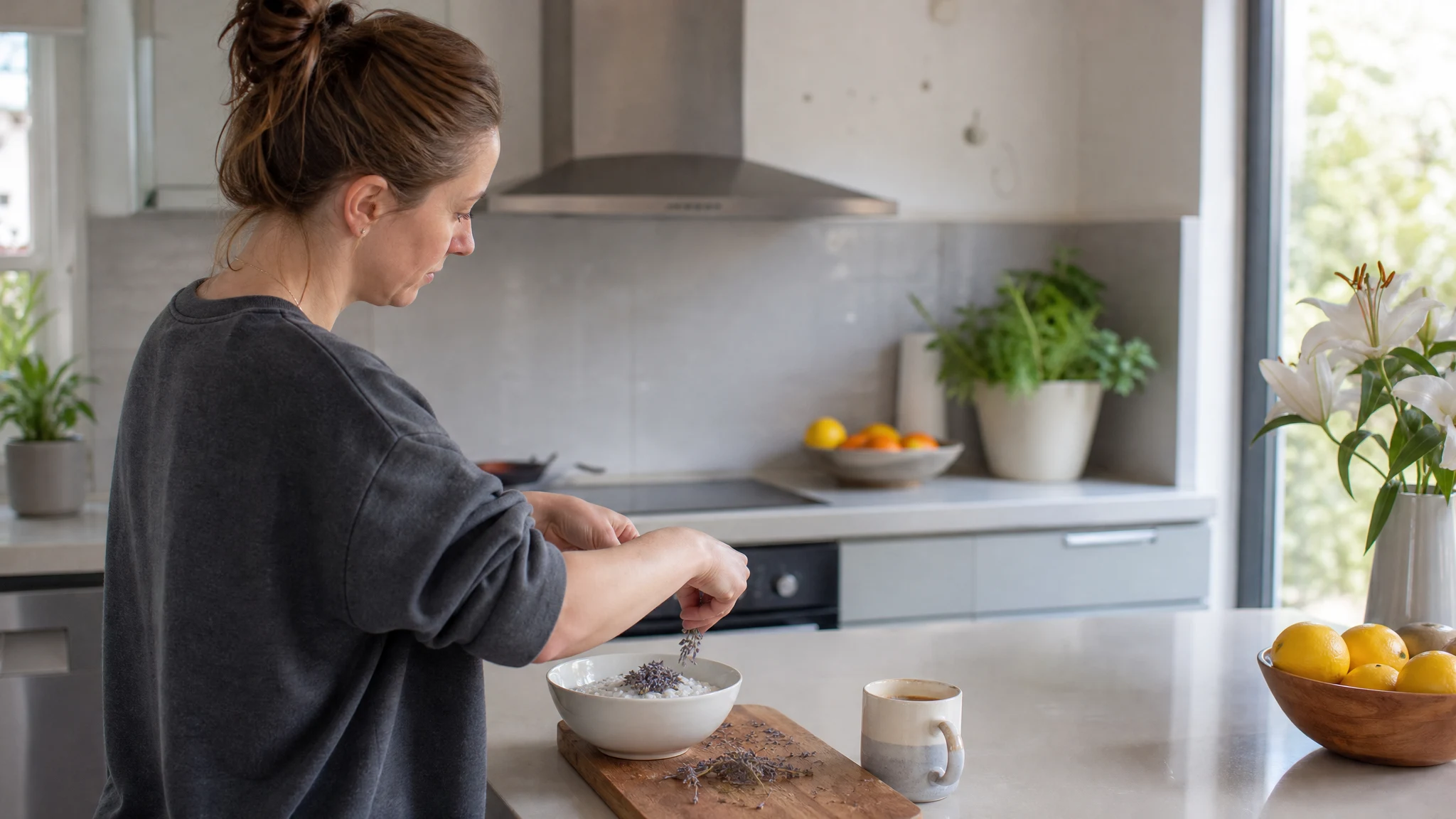
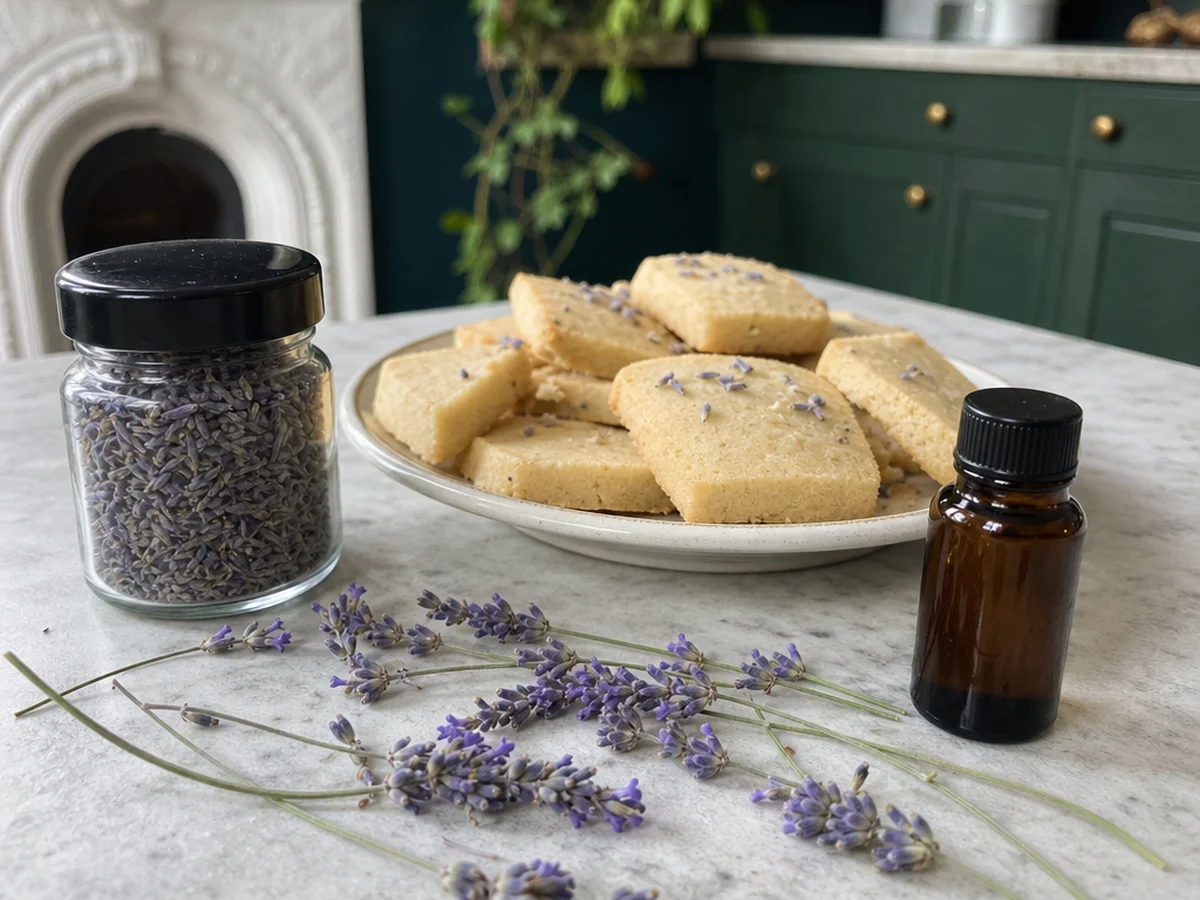
A few simple ideas to start with. Steep a small pinch of buds in warm milk or cream before you make custard or ice cream, then strain them out. Stir a few buds into a jar of sugar and leave it for a week, and you have a lavender sugar for shortbread or the rim of a glass. Add a little to a jar of honey. In each case you are infusing and tasting, not adding something you cannot take back, which is the whole secret of cooking with a strong flavour.
If you want to cook with lavender
Buy dried buds labelled for culinary use, with the species named, from a grocer or food supplier. We do not sell buds or food-grade extracts. Start with a small amount, steep it in something fatty or sweet, and taste before adding more. If you are curious about what makes lavender smell the way it does, our linalool and linalyl acetate post covers the chemistry.
Handling the oil in a kitchen
If you craft with our oils in the kitchen, keep them away from food and bare skin. The Tisserand Institute gives 0.2% to 1% for sensitive skin, 0.5% to 1.2% for facial products and 1% to 3% for body oils. Our guidance is 0.5% to 2% in a carrier, and we start at the lower end. NCCIH notes that topical products containing lavender may cause allergic skin reactions in some people.
Buds make a seasoning and the oil does not. Check the species on the label, and a dish will taste like lavender rather than a cleaning product.
Lavender in the kitchen rewards a light hand and a bit of patience, so start small and let the flavour come up slowly.
Lavender Essential Oil
Lavender Essential Oil from our own shop, in sizes from 0.5 oz to bulk.
From $12.99
Shop Now →Sources & Further Reading
- Uçuk C et al. Considering Culinary Use of Lavender: Sensory and Cultural Factors. Europe PMC 42883678
- Civilyte A et al. From antiquity to modern hygiene: the archaeological and medicinal legacy of lavender as a promising antimicrobial agent. Europe PMC 40529470
- NCCIH. Lavender. nccih.nih.gov
- National Capital Poison Center. Essential oils: Poisonous when misused. poison.org
- Tisserand Institute. Dilution for essential oils. tisserandinstitute.org