Kashmir vs English Lavender: Does a Rare Origin Matter?
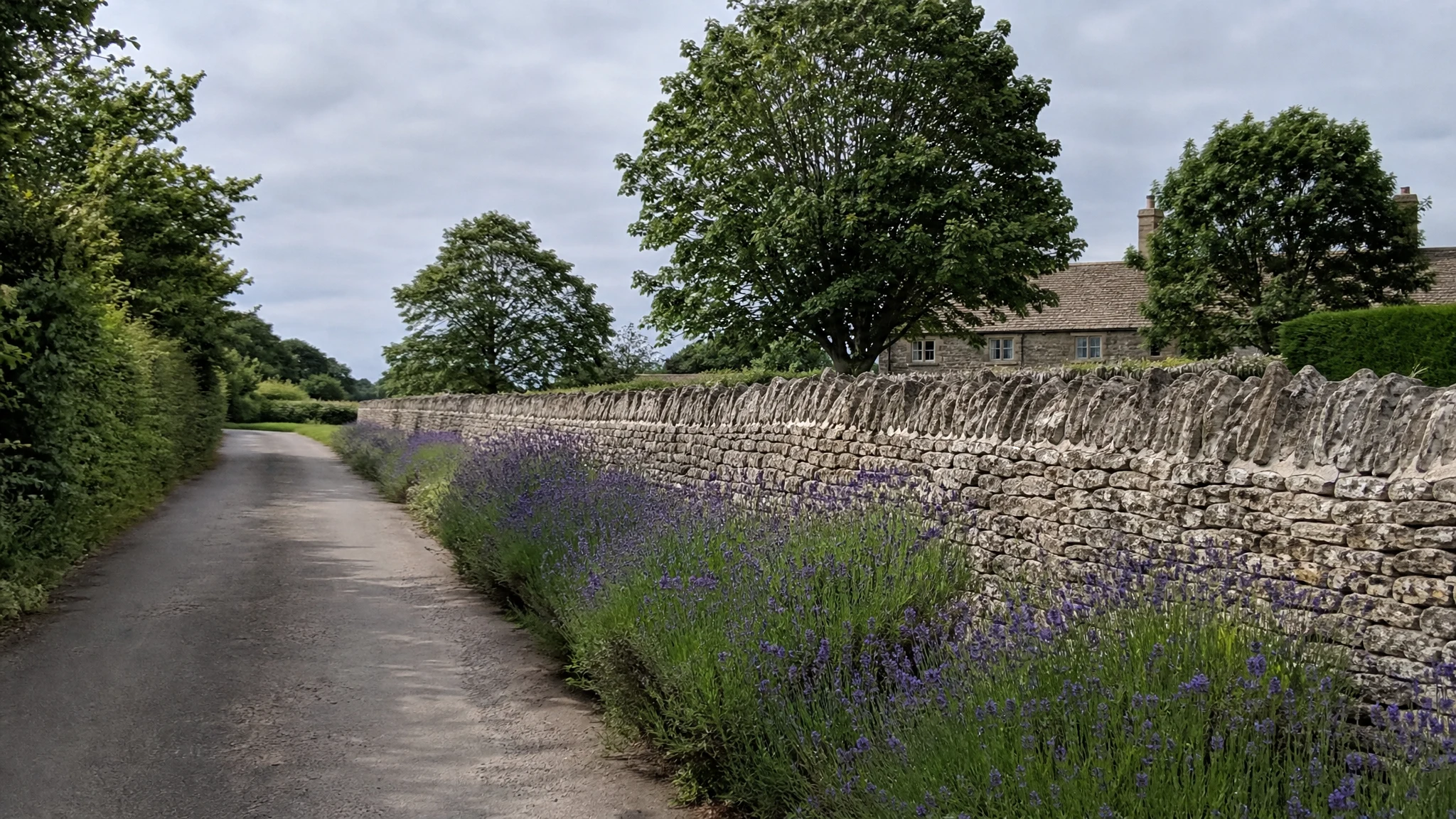
Kashmir lavender and English lavender both have a romantic ring. Fields of purple in the Himalayan foothills, hedgerows in the English countryside: a label that names a place like that promises something different from the usual bottle. It is fair to wonder what the chemistry actually says, and the answer is a pleasant surprise. The rarer origin turns out to be less of a different oil than a different story.
Lavender Essential Oil
Our own Lavender Essential Oil, in sizes from 0.5 oz to bulk.
From $12.99
Shop Now →Kashmir lavender, with Bulgarian roots
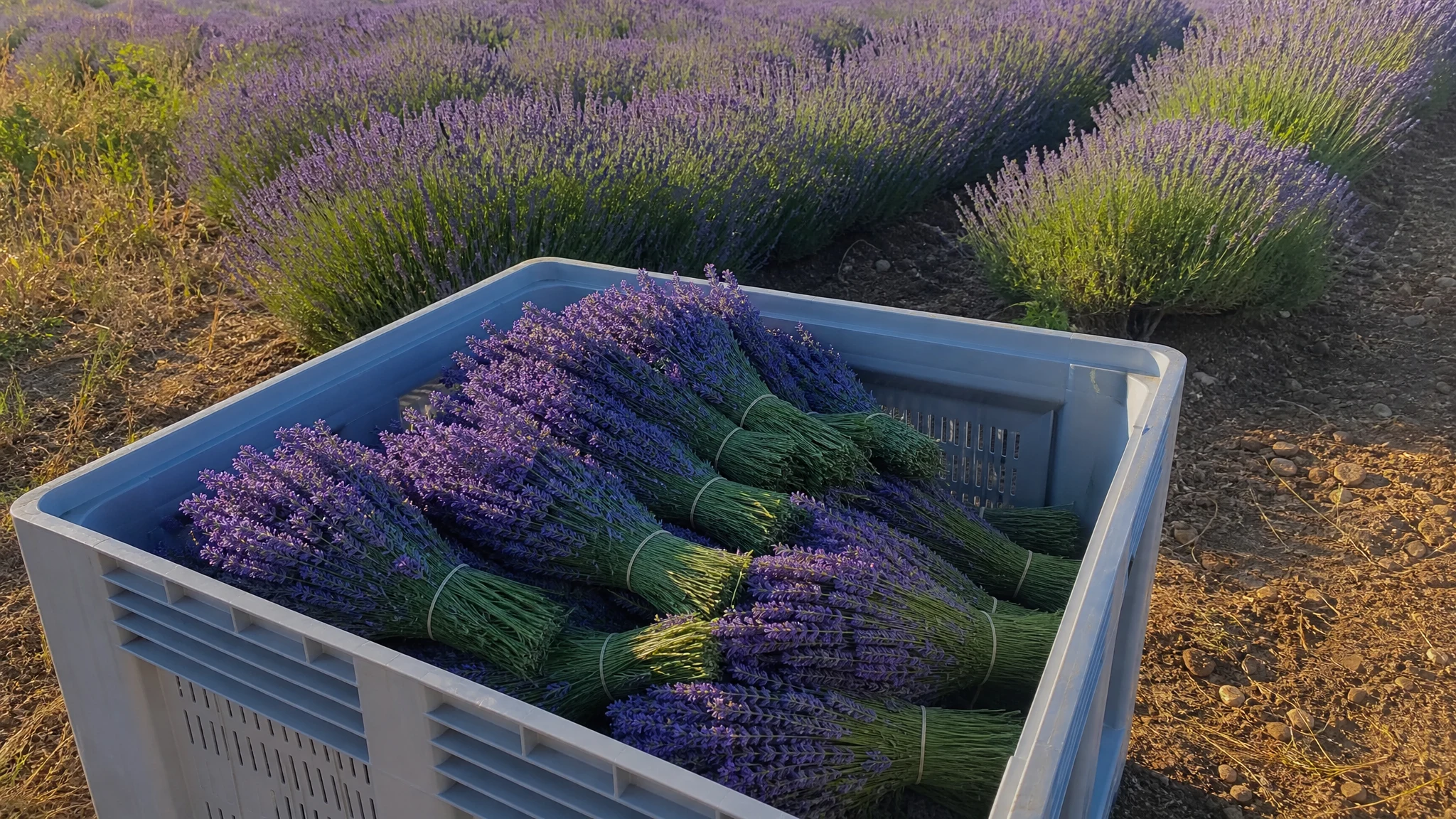
In 2007 Robert Adams and Tonya Yanke of Baylor University compared two Kashmir lavender oils with nine commercial oils bought from vendors in the US and France, using several kinds of gas chromatography. Their opening observation was that true lavender oil was becoming commercially available from Kashmir, and that favorable climate and low labor costs might make it a significant competitor to the historical sources. That is their speculation, but the cultivars are a good clue to what followed. Several of the lavenders introduced to India came from Bulgaria, with names such as Karlovo, Hemus and Kazanluk, along with some Russian and French varieties. One Kashmir cultivar in the study, B-18, has an unknown origin. So "Kashmir" tells you where a crop grows, and the plant itself may have a Bulgarian pedigree.
The result: across all eleven oils, linalool ranged from 27.3 to 42.2 percent and linalyl acetate from 27.2 to 46.6 percent, and eight of the eleven met the European Pharmacopoeia 5.0 standard. The authors concluded that the Kashmir oils were comparable to the other commercial oils, and they judged the Karlovo oil a little better than B-18. Both Kashmir oils were very low in camphor, which the authors link to an excellent fragrance. That fragrance verdict is their opinion rather than a blind panel, but a low-camphor, soft profile is just what many people hope to smell in a true lavender.
English lavender, one batch at a time
For English lavender we could not locate a published survey of English-grown oil, so what we have is one detailed lab report. In 2013 the French laboratory Pyrenessences Analyses reported on a batch of English lavender (Lavandula angustifolia, flower and leaf, batch EL12-318): 44.94 percent linalool, 16.14 percent linalyl acetate and 0.36 percent camphor. Measured against the ISO 3515 standard for lavender from other origins, the lab judged lavandulyl acetate too low and linalool too high, and concluded that the batch did not comply.
It is worth being generous with that result and also precise. It describes one batch in one year. It does not tell you what an English grower's oil looks like in general, and it does not say that English lavender is lesser; it says that this batch had a linalool-forward, low-camphor profile. Chemistry like that can reflect cool growing conditions, harvest timing or distillation choices, and one report cannot separate them. If you enjoy the idea of English lavender, enjoy it, and ask for the analysis that comes with the specific lot.
Why origin is only part of the story
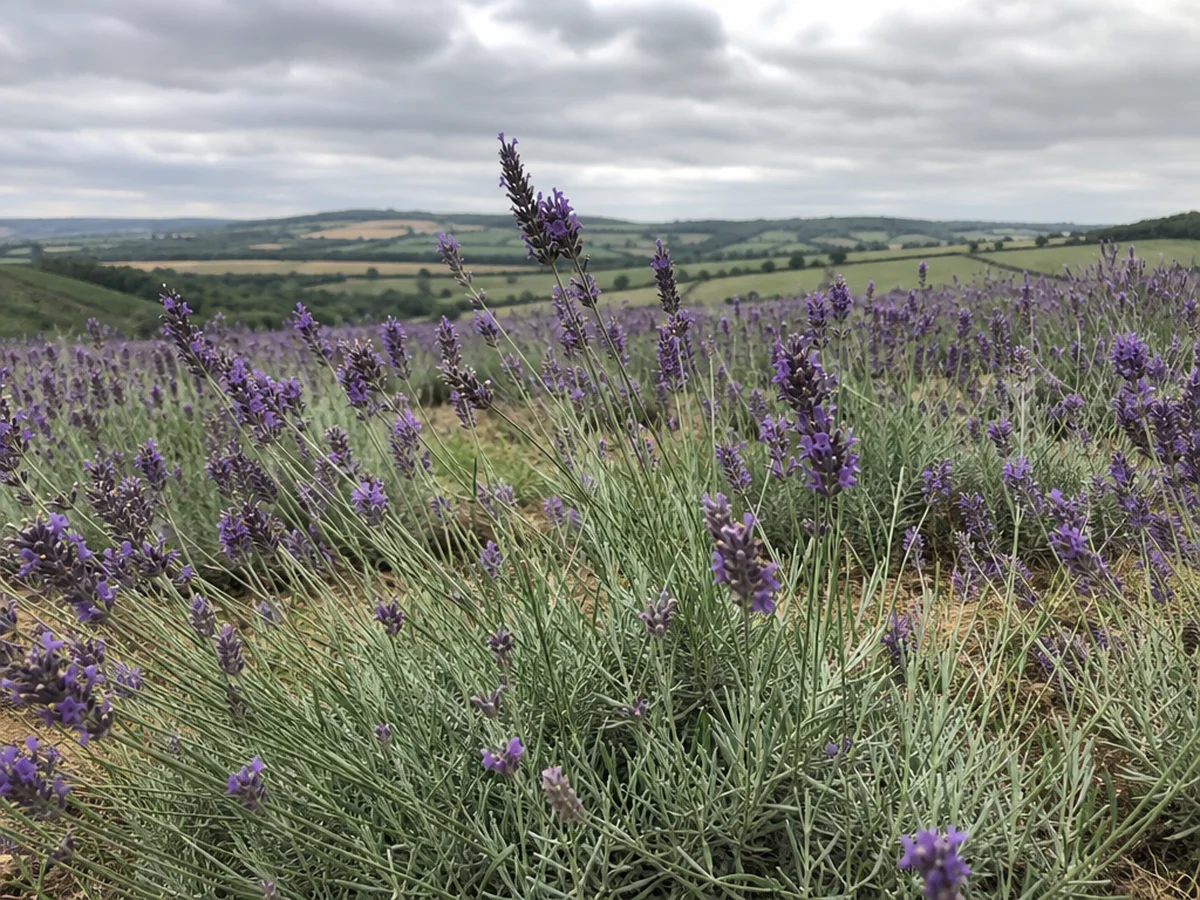
A 2020 study in Plants sampled true lavender at 14 wild sites across its native range and grew the plants side by side in a common garden. It found four distinct chemotypes among three genetic populations, and French populations alone split into two chemotypes. One country, then, can hold more than one profile. Cultivar, harvest stage, distillation and blending all move the numbers around, and the place name on a label cannot capture them.
Adams and Yanke also offered a candid look at the market of their day. They noted that many sellers blend oils from several sources to hit a specification, and quoted a producer who said, "We just use our nose. If it smells like lavender, we sell it." That was a 2007 observation about a handful of sellers and not a current audit, but it explains why a report in your hand tells you more than a flag on the front of the bottle.
Think of lavender in your own garden. Two plants in different corners can smell a little different on a warm afternoon, depending on the sun, the soil and when you pick them. A country is a very large place to squeeze onto a label, and a field is a very small one.
What we would do with this
When a lavender is sold on the strength of a rare origin, we would ask for the lot's GC-MS report and read it against the pharmacopoeia or ISO ranges, which our GC-MS guide walks through. We sell four lavender-family oils, true lavender, lavandin grosso, spike lavender and a trade-grade 40/42. The Certificate of Analysis we publish covers one batch of our true lavender and lists density and refractive index. If you need constituent data, species confirmation or an origin statement for a lot, ask us in writing through the contact page before ordering.
When you meet a place name you do not know, enjoy the curiosity and then do the practical things. Smell the oil next to a lavender you already know and note whether it reads softer, greener or sharper. Write down the species the seller names. A rare origin can be a lovely reason to try a bottle, as long as you are curious about the oil itself rather than counting on the place to vouch for it.
For the wider origin question see our Bulgarian versus French article, and for what lavender smells like whatever the map says, try the scent profile.
A rare origin makes a lovely story for a bottle, and the batch's own analysis is how you find out whether the story and the oil match.
Lavender Essential Oil
Lavender Essential Oil from our own shop, in sizes from 0.5 oz to bulk.
From $12.99
Shop Now →Sources & Further Reading
- Adams RP, Yanke T. A comparison of new Kashmir lavender oils with commercial lavender oils. Perfumer & Flavorist, 2007. perfumerflavorist.com
- Pyrenessences Analyses. Analysis report no. 7946-A, English lavender, batch EL12-318, 2013 (hosted by Nature's Gift). naturesgift.com
- Despinasse Y et al. Structure of the Chemical and Genetic Diversity of the True Lavender over Its Natural Range. Plants (Basel), 2020. pubmed.ncbi.nlm.nih.gov/33255497