How to Read a Lavender GC-MS Report, Step by Step
A GC-MS report looks like a spreadsheet written in another language, but it answers a very ordinary question: what is in this sample, and how much of each thing? Once you know the four things to look at, a lavender report stops being intimidating and starts being a useful way to ask a seller good questions.
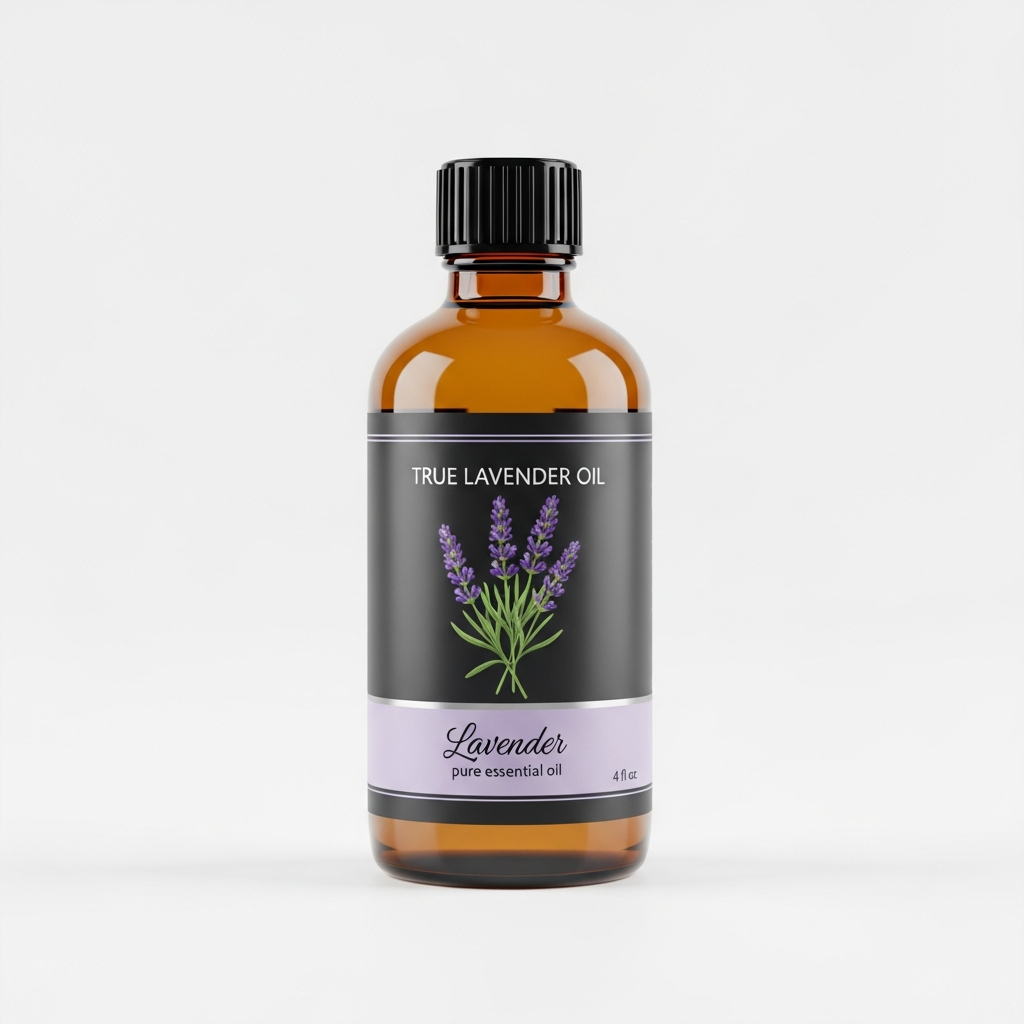
Lavender Essential Oil
Our own Lavender Essential Oil, in sizes from 0.5 oz to bulk.
From $12.99
Shop Now →What the numbers are
Gas chromatography separates an oil into its individual aroma compounds, and mass spectrometry identifies them. The report lists each compound as a percentage, and in routine work those are normalised percentages of the volatile peaks. So a report tells you the balance of compounds in one sample. By itself it does not tell you whether the oil is good, only how that balance compares with whatever standard you hold it against.
The compounds worth knowing
Two compounds define lavender: linalool and linalyl acetate. The European Pharmacopoeia range for true lavender oil is 20 to 45% linalool and 25 to 47% linalyl acetate, and the ISO 3515 standard sets narrower ranges by origin. Linalool, for example, runs 25 to 38% for French lavender grown from seed and 22 to 34% for Bulgarian. Camphor is the compound to watch for species. The pharmacopoeia limit for true lavender is below 1.2%, while lavandin carries 2 to 33% camphor, most often 5 to 10%, according to a 2023 review. 1,8-cineole is a second marker, below 2.5% in the pharmacopoeia table.
That does not make a higher-camphor oil a bad oil. It makes it a different oil, which is why lavandin grosso and spike lavender have their own place in our range, and why the report has to match the oil you are buying. A published range for angustifolia tells you nothing about our lavandin grosso, and the other way round.
Read it in this order
- Is it this lot? A report describes one sample, so the batch number on the report should match the one on the bottle you receive.
- Who ran it, and how? A named lab, a method and a date let you check the report. A table of percentages with none of these is hard to rely on.
- Which standard, and are the limits printed? Good reports print the limit beside the result. If not, you have to look up the right one yourself, and as the ISO tables show, ranges differ by origin.
- Is there a chiral run? This is the check a basic report skips, and it earns its place below.
If you only remember one thing from the list, make it the first question. A report that describes a different lot, or a different oil, tells you about something other than the bottle in your hands, however good the numbers look.
Why the chiral column matters
Linalool and linalyl acetate each come in two mirror-image forms. Natural lavender is overwhelmingly one form, and the pharmacopoeia limits the other: (S)-linalool at a maximum of 12%, (S)-linalyl acetate below 1%. Synthetic versions are a mixture of both. A 2021 study took genuine lavender oil and added 27% synthetic linalool and linalyl acetate. The (S)-linalool share jumped from 6.2% to 33.6% and the (S)-linalyl acetate share from 0.6% to 19.6%, both well past the limits, so a chiral analysis made the addition obvious.
The same study tested dilution with sunflower oil, and the result is a good reason to read reports with care. Because a vegetable oil changes neither the qualitative composition nor the normalised percentages, the standard percentages stay put, and an absolute quantitative analysis is needed to find it. That is why a report with tidy percentages is a good sign without being a guarantee. If you are buying in volume and a seller can provide chiral data, it is worth asking for.
Questions to write down before you ask
It is much easier to get a useful answer if you ask clear questions. Before you write to any seller, make a short list:
- Which oil and which species is this report for?
- Which lot does it describe, and does it match the bottle I will receive?
- Which laboratory ran it, with what method, and on what date?
- Which standard are the results compared against, and are the limits printed?
- Is there a chiral run, if I need one?
Keep the report somewhere you can find it, next to your notes for the project. Months later, when you want to remember which lavender went into which batch, a labelled report is worth far more than a memory.
A clear, polite question tends to get a clearer answer than a vague one, and a good seller will not mind being asked.
What our certificate is
The certificate we publish for one batch of our angustifolia oil is not a GC-MS report. It lists appearance, smell, relative density (0.894) and refractive index (1.458), and carries no constituent percentages. We have no published certificate for our lavandin grosso, spike lavender or 40/42. If you need GC-MS data for your lot, ask us in writing through the contact page before ordering, then compare it with the ranges above. Our post on linalool and linalyl acetate and our glossary fill in the background, and our buying guide shows how a report fits into choosing an oil.
The point of reading a report is not to hunt for a flawless oil. It is to know which questions the page answers and which it leaves open.
Lavender Essential Oil
Lavender Essential Oil from our own shop, in sizes from 0.5 oz to bulk.
From $12.99
Shop Now →Sources & Further Reading
- Crisan I et al., 2023. Current Trends for Lavender (Lavandula angustifolia Mill.) Crops and Products with Emphasis on Essential Oil Quality. Plants.
- Capetti F et al., 2021. Adulteration of Essential Oils: A Multitask Issue for Quality Control. Three Case Studies: Lavandula angustifolia Mill., Citrus limon (L.) Osbeck and Melaleuca alternifolia (Maiden & Betche) Cheel. Molecules.
- Lavandula × intermedia - A Bastard Lavender or a Plant of Many Values? Part I. Biology and Chemical Composition of Lavandin. Molecules, 2023.