How to Buy Lavender Oil: Species First, Then Paperwork
Walk through any listing for lavender oil and the adjectives pile up: pure, natural, premium, therapeutic. None of them tells you what you most want to know, which is which lavender is in the bottle. A better way to shop is to ask for things a seller can show you, and to read them in a particular order.
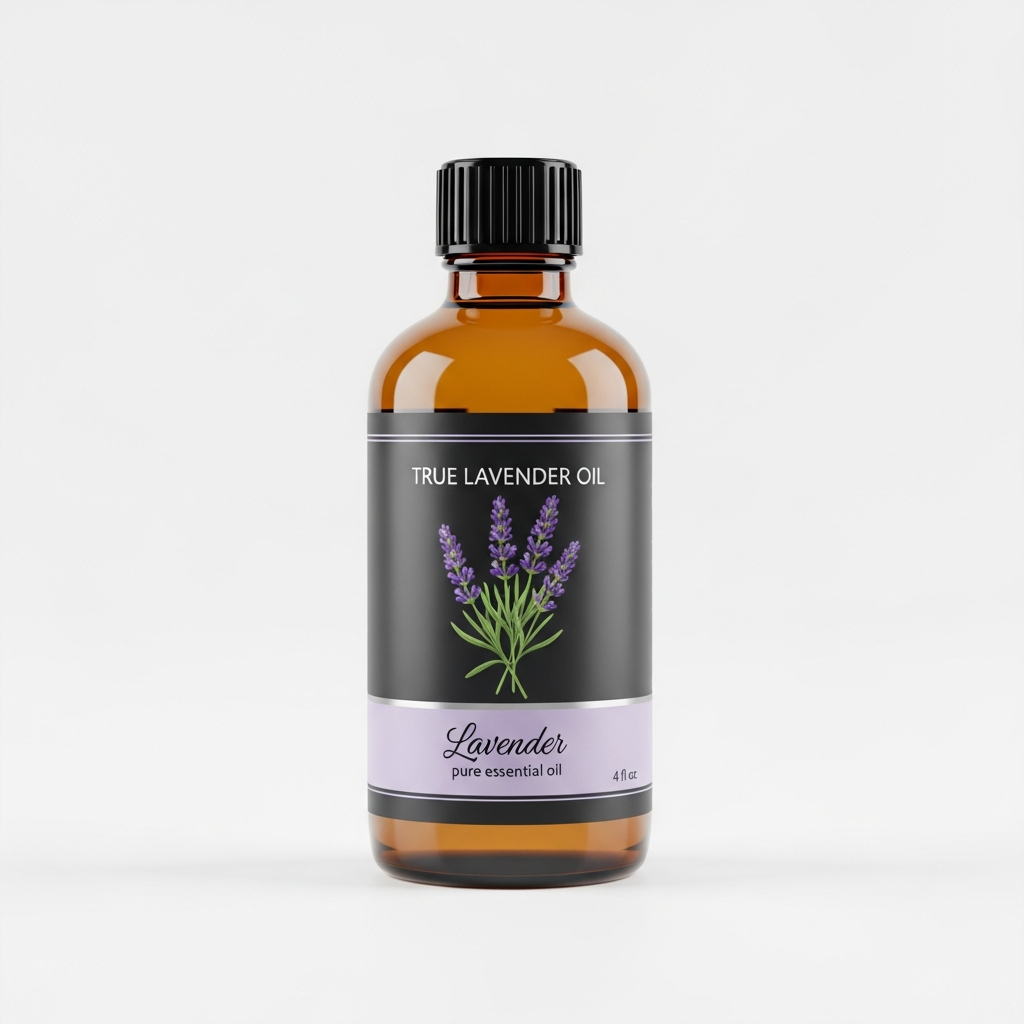
Lavender Essential Oil
Our own Lavender Essential Oil, in sizes from 0.5 oz to bulk.
From $12.99
Shop Now →First, the species name
"Lavender oil" can mean true lavender (Lavandula angustifolia), spike lavender (L. latifolia) or lavandin, the sterile hybrid of the two. They are different oils with different scents, and the price gap is real: a 2023 review says lavandin oil is several times cheaper than true lavender oil and is often used as a replacement for it, or even to adulterate it. A listing that gives only "lavender," or a trade code, has not told you the species.
That is why we name them. We sell four lavender-family oils: true lavender (angustifolia), lavandin grosso (Lavandula hybrida), spike lavender (L. latifolia) and an oil sold under the trade name 40/42, whose page says the exact species is not specified and asks you to contact us before ordering if identity matters to you. Asking in writing, and keeping the answer in writing, is good practice with any seller. Our glossary lists the names you will meet.
Smell it when it arrives
Paperwork is only half the picture, and your nose is the other half. When the bottle comes, put a drop on a paper strip and smell it in a well-ventilated room. Our angustifolia oil is described as soft, floral and gently herbaceous, while spike lavender is sharp and camphoraceous with little sweetness. If the oil in your hand reads quite differently from the description of what you ordered, write to the seller and keep the answer. Smelling a few different lavenders side by side, even in small sizes, trains your nose faster than any article can.
Then, a report for the batch you are buying
Poison Control points out that essential oil products are not well regulated, so it can be hard to know exactly what is in the bottle: which species, what concentration, whether there are contaminants. The FDA adds that a plant origin does not by itself make an ingredient safe. A batch report is the seller's way of answering those questions with something other than adjectives.
It helps to know what a report can and cannot catch. A study that built reference profiles from twenty genuine lavender batches then adulterated oil on purpose. Spiking an oil with 27% synthetic linalool and linalyl acetate pushed the (S)-linalool share from 6.2% to 33.6%, far over the pharmacopoeia maximum of 12%, and a chiral analysis showed it plainly. Diluting oil with sunflower oil at 5% to 50% was subtler still, because it changes neither the qualitative composition nor the normalised percentages, so an absolute quantitative analysis is needed. The Pharmacopoeia test for fatty oils is simple: put a drop on filter paper and see whether a translucent spot remains after 24 hours. Our guide to reading a GC-MS report goes through the columns.
Our own checks, reasoned from that, are: the batch on the report should match the bottle you receive, the report should be for the same oil you are buying, and a report that names its lab, method and date is easier to rely on than one that does not.
What our certificate covers
We publish a certificate of analysis for one batch of our angustifolia oil. It lists appearance, smell, relative density (0.894) and refractive index (1.458). It does not carry constituent percentages, chiral data or origin, and it does not cover our lavandin grosso, spike lavender or 40/42. If you need a GC-MS report, species confirmation, origin, an allergen declaration, an IFRA certificate or a safety data sheet, ask us in writing through the contact page before ordering. We would rather you ask than assume.
Small bottle or large?
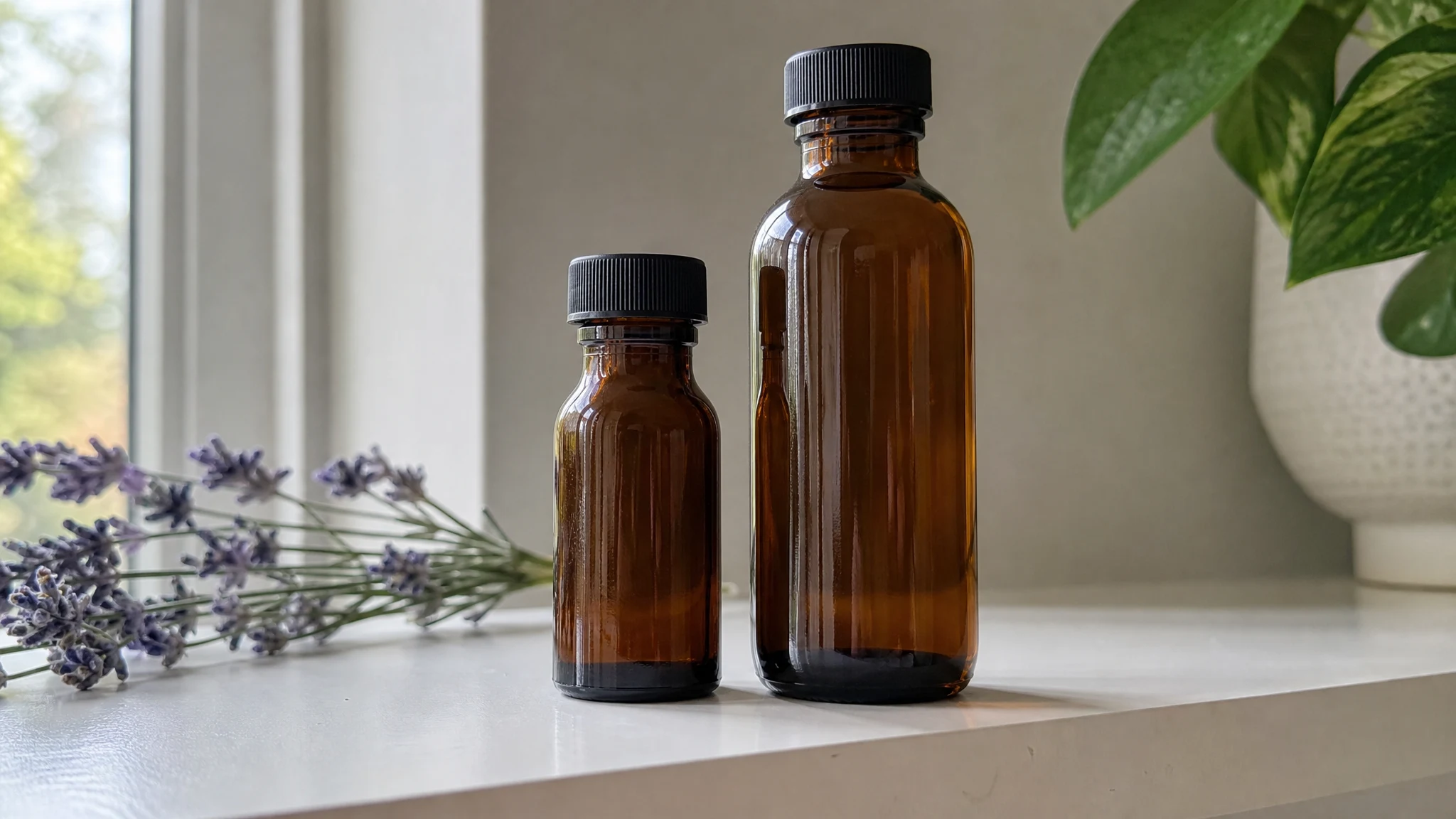
If you have never used lavender oil, a small size is a sensible start: you can smell it, decide whether it suits you, and come back for more. Our retail sizes run from half an ounce up to 16 oz, and larger lots are sold by the pound. Bigger sizes make sense once you know how fast you use an oil, because a bottle you open rarely lasts longer than one you open every day. Whatever you choose, store it capped, cool and dark.
Price tells you something, too
Because lavandin yields so much more oil per hectare than true lavender, a very low price for something called lavender is a question worth asking the seller about, not a verdict. Our guide to why lavender oils cost different amounts explains what drives the difference. For current prices on our own oils, see the shop page.
If you are buying with a particular outcome in mind, remember the FDA classes claims about anxiety, depression or sleep as drug claims, and our map of the research shows what studies on lavender actually tested. For a household with pets or small children, read the poison-centre advice before the bottle arrives.
So here is the short version of how we would shop: find the species name, ask for the batch report in writing, and let the adjectives take care of themselves.
Shopping for lavender is easier when you slow down a little. Keep a note of the species, the batch and the date, and next time you will know exactly what to ask for.
Lavender Essential Oil
Lavender Essential Oil from our own shop, in sizes from 0.5 oz to bulk.
From $12.99
Shop Now →Sources & Further Reading
- Poison Control. Essential oils: Poisonous when misused.
- FDA. Aromatherapy.
- Lavandula × intermedia - A Bastard Lavender or a Plant of Many Values? Part I. Biology and Chemical Composition of Lavandin. Molecules, 2023.
- Capetti F et al., 2021. Adulteration of Essential Oils: A Multitask Issue for Quality Control. Three Case Studies: Lavandula angustifolia Mill., Citrus limon (L.) Osbeck and Melaleuca alternifolia (Maiden & Betche) Cheel. Molecules.