Lavender Oil Sizes: Which Bottle to Order First
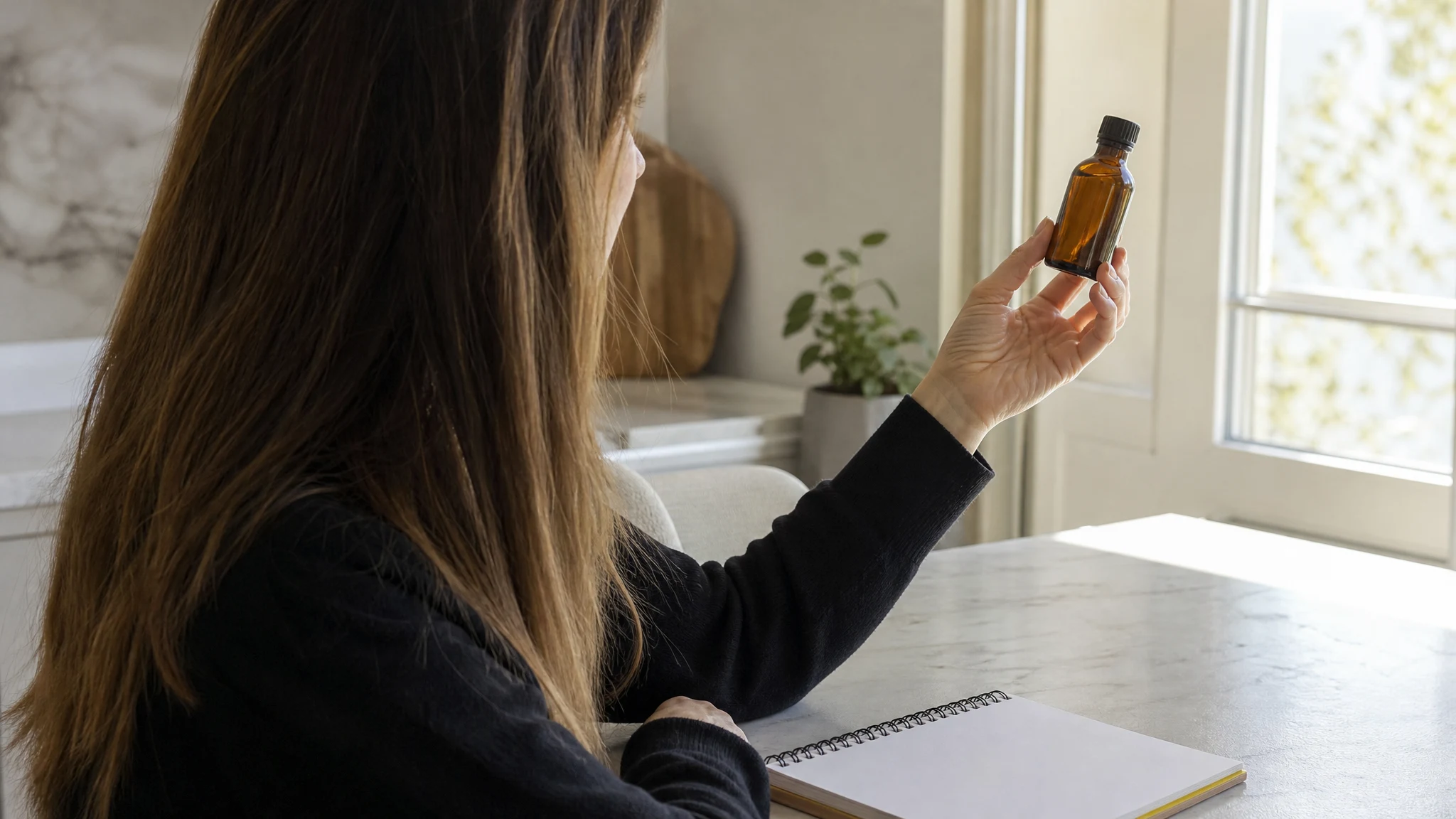
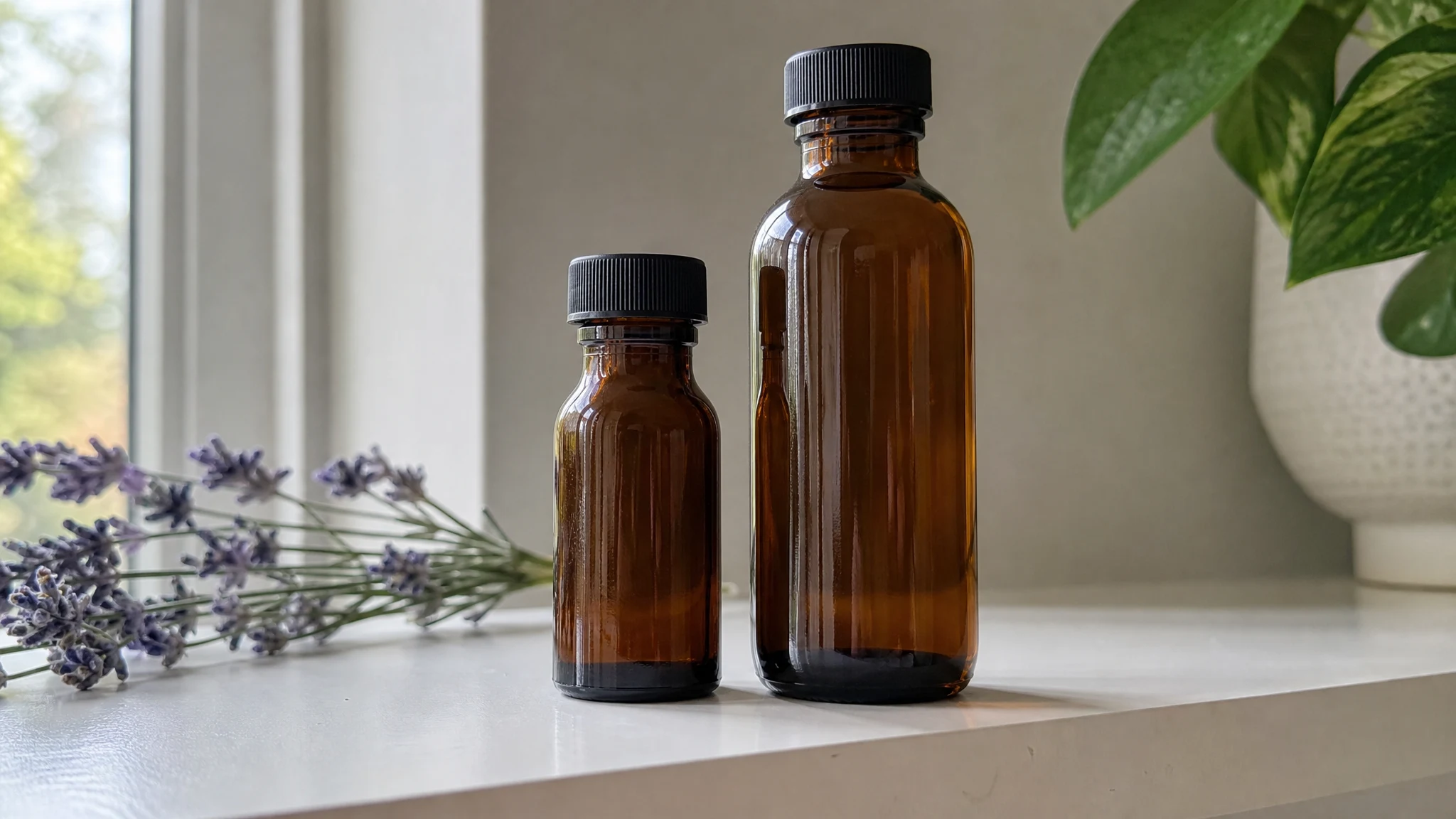
Our advice for a first order is simple: choose the smallest bottle that covers the project in front of you. Money is part of it, but not the biggest part. Lavender oil changes once air gets into the bottle, so a bottle you finish while it is fresh serves you better than a large one that lingers. We sell four lavender-family oils in ten sizes, from 0.5 oz up to 400 lb, and here is how we would work out which one suits you.
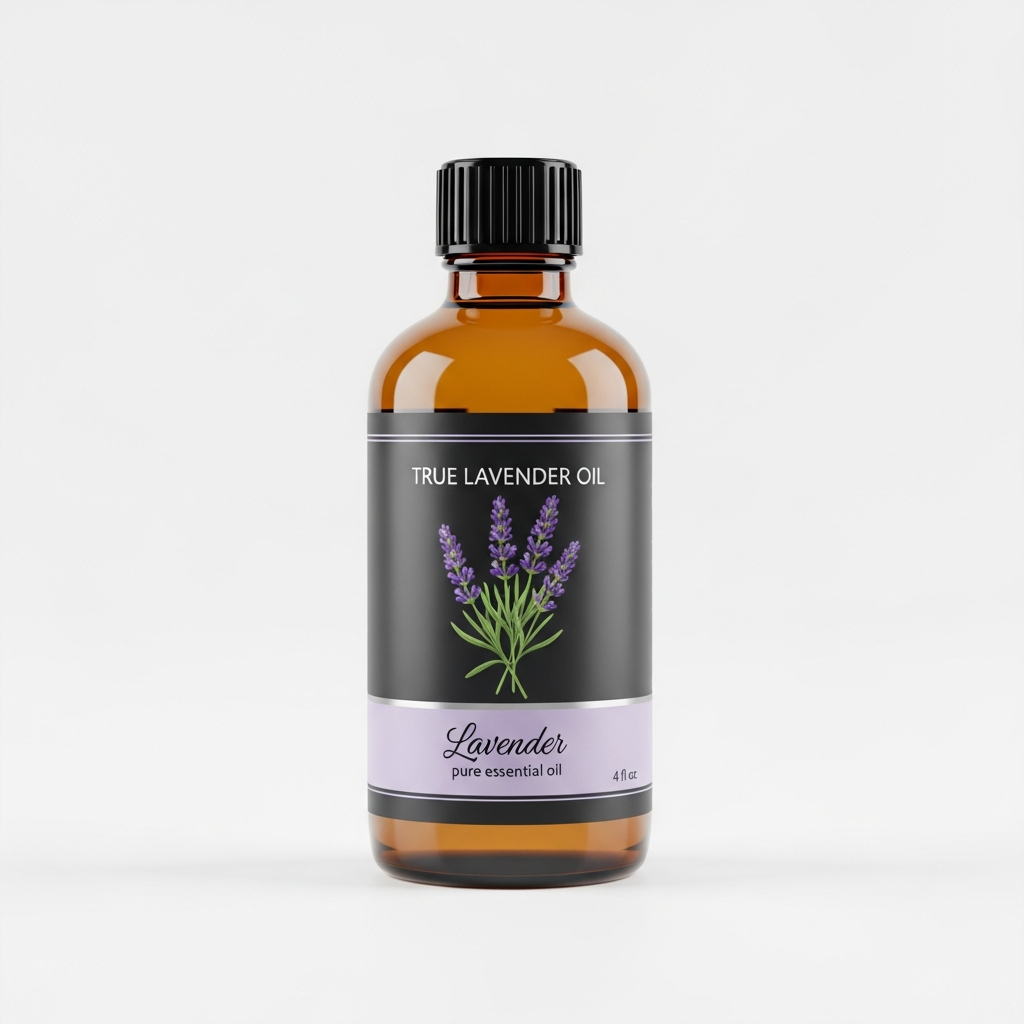
Lavender Essential Oil
Our own Lavender Essential Oil, in sizes from 0.5 oz to bulk.
From $12.99
Shop Now →Why freshness favours small bottles
In a 2008 study, air-exposed lavender oil was followed by chemical analysis: its main compounds oxidised at the same rate as the isolated compounds, and the oil's skin-sensitising potency, measured in mice, increased accordingly (Hagvall et al.). A companion study on linalyl acetate, the main ester in the oil, found high-purity material had weak sensitising potency (EC3 25%), while a sample oxidised for 10 weeks reached EC3 3.6% (Sköld et al.). A lower EC3 means a stronger sensitiser, so that is about a sevenfold shift.
Those were laboratory exposures and mouse assays, not a kitchen cupboard, so they do not tell us how fast any bottle changes at home. The practical reasoning is ours: each time a bottle is opened, some of the oil is replaced by air, and a large bottle used slowly is opened far more often than a small one emptied quickly. Our oils are typically stable 2 to 3 years unopened if kept in a cool, dark cabinet, and our storage guide covers the rest.
Turning a project into millilitres
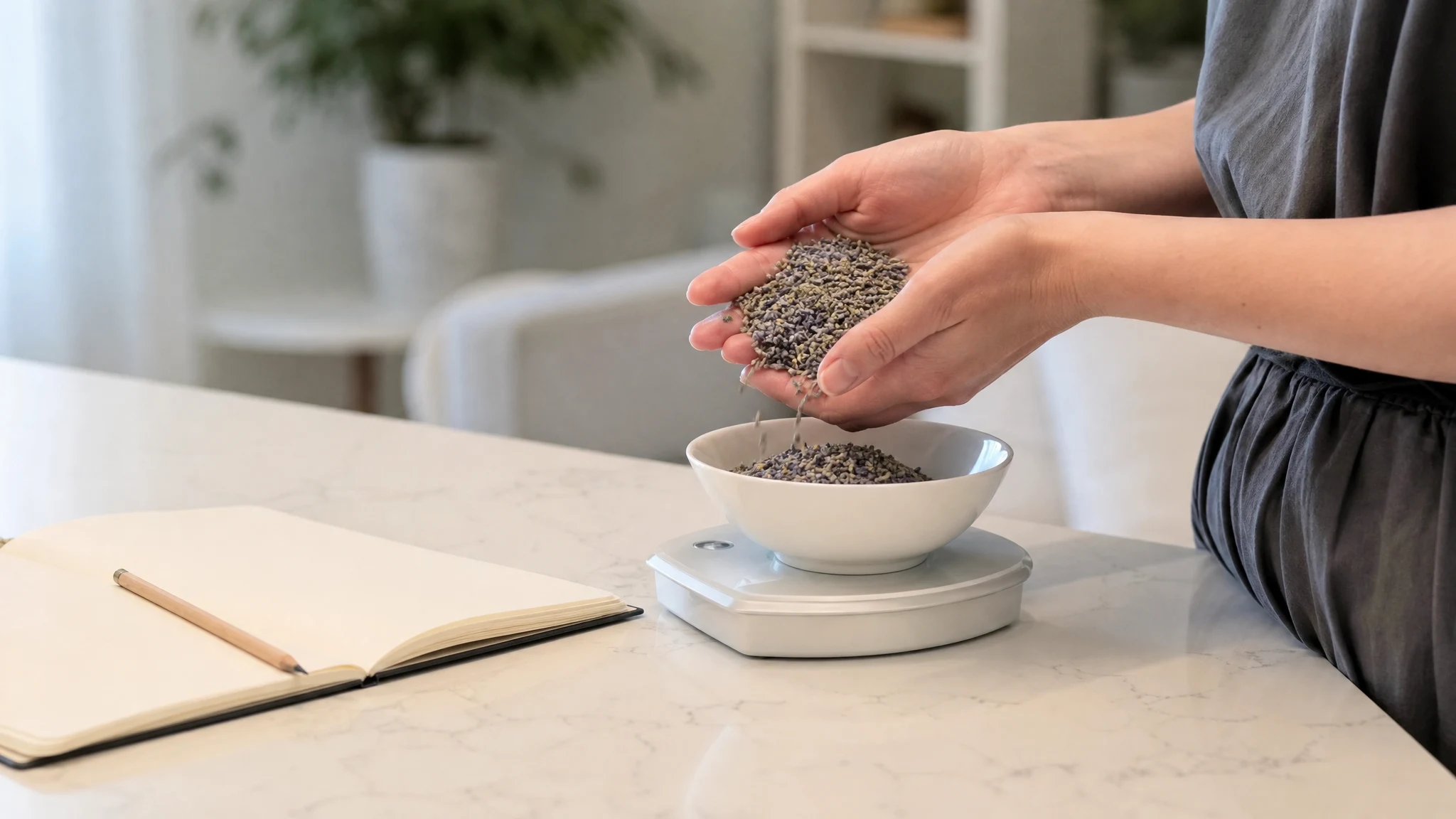
Sizes make more sense in use. This table assumes our dilution range of 0.5% to 2% (about 3 to 12 drops per ounce of carrier), 1 oz = 29.57 ml, and treats the bottle ounce as a fluid ounce. The oil's volume barely changes the carrier total, so we ignore it.
| Bottle (oz) | Oil (ml) | 1 oz batches at 2% | 1 oz batches at 0.5% |
|---|---|---|---|
| 0.5 | 14.8 | 25 | 100 |
| 1 | 29.6 | 50 | 200 |
| 2 | 59.1 | 100 | 400 |
| 4 | 118.3 | 200 | 800 |
| 8 | 236.6 | 400 | 1,600 |
| 16 | 473.2 | 800 | 3,200 |
One batch is 29.57 ml of carrier with 0.59 ml of oil at 2%, or 0.15 ml at 0.5%. Read the first row plainly: our smallest bottle already holds enough for 25 one-ounce bottles of a 2% blend. A single body oil or a handful of gifts will not come near the end of it, which is why one of the two smallest sizes is the natural first order for personal use.
The pound sizes belong to production runs. The one density we can quote is 0.894, from the one batch on the Certificate of Analysis we publish for the angustifolia oil, and it is not available for the other three. On that figure, 1 lb (453.6 g) is about 507 ml, so 5 lb is roughly 2,540 ml. If that is your scale, our bulk page covers the larger sizes, and it suggests decanting working amounts into smaller airtight glass bottles rather than opening the big container each time.
Choose the oil before the size
Size is the second decision. The first is which of the four oils you want, since they are different materials. The angustifolia oil is soft and floral with a clean, sweet finish. Spike lavender is sharp, camphoraceous and herbaceous with a green, less sweet character. Lavandin grosso has a camphor-tinged lift. The fourth, sold under the trade name 40/42, is smooth, sweet and floral-herbaceous, and its page does not state the species, so contact us before ordering if identity matters to you.
The published chemistry explains why they differ. A 2023 review of lavandin reports camphor in lavandin oils ranging from 2% to 33%, most often 5% to 10% (Pokajewicz et al.). That is a literature range for lavandin in general, not a figure for our bottle. For a first order we suggest a half-ounce or one-ounce bottle of whichever description matches the scent you want, and then see how you get on. Our true, spike and lavandin guide goes deeper. If you are making something to sell, tell us in writing through our contact page what you need confirmed, whether species, GC-MS, an allergen declaration, IFRA or a safety data sheet, and rely on the written answer before ordering. The Certificate of Analysis we publish covers one angustifolia batch, listing appearance, smell, density and refractive index.
A small habit that helps
Whichever size you choose, put a small sticker on the bottle with the date you opened it. It is a thirty-second job and it means you never have to wonder how long a bottle has been in the cupboard. Keep the cap tight, store it somewhere cool and dark, and use the oldest bottle first. A tidy cabinet with a date on each bottle is the quiet secret of people who never run out and never waste anything.
What a bigger bottle means at home
A larger bottle is also a larger quantity of undiluted oil in the house. Our oils are sold neat, so the dilution is yours to make, and neat oil is 50 times the 2% top of our range (100 divided by 2). The National Capital Poison Center advises locking essential oils away, out of the sight and reach of children and pets. We say the same: keep them away from eyes, children and pets, and avoid internal use. A 16 oz bottle in a home with a toddler is a bigger responsibility than a half-ounce one. For why we do not suggest skipping dilution, see using lavender neat, and for allergy numbers, our patch test post.
So smell the small bottle first, work out your dilution from the table, and step up a size only when the last one is nearly gone.
Lavender Essential Oil
Lavender Essential Oil from our own shop, in sizes from 0.5 oz to bulk.
From $12.99
Shop Now →Sources & Further Reading
- Hagvall L et al. Lavender oil lacks natural protection against autoxidation, forming strong contact allergens on air exposure. Europe PMC 18759894
- Sköld M, Hagvall L, Karlberg AT. Autoxidation of linalyl acetate, the main component of lavender oil, creates potent contact allergens. Europe PMC 18154552
- Pokajewicz K et al. Lavandula x intermedia-A Bastard Lavender or a Plant of Many Values? Part I. Biology and Chemical Composition of Lavandin. Europe PMC 37049706
- National Capital Poison Center. Essential oils: Poisonous when misused. poison.org