Is Neat Lavender Oil Okay on Skin? Why We Dilute
Plenty of people will tell you they have dabbed neat lavender oil on their skin for years without a problem, and plenty of people will tell you never to do it. We land in the middle with a practical answer: we dilute first, every time, and we think the reason is more interesting than a simple warning label. With lavender, the question is less about what happens today and more about what happens to your skin's memory over months.
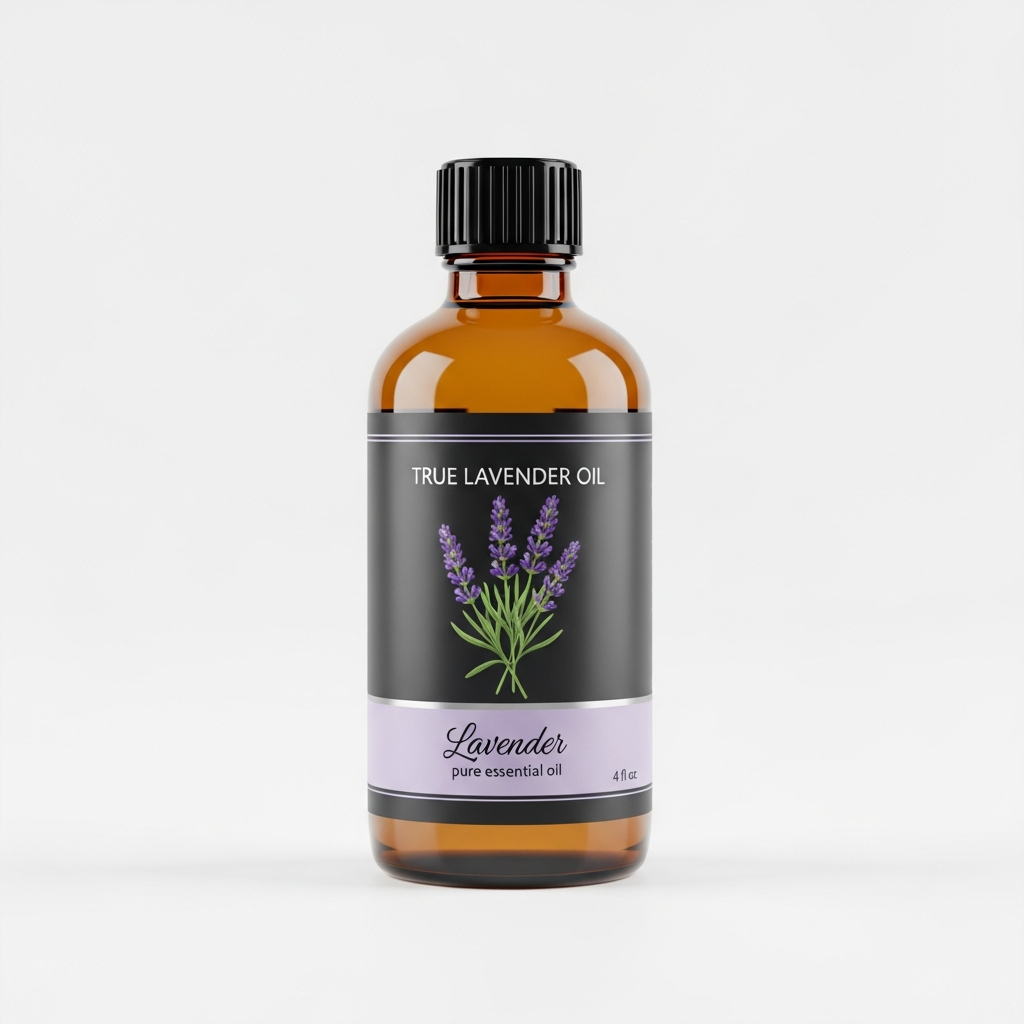
Lavender Essential Oil
Our own Lavender Essential Oil, in sizes from 0.5 oz to bulk.
From $12.99
Shop Now →Lavender is beloved, and it has one quirk
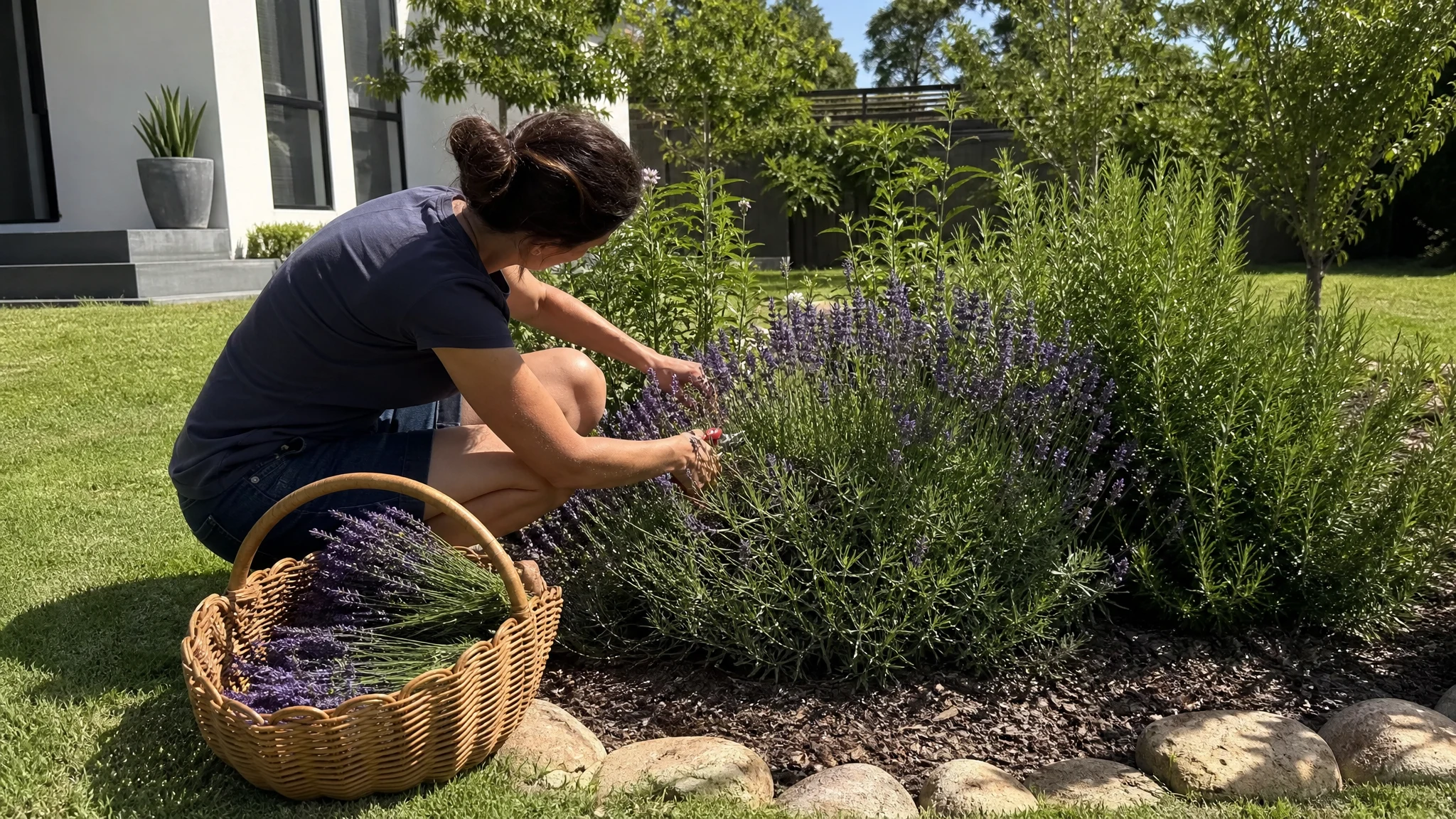
Lavender is one of the most widely used fragrance oils in the world, and most people never have a bit of trouble with it. The quirk is chemistry. Its two main components, linalool and linalyl acetate, react with oxygen once the oil is exposed to air. In a study of air-exposed lavender oil, the terpenes oxidized at the same rate as the pure compounds did, and the oil became a stronger skin sensitizer in mice as it aged (Hagvall et al., 2008). Sensitizing means an immune-type reaction that can build with repeat exposure rather than a one-time sting, so a skin test on day one cannot promise anything about month six.
That is the whole case for dilution in one idea. Diluting lowers how much oil touches your skin each time, and a fresh bottle that is kept capped has less oxidized material in it to begin with. Neat application gives you the most oil per contact and the most contacts, which is exactly the combination you do not want if you are trying to keep skin comfortable with lavender for the long haul.
What the clinic numbers tell us, and what they do not
You may have seen figures from patch-test clinics. An Australian review of patients tested with lavender over 25 years found that 2.2% had a positive reaction, and the authors concluded lavender is an uncommon cause of allergic contact dermatitis, but one worth knowing about because it turns up in so many personal care products and essential oils (Bingham et al., 2019). A Swedish team testing oxidized lavender oil found 2.8% positive, and noted that testing the main sensitizers alone missed a share of cases (Hagvall and Christensson, 2016).
Keep these in perspective. They come from people who were sent to a dermatology clinic because they already had a suspected skin problem, so they are not a rate for everyone. We read them as a reminder of the mechanism, not as a reason to be afraid of a lovely oil. The US National Center for Complementary and Integrative Health puts the practical takeaway simply: topical lavender products may cause allergic skin reactions in some people (NCCIH).
What dilution looks like in the kitchen
Our own dilution guidance for skin is 0.5% to 2% in a carrier oil, with a patch test first. The lower end is where we like to start for leave-on products, and about 0.5% for the face, which sits at the bottom of the 0.5-1.2% facial range the Tisserand Institute lists (Tisserand Institute). We recommend that lower start because published guidance can differ by species and by product, so the quiet end of the range is the comfortable place to begin. Check current IFRA standards if you are formulating something to sell.
Here is the arithmetic, using about 20 drops per milliliter (droppers vary) and 29.57 ml to the ounce:
| Strength | Oil in 1 oz of carrier | Oil in 10 ml of carrier |
|---|---|---|
| 0.5% | about 3 drops | about 1 drop |
| 1% | about 6 drops | about 2 drops |
| 2% | about 12 drops | about 4 drops |
One thing the table makes obvious: small bottles are unforgiving. A single drop in a 10 ml roller is already 0.5%, so a heavy-handed second drop moves you a long way. Many a "just add a drop" tip lands at a much stronger blend than people expect, which is why a scale is worth using when the batch is tiny.
Choosing the oil and the carrier
We sell four lavender-family oils: true lavender (Lavandula angustifolia), lavandin grosso, spike lavender and a trade-grade 40/42 whose species is not stated on its page. They smell different. We describe the angustifolia oil as soft and floral with a clean, sweet finish, lavandin grosso as fresher with a camphor-tinged lift, and spike lavender as sharp and herbaceous. The research above mostly concerns true lavender, so we do not apply it to the others. The Certificate of Analysis we publish covers one batch of the angustifolia oil and lists density and refractive index. If you need GC-MS, an allergen declaration or an SDS for your own formulation, ask us in writing through the contact page before ordering.
Carrier oils are a craft-shop or pharmacy purchase for you; we sell only our four oils. Pick a fresh one with a best-before date, because the oil you dilute into matters as much as the lavender. If you want ideas, our guide to carrier oils for lavender and the full walk-through in how to dilute lavender oil go further.
If what you love is the smell straight from the bottle, there is an easy way to enjoy it without putting neat oil on skin: open the bottle and hold it a hand's width from your nose. The scent is the pleasure, and contact is where dilution does its work.
A short list of good habits
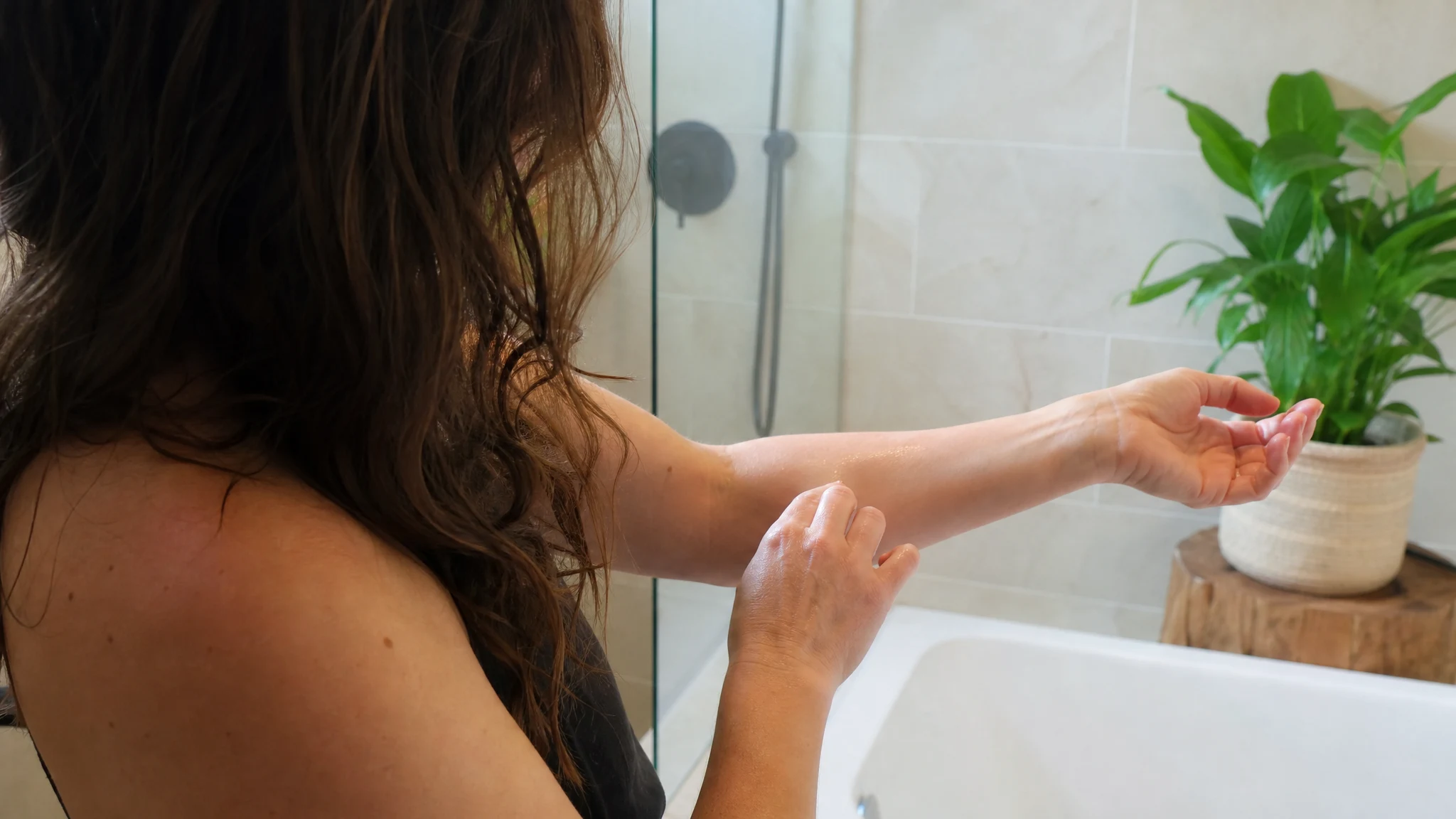
- Dilute before it touches skin, and patch test the finished blend on a small patch first.
- Skip damaged skin. Poison Control advises against using essential oils on damaged skin, and says diluting in a carrier oil is the best way to avoid a bad reaction from direct skin contact (Poison Control).
- Keep the bottle capped, cool and dark, away from eyes, children and pets. Our storage guide explains why.
- If redness, itching or swelling appears, stop, rinse, and see a doctor or dermatologist if it lingers. Pregnant, nursing, or living with a medical condition: ask your physician first.
We sell lavender oil for external, aromatic use and make no medical claims for it. A little patience at the dilution step is what lets you enjoy the aroma and the ritual for years.
Lavender Essential Oil
Lavender Essential Oil from our own shop, in sizes from 0.5 oz to bulk.
From $12.99
Shop Now →Sources & Further Reading
- Hagvall et al., 2008. Lavender oil lacks natural protection against autoxidation, forming strong contact allergens on air exposure. Contact Dermatitis. pubmed.ncbi.nlm.nih.gov/18759894
- Bingham et al., 2019. Contact allergy and allergic contact dermatitis caused by lavender: A retrospective study from an Australian clinic. Contact Dermatitis. pubmed.ncbi.nlm.nih.gov/30779160
- Hagvall and Christensson, 2016. Patch Testing with Main Sensitizers Does Not Detect All Cases of Contact Allergy to Oxidized Lavender Oil. Acta Derm Venereol. pubmed.ncbi.nlm.nih.gov/26671837
- NCCIH. Lavender: Usefulness and Safety. nccih.nih.gov
- Tisserand Institute. Dilution for essential oils. tisserandinstitute.org
- Poison Control. Essential oils: Poisonous when misused. poison.org