Lavender Massage Oil: Strength, Carrier and Mixing Steps
A lavender massage oil comes down to three decisions: how strong, how much, and which carrier. The good news is that the arithmetic is friendly, and once you have it, you can mix a small bottle in a couple of minutes. Here is how we would work it out.
Lavender Essential Oil
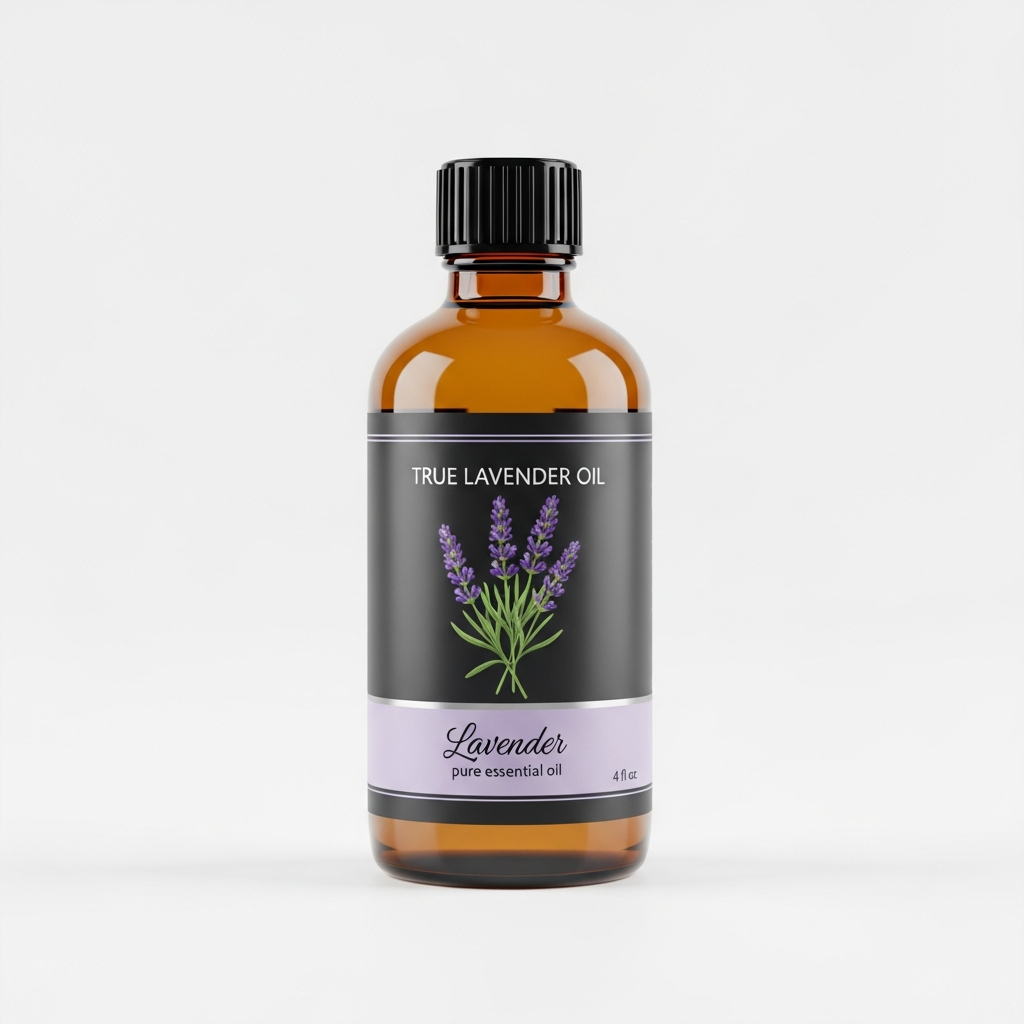
Our own Lavender Essential Oil, in sizes from 0.5 oz to bulk.
From $12.99
Shop Now →Decide who it is for
A few situations deserve a conversation with a professional before any blend. The NCCIH says little is known about whether lavender is safe in pregnancy or while breastfeeding, so that question belongs with an OB/GYN or midwife (NCCIH, Lavender: Usefulness and Safety). It also notes a few reports of breast tissue swelling in children who used topical products containing lavender, which is a reason to leave children's skincare to a pediatrician. And if the skin is broken, or there is eczema or a known fragrance allergy, check with a dermatologist first; our eczema page has more. For a healthy adult with intact skin, read on.
Pick a strength from a published range
The Tisserand Institute gives 1% to 3% for body oils and lotions, and says that range "has been in use for more than 50 years by aromatherapists for body massage with essential oils". It puts facial products at 0.5% to 1.2% and sensitive or impaired skin at 0.2% to 1% (Tisserand Institute, Dilution for essential oils). Our own dilution guidance for lavender oil is 0.5% to 2% in a carrier with a patch test first. We found no lavender-specific ceiling to put beside either range, so we start at 1% for a first session and keep larger-area blends at 2% or below. That is a judgment from the numbers, not a safety guarantee, and our oils differ by species, so keep the sharper spike lavender light.
Know what happens to the oil
Massage is more than surface contact. The European Medicines Agency's assessment summarises a study in which one volunteer had a massage oil with 2% lavender oil rubbed on the abdomen for 10 minutes. Linalool and linalyl acetate, lavender's two main compounds, appeared in the blood within minutes, peaking at 121 and 100 ng/ml (EMA, Assessment report on Lavandula angustifolia Miller, aetheroleum and Lavandula angustifolia Miller, flos). It was one person and a different oil, but it shows what a lot of us assume: a massage oil is absorbed, so a modest strength is the sensible path.
Do the arithmetic
One ounce is 29.57 ml, and about 20 drops to a millilitre is a rough convention, since droppers vary. On that basis:
| Blend size | 1% | 1.5% | 2% |
|---|---|---|---|
| 30 ml (1 oz) | about 6 drops | about 9 drops | about 12 drops |
| 60 ml (2 oz) | about 12 drops | about 18 drops | about 24 drops |
| 120 ml (4 oz) | about 24 drops | about 36 drops | about 48 drops |
Our shop line of roughly 3 to 12 drops per ounce matches the first row. Make a small bottle first; you can always make more. The batch behind our published certificate of analysis (angustifolia) had a relative density of 0.894, so if you mix by weight, 1 ml of that oil is about 0.894 g. Our dilution guide covers the rest.
Choose a carrier
Carrier oils come from a craft supplier, pharmacy or grocery store, since we sell only our lavender-family oils. Three things matter. How quickly you will use it: plant oils age too, so a small bottle you finish beats a large one that sits. Allergies: sweet almond oil comes from a tree nut, so anyone with a tree-nut allergy should ask an allergist. And feel: lighter carriers spread quickly, heavier ones give longer glide. Our carrier oil comparison goes through the usual options.
What massage research says
Lavender and massage often travel together for relaxation, so it is worth knowing what has been tested. In a trial of 150 cardiac patients, hand and foot massage with sweet almond oil, the same massage with lavender in sweet almond oil, and a control group were compared. Sleep scores improved in both massage groups, and the two massage groups did not differ (Cheraghbeigi et al., Comparing the effects of massage and aromatherapy massage with lavender oil on sleep quality of cardiac patients: A randomized controlled trial). The kindest reading is that touch and time carried the benefit. We think lavender is a lovely scent choice for a massage oil, and the scent is the reason to choose it. See our research map for more.
Setting up the session
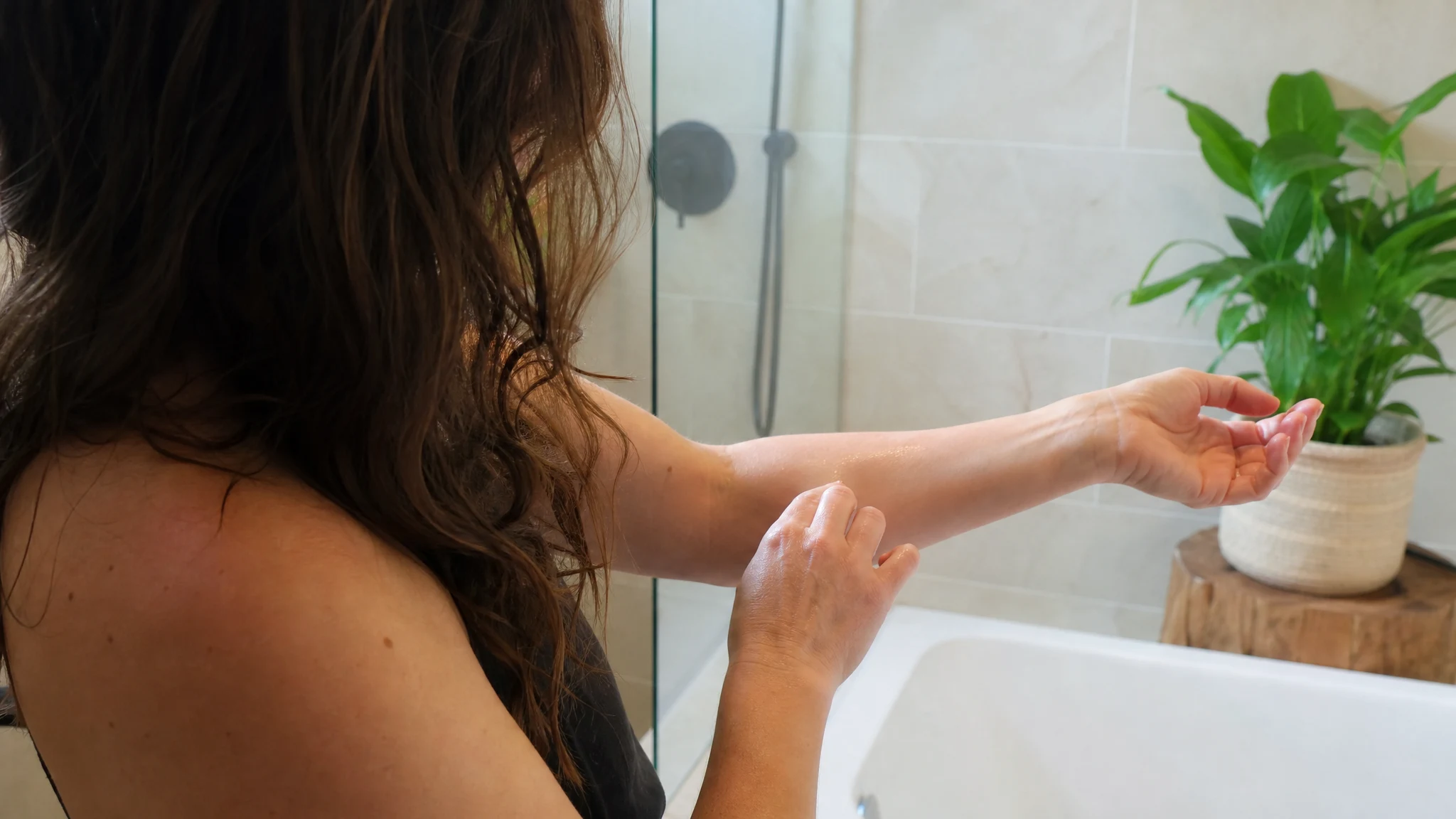
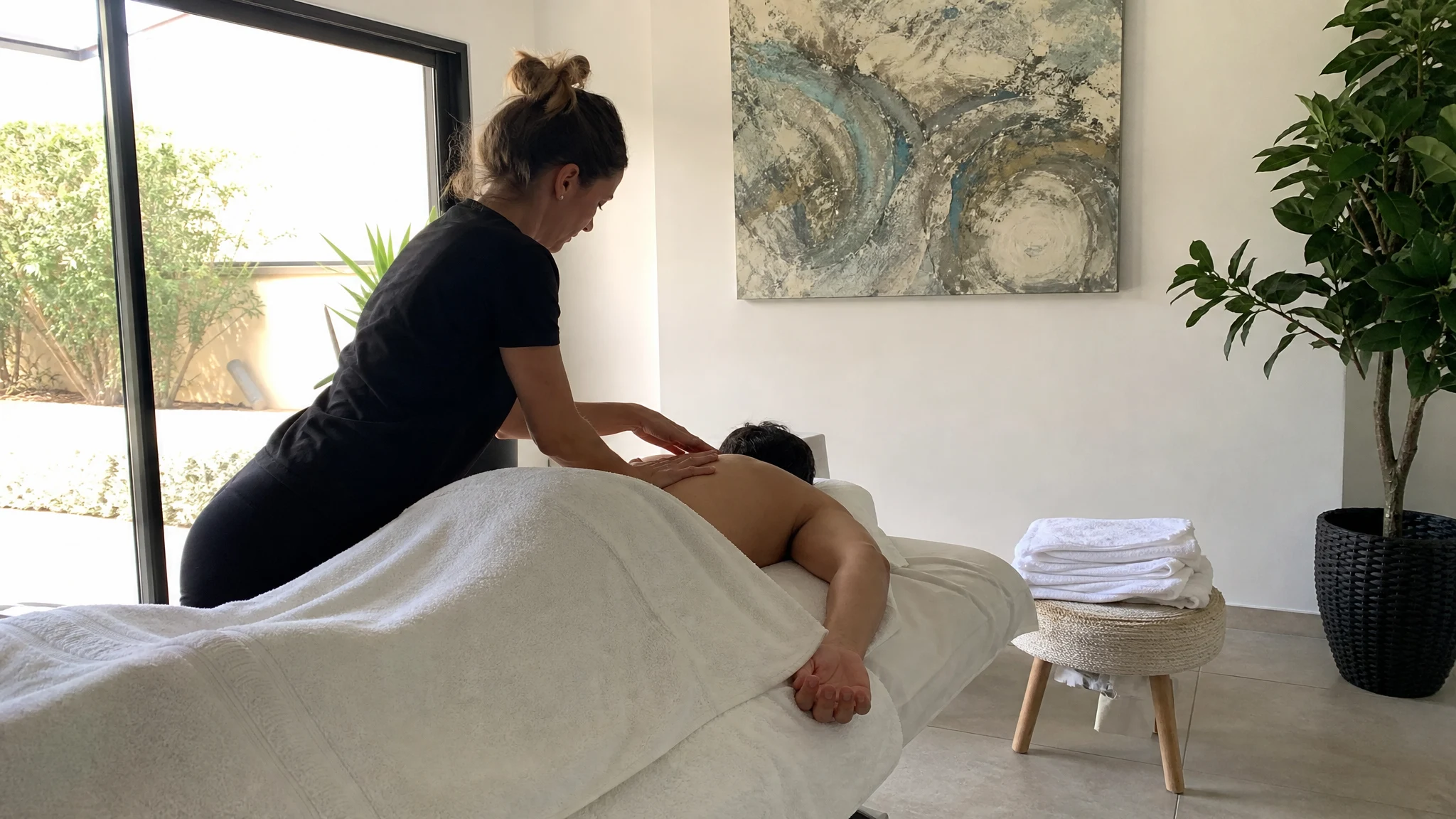
A little preparation makes a massage oil nicer to use. Warm the bottle in your hands for a minute so the oil spreads easily. Put a towel you do not mind marking under the person, keep the room warm, and have a second towel nearby for your hands. Pour a small amount into your palm rather than straight onto the skin. Ask how the pressure and the scent feel as you go, and stop at any discomfort.
Mix and label
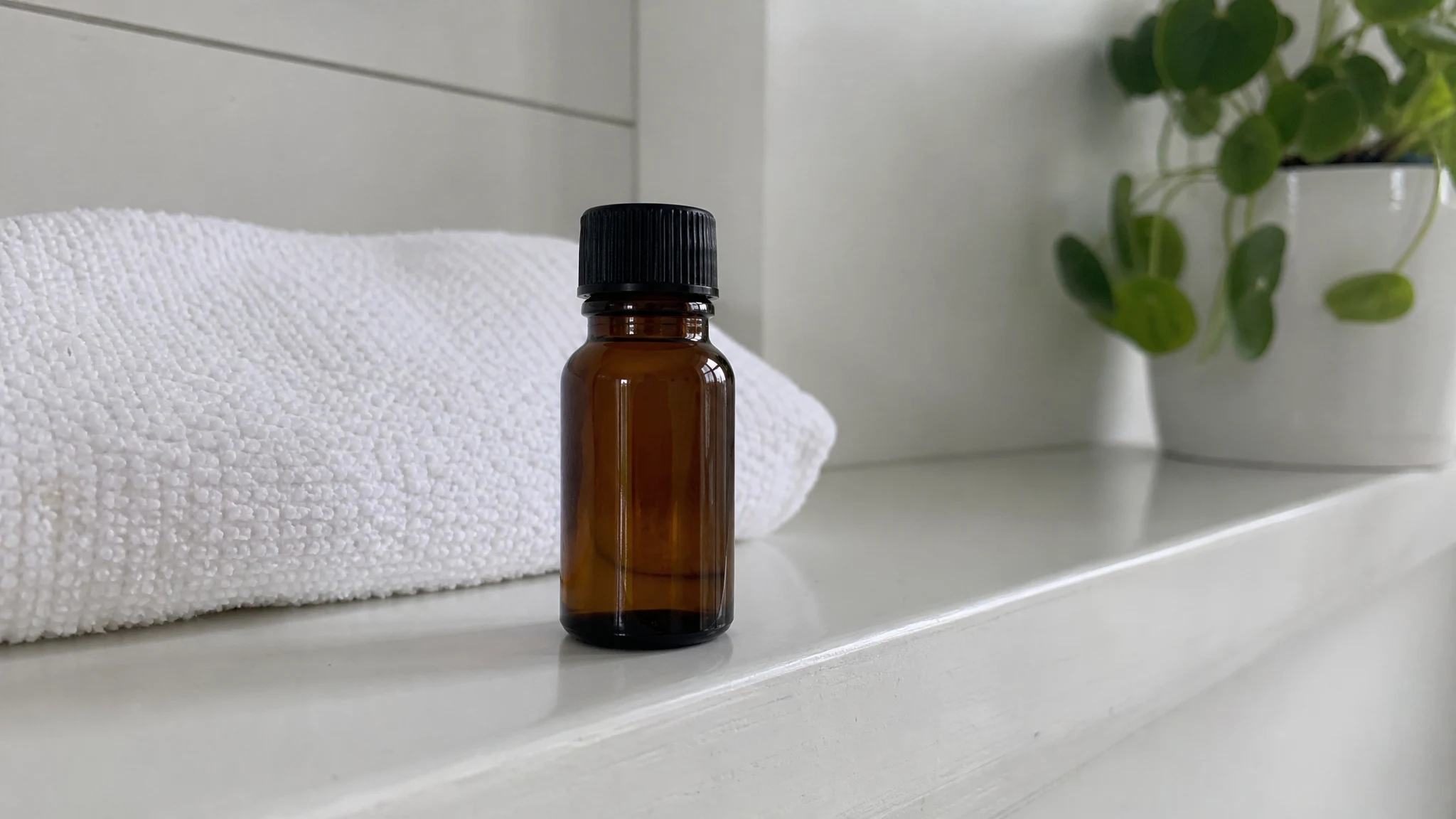
- Pour the carrier into a clean dark glass bottle first, then add the lavender oil.
- Cap and turn the bottle over slowly a few times.
- Label it with strength and date, and store it out of reach of children and pets. The National Capital Poison Center says essential oils must be "locked up, out of the sight and reach of children and pets" (Poison Control, Essential oils: Poisonous when misused).
- Patch test on a small area and wait, and stop at any redness. Keep the oil away from eyes and the face unless you have diluted for the face (0.5% is our starting point).
Wash sheets and towels afterwards, and enjoy the scent.
Lavender Essential Oil
Lavender Essential Oil from our own shop, in sizes from 0.5 oz to bulk.
From $12.99
Shop Now →Sources & Further Reading
- NCCIH, Lavender: Usefulness and Safety
- Tisserand Institute, Dilution for essential oils
- EMA, Assessment report on Lavandula angustifolia Miller, aetheroleum and Lavandula angustifolia Miller, flos
- Cheraghbeigi N et al., Comparing the effects of massage and aromatherapy massage with lavender oil on sleep quality of cardiac patients: A randomized controlled trial. Complement Ther Clin Pract, 2019
- Poison Control, Essential oils: Poisonous when misused