Lavender Oil and Dogs: Diffuser, Skin and Spills
Dogs are not small cats, and that is the first thing worth knowing. The enzyme gap that makes cats so sensitive to many plant compounds is not present in dogs. It is tempting to read that as a green light for the diffuser, but the veterinary sources are careful to say that dogs are still at risk. So the useful question is less "is it allowed" and more "which situation are we talking about".
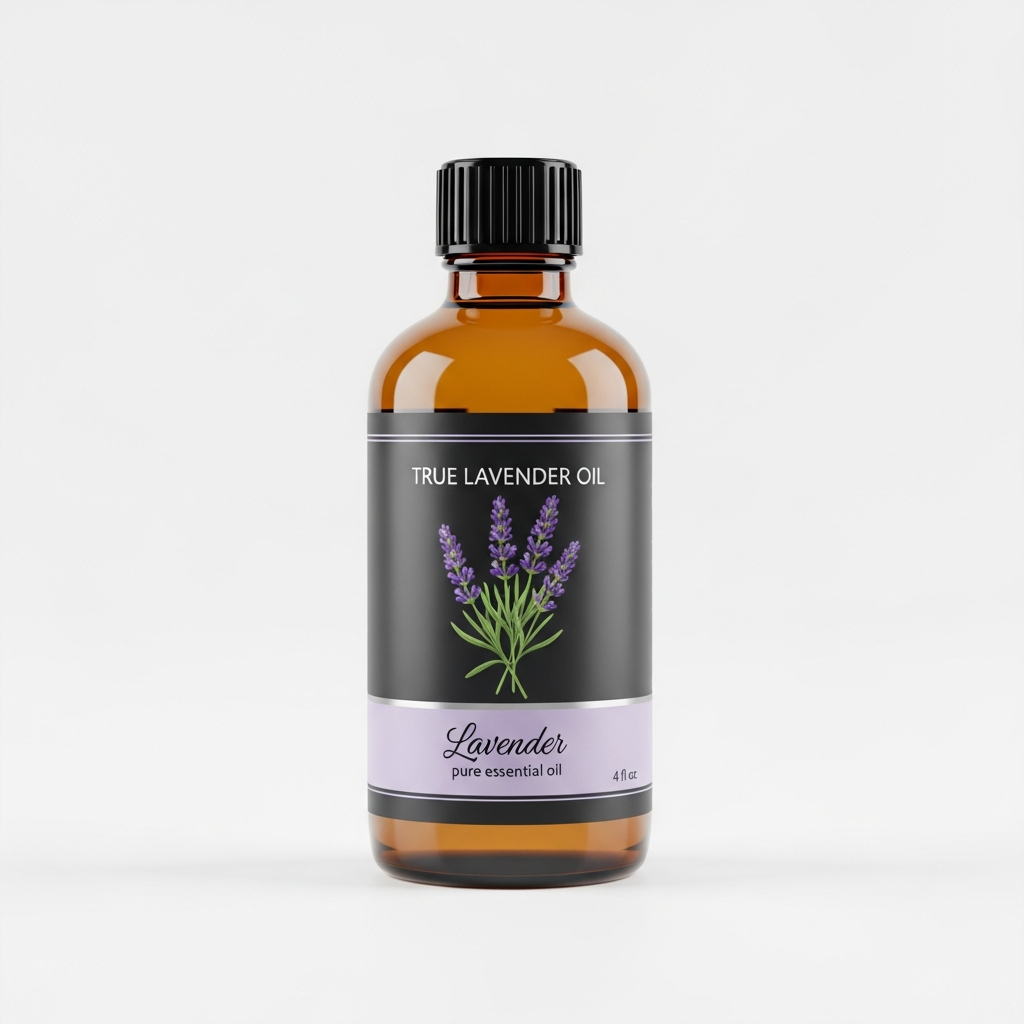
Lavender Essential Oil
Our own Lavender Essential Oil, in sizes from 0.5 oz to bulk.
From $12.99
Shop Now →Three situations that get lumped together
A scented room puts a little vapor in the air, and a dog can usually walk out of it. A skin application puts real oil onto a coat that the dog can lick. A spill, a chewed bottle or a tipped diffuser reservoir puts oil straight into a mouth, and that last one is what poison-center literature mostly records.
What the authorities have written
The Merck Veterinary Manual says dogs do not share the cat enzyme deficiency but are still at risk for toxicosis from exposure to essential oils. It lists vomiting, lethargy, drooling, ataxia (wobbliness) and loss of appetite as the most common signs after swallowing or skin contact, and it says concentrated oils should never be applied directly to pets. Its advice to pet owners is to keep pets out of the room while a diffuser runs, ventilate afterward and run the diffuser only for short periods.
The ASPCA's plant entry for lavender lists the plant as toxic to dogs, cats and horses, naming linalool and linalyl acetate as the toxic principles and nausea, vomiting and loss of appetite as signs. That is a plant entry rather than an oil dosing statement, but those two compounds are central to lavender oil, so the connection is natural. The ASPCA's Animal Poison Control Center also says that toxicity varies among oils, that inhaling oils could lead to aspiration pneumonia, and that it would not recommend using essential oils where pets have access unless they are supervised or your veterinarian approves.
Merck names tea tree as the oil most often reported to poison pets rather than lavender, and none of these pages gives a threshold for lavender. We read that as a reason for caution, since without a threshold no one can hand you a safe amount.
What the one dog study measured
A 2006 study in the Journal of the American Veterinary Medical Association put 32 dogs with a history of excitement on car rides through two conditions: a control with no added odor and a condition with the ambient odor of lavender, each for three consecutive days on trips to a familiar walking site. Observers recorded how the dogs spent their time. The dogs spent more time resting and sitting and less moving and vocalizing during the lavender condition.
It is a careful study and a narrow one. It looked at behavior during a car journey in dogs that were fit to travel. It did not measure blood levels, effects on the liver or what happens when a dog licks oil. We would not stretch it into a recommendation for a diffuser at home,, and it says nothing about a puppy, an elderly dog or one that is unwell.
Why size matters
Here is some arithmetic, offered as arithmetic and not as a toxic dose. The Certificate of Analysis we publish for one batch of our angustifolia oil gives a relative density of 0.894, so a milliliter weighs about 0.894 grams. At a rough 20 drops per milliliter, one drop is about 0.05 ml, or around 45 milligrams. Spread over a 10 kg dog, a single swallowed drop is about 4.5 mg per kilogram of body weight, and over a 3 kg puppy it is about 15. A 1 oz bottle holds 29.57 ml, which is nearly 600 drops by the same estimate. Small dogs reach large per-kilogram numbers quickly. The density belongs to that single batch and does not describe our lavandin, spike lavender or 40/42.
Practical habits for dog households
- Keep oil off the dog entirely. The 0.5% to 2% dilution guidance we give for adult human skin is not a dog dilution, and a veterinarian is the person to decide anything about skin.
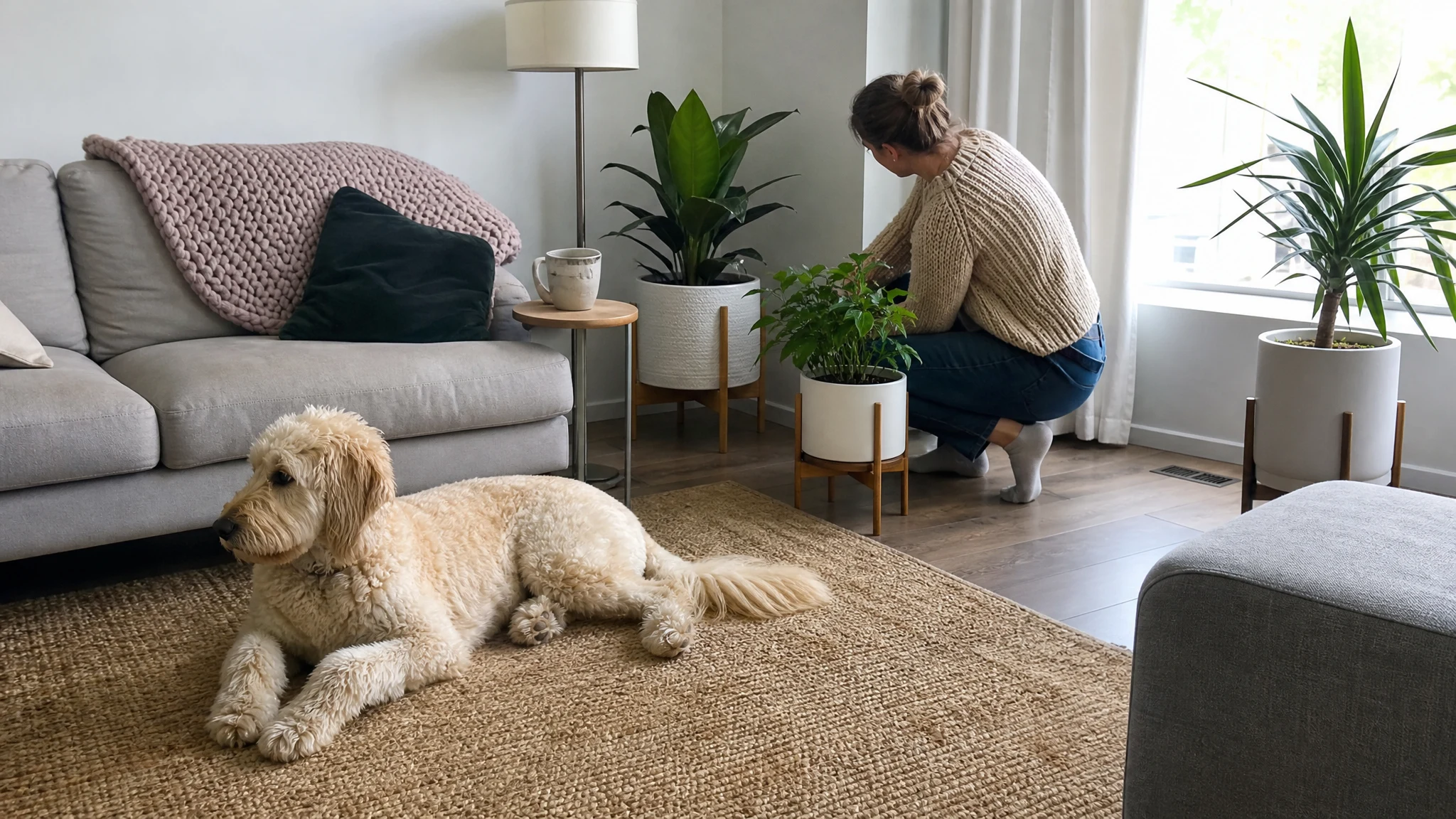
- Run a diffuser, if at all, in a room the dog can leave, and not in a crate room or a closed bedroom.
- Be most cautious with puppies, very old dogs and any dog with liver, breathing or neurological problems. That is our reasoning from the aspiration warnings, so ask your veterinarian.
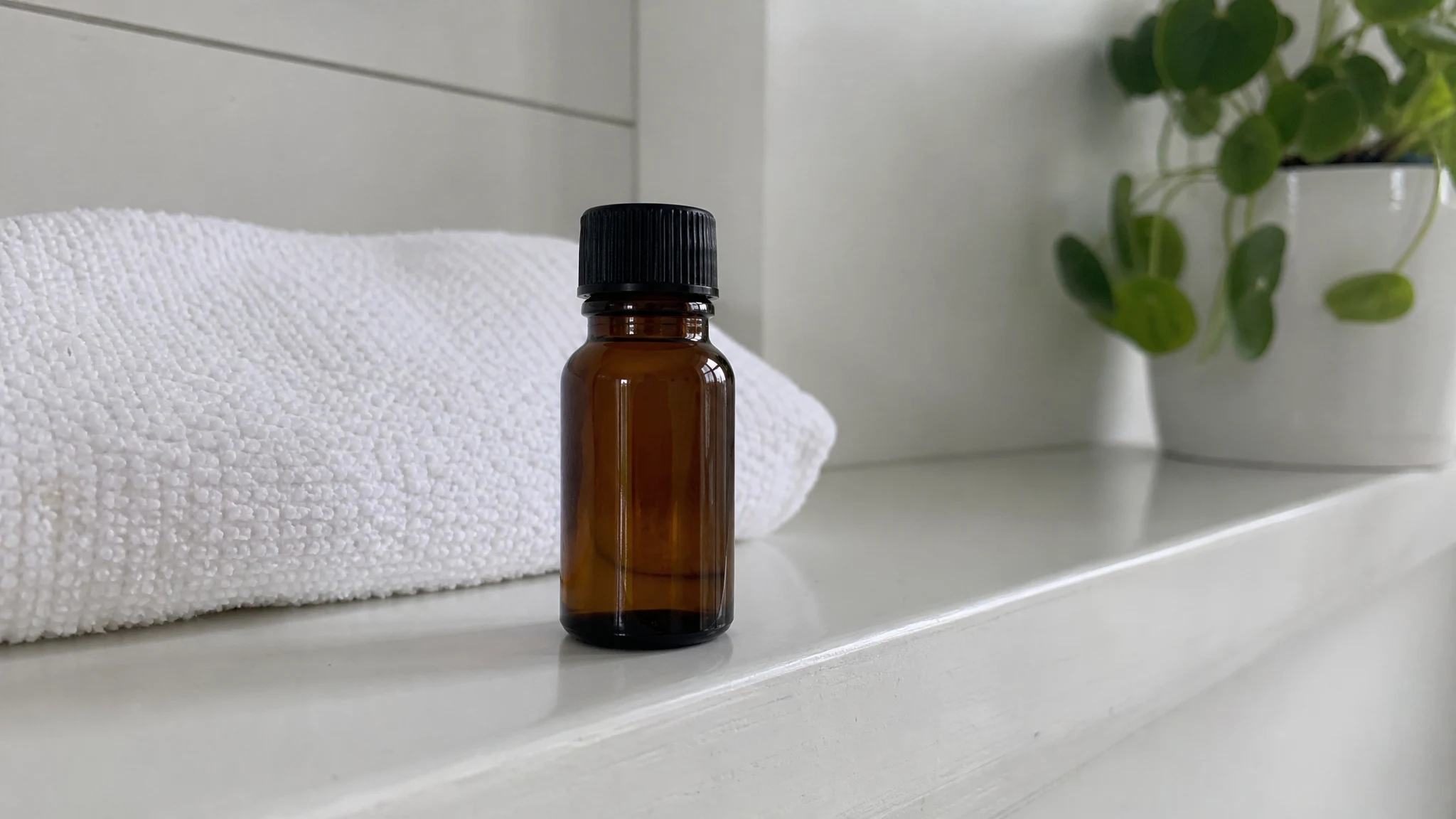
- Keep bottles capped and out of reach, and clean up spills straight away, because oil on a floor ends up on paws and then in a mouth.
Thinking like a dog owner
Dogs live nose first. A smell that feels pleasant to us can be much louder to an animal that spends its walks reading the ground, which is one more reason we prefer to treat lavender as something that stays in our own corner of the house. That is an observation about how dogs behave, not a study result, and your veterinarian is the person to say what it means for your dog.
A quick walk through your home helps. Look for where the bottle lives, whether a curious puppy could reach it, and whether the room you scent has a door that closes. Dogs are good at finding what is left within reach, and a capped bottle on a high shelf is simply not part of their world.
If a dog gets into it
Move the dog away from the source and into fresh air. Merck says vomiting should not be induced because of the risk of aspiration. Call your veterinarian, an emergency clinic or the ASPCA Animal Poison Control Center at (888) 426-4435, where a consultation fee may apply. The Pet Poison Helpline lists (855) 764-7661 on its site, and the 1-800-222-1222 poison line is for people, not pets. Watch for the signs above and for coughing.
Our guidance on all four of our lavender-family oils is to keep them away from pets, and we have no product made for animals. Cats call for even more care, which we discuss in our cat article. For the human side, see our skin reaction guide and storage guide.
Dogs share our homes and our noses, and a home where the oil lives on a high shelf and the diffuser runs in an empty room is one where both can be happy.
Lavender Essential Oil
Lavender Essential Oil from our own shop, in sizes from 0.5 oz to bulk.
From $12.99
Shop Now →Sources & Further Reading
- Merck Veterinary Manual. Toxicoses From Essential Oils in Animals. merckvetmanual.com
- ASPCA. Toxic and Non-toxic Plants: Lavender. aspca.org/lavender
- ASPCA. Pet Poisons: Be Mindful of these Household Products and Cleaning Agents. aspca.org/news
- Pet Poison Helpline. Essential Oils. petpoisonhelpline.com/blog/essential-oils
- Wells DL. Aromatherapy for travel-induced excitement in dogs. J Am Vet Med Assoc, 2006. europepmc.org/article/MED/16978115