Swallowing Lavender Oil: Why We Say No
Search for lavender and you will find lavender lemonade, lavender capsules in a pharmacy aisle and lavender oil in a brown glass bottle. They share a name, so people reasonably wonder whether they share a use. They do not, and the bottle is the one that stays out of the mouth.
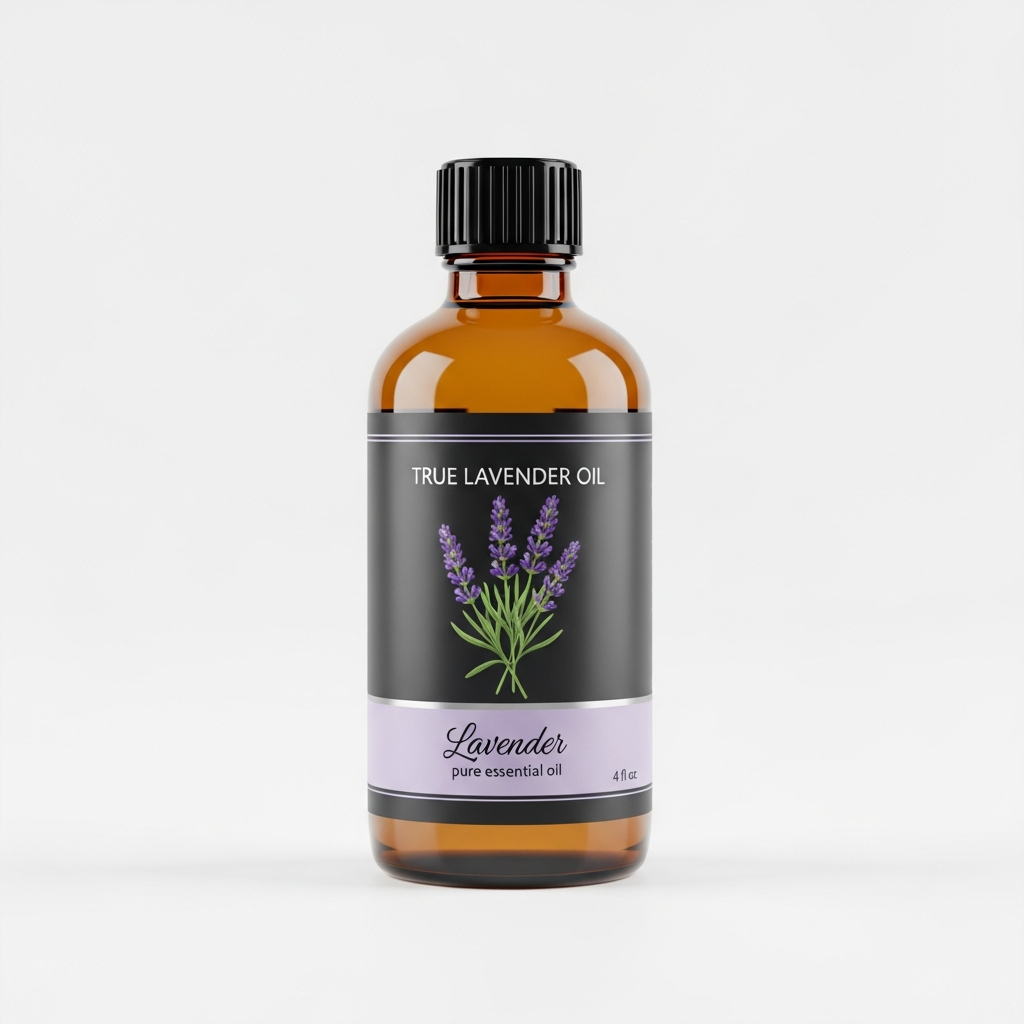
Lavender Essential Oil
Our own Lavender Essential Oil, in sizes from 0.5 oz to bulk.
From $12.99
Shop Now →Three products, one name
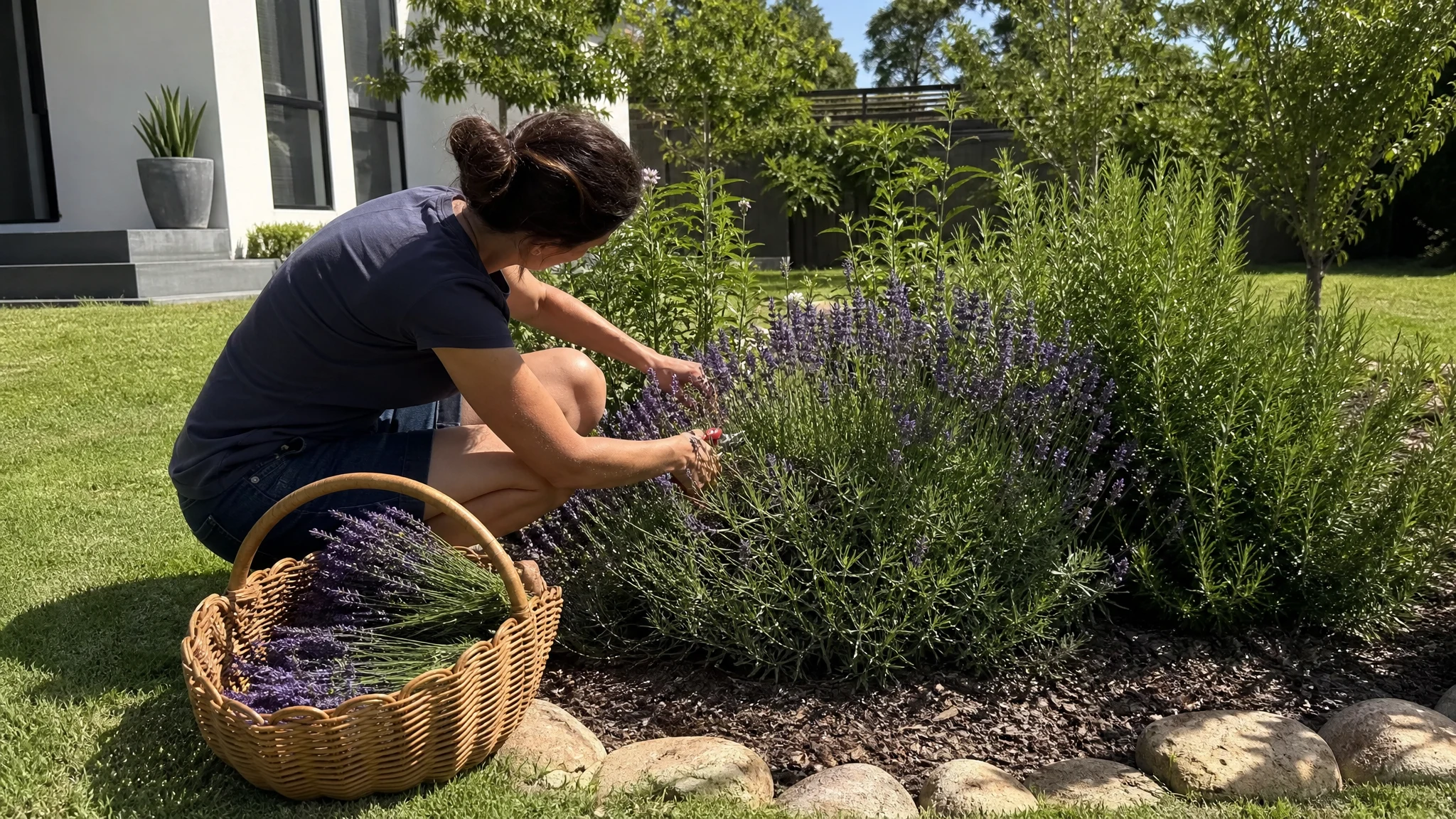
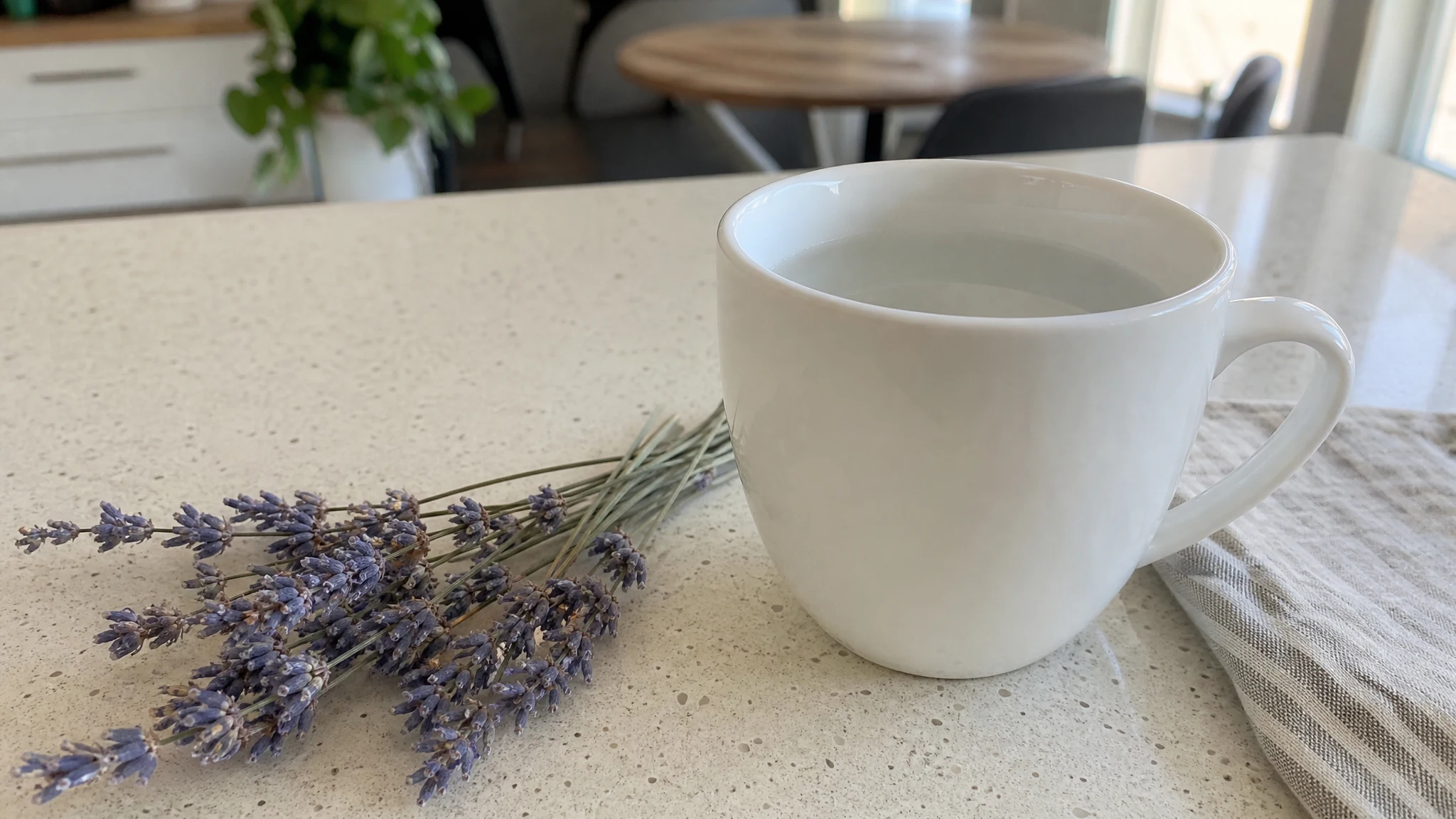
Dried lavender buds are a seasoning. The National Center for Complementary and Integrative Health says it is likely safe to consume lavender in the amounts typically used in foods, which means a pinch in shortbread or a sprig in sugar. If that is the project you have in mind, our article on cooking with lavender walks through why buds are the right ingredient.
The capsule is something else again. Silexan, the best-known example, is described in a 2023 meta-analysis as a proprietary active substance produced from Lavandula angustifolia, taken as one 80 mg capsule a day. The analysis pooled five placebo-controlled trials of adult outpatients over ten weeks. It is a standardized, manufactured preparation with a defined composition, studied in a clinical setting, which is exactly what a retail bottle is not. We cover it in our Silexan article, and we do not sell capsules or any supplement.
The third product is a concentrated essential oil, sold for fragrance and cosmetic use. That is what we bottle: four lavender-family oils, namely true lavender (Lavandula angustifolia), lavandin grosso, spike lavender and a trade-grade 40/42. All four are for external, aromatic use, and our guidance says to keep them away from eyes, children and pets and to avoid internal use.
What the food rulebook really says
A common argument goes: the FDA lists lavender as generally recognized as safe, so a few drops must be fine. It is worth reading the actual wording. Section 182.20 of Title 21 of the Code of Federal Regulations covers essential oils, oleoresins and natural extractives, and it names lavender, spike lavender and lavandin among them. The phrase that does the work is "generally recognized as safe for their intended use". The entry belongs to a food maker using a flavoring in a declared way. It is not a dosing instruction for someone adding drops from a bottle to a glass of water.
The FDA makes a related point about aromatherapy products: what a product is, legally, depends mainly on how it is intended to be used, judged from labeling, websites and advertising. That is why we describe our oils as aroma and cosmetic materials and make no ingestion or health claims for any of them.
What poison centers say about swallowed oils
Poison Control, a US poison center service, states plainly that essential oils can be poisonous if swallowed, and that aspirating one, meaning choking so that some reaches the lungs, can cause pneumonia. It also notes that children have thin skin and immature livers, which may make them more susceptible than adults.
Its article includes a case worth knowing about. An 18-month-old boy swallowed a small amount of a lavender extract his mother used as a home fragrance. Three hours later he was extremely drowsy and confused, and he was back to normal in about six hours. The case report listed in the article's references is titled as a poisoning by lavandin extract, a reminder that lavandin and true lavender are close relatives, and lavandin is one of the four oils we sell. It is a single case, and it says nothing about how often this happens. It does show how little it takes for a curious toddler and an accessible bottle to produce a hospital visit.
If a bottle has been swallowed
Call your poison center at 1-800-222-1222 in the US, or use the webPOISON CONTROL online tool. Poison Control says the guidance is free, confidential and available around the clock. Keep the bottle in hand so you can read out the name and size. If someone is struggling to breathe, very drowsy or confused, call emergency services instead. Outside the US, use your national poison information service.
Prevention is mostly logistics: keep the cap on, store bottles high up and out of sight, and decant only what you need into a small container you can close firmly. Our storage guide goes into the practical details.
Better ways to enjoy the scent
If you love lavender and want to bring it into the kitchen or the house, there are plenty of good routes that do not involve the bottle. A sprig of fresh lavender on a windowsill smells wonderful, and dried buds from a farmers market or herb shop belong in the pantry. A drop of oil on a cotton ball in a drawer scents the drawer for weeks. Let the oil stay in the bottle and keep your nose doing the work.
For adults and for medicines
NCCIH lists diarrhea, headache, nausea and burping among the adverse effects some people report from oral lavender products. It adds that there are theoretical reasons to suspect lavender might interact with some sedative drugs or herbs, which matters especially before surgery, and it advises talking with your health care provider if you take any medicine. A pharmacist or physician is the right person for any question about swallowing a lavender product. The same goes for pregnancy and breastfeeding, where NCCIH says little is known; see what the sources say about pregnancy.
So our answer is simple and does not change from oil to oil: use the buds in the kitchen if you like lavender flavor, leave capsules to a doctor's advice, and keep the bottle for the diffuser and diluted skin use. If you ever have a question about a specific bottle, ask us in writing through the contact page.
Lavender Essential Oil
Lavender Essential Oil from our own shop, in sizes from 0.5 oz to bulk.
From $12.99
Shop Now →Sources & Further Reading
- National Center for Complementary and Integrative Health. Lavender: Usefulness and Safety. nccih.nih.gov/health/lavender
- Dold M et al. Efficacy of Silexan in patients with anxiety disorders: a meta-analysis of randomized, placebo-controlled trials. Eur Arch Psychiatry Clin Neurosci, 2023. pmc.ncbi.nlm.nih.gov/articles/PMC10465640
- 21 CFR 182.20 - Essential oils, oleoresins (solvent-free), and natural extractives (including distillates). Electronic Code of Federal Regulations. law.cornell.edu/cfr/text/21/182.20
- US Food and Drug Administration. Aromatherapy. fda.gov/cosmetics/cosmetic-products/aromatherapy
- Poison Control. Essential oils: Poisonous when misused. poison.org/articles/essential-oils