Lavender Oil in Pregnancy: Questions for Your Midwife
People ask us about lavender oil and pregnancy more than almost anything else, and we understand why: lavender is one of the best-loved oils there is. We still do not give a pregnancy or breastfeeding dilution for any of our lavender oils, and our own disclaimer says to consult your physician if you are pregnant or nursing. That is not caution for show. It reflects what the sources say, which is that the evidence is thin and the guidance that exists comes from maternity teams who want you to ask a person who knows your pregnancy.
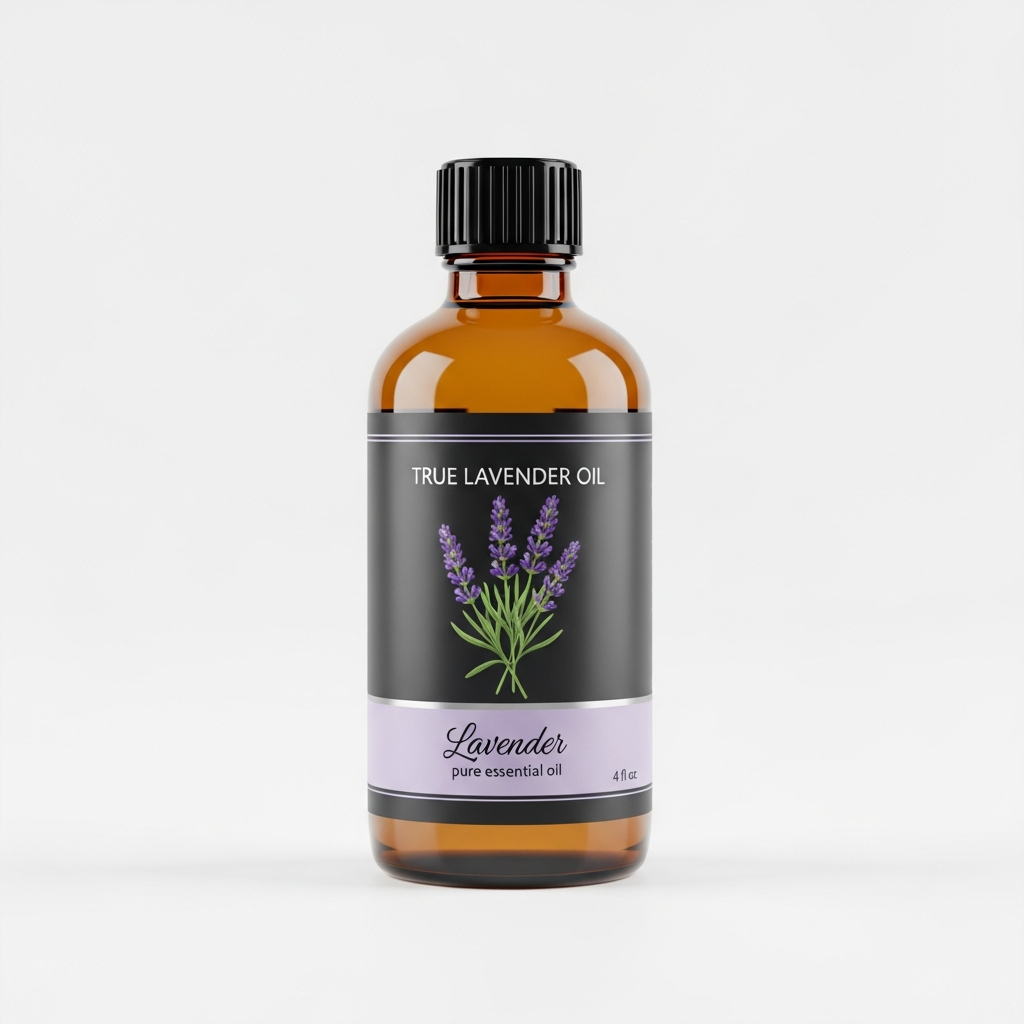
Lavender Essential Oil
Our own Lavender Essential Oil, in sizes from 0.5 oz to bulk.
From $12.99
Shop Now →What the authorities have written
The National Center for Complementary and Integrative Health, in its February 2025 page on lavender, says little is known about whether it is safe to use lavender during pregnancy or while breastfeeding. The European Medicines Agency's 2012 assessment of true lavender lists "no data available" under safety in special populations. Neither document gives a dose, so there is no number to borrow.
Two NHS maternity documents go further, and they are worth reading as what they are: local clinical guidance written for trained midwives, not national advice for the public. NHS Borders' aromatherapy guideline for midwifery practice, last reviewed in September 2024, says to avoid essential oils in the first trimester because some are emmenagogic, lists lavender among the hypotensive oils to avoid when an epidural is in place or blood pressure is low, advises against taking essential oils internally, and suggests avoiding flower-derived oils in women whose hay fever or asthma is triggered by pollen. The York and Scarborough Teaching Hospitals NHS Foundation Trust says women in the first trimester are not to have direct contact with essential oils, and lists exclusions that include epilepsy, cardiac disease, moderate or severe pregnancy-induced hypertension and open wounds. Both documents describe a process in which a midwife who knows the oils decides, with your consent. We deliberately do not repeat their massage dilutions, since a clinic protocol is not a number for a home blend.
What the trials looked at
Searching for this topic turns up claims that lavender helps with stress or labour. It helps to know what is behind them. A 2024 systematic review in Healthcare looked at clinical trials published between 2000 and 2022, found 251 articles and kept six: 413 participants who used lavender essential oil in the second or third trimester, with outcomes on sleep quality, anxiety or stress. All six reported improvement on their target measure and no adverse effects, and the authors' own conclusion was that the number of participants is small and the literature limited, so more studies are needed.
A labour trial published in Explore in 2023 divided 121 first-time mothers into three groups, comparing no intervention with lavender inhalation or lavender massage. The dose was two drops on the palms for three minutes, or two drops with a fifteen-minute sacral massage, in each phase of the first stage of labor. At about 20 drops to a milliliter, two drops is roughly 0.1 ml, a small measured amount applied in a supervised setting. A diffuser running through an evening is a different thing, and nobody has measured what one delivers, so the trial numbers cannot be stretched to cover it. That mismatch also means we cannot offer a lower or safer figure for home use, which is why the answer stays with a clinician.
Questions worth taking to your midwife
The one point on which the sources agree is that your maternity clinician should be involved. For breastfeeding, a lactation consultant or pharmacist is a good second contact. It helps to bring the bottle and to say how you want to use it: in a diffuser, on skin or in a bath, and how often. Useful questions:
- Does anything in my history, such as blood pressure, asthma, epilepsy or bleeding, change the answer?
- Does the first trimester change the answer?
- Are you advising on skin contact, on room scent, or on both?
Two points hold whatever your pregnancy is like. Swallowing essential oil is a poisoning risk for anyone, which we cover in our article on swallowing lavender oil. And skin reactions can happen to any user, as our piece on using the oil on skin explains. We have no source saying sensitization behaves differently in pregnancy, so we say nothing either way. Keep bottles capped and out of reach of other children in the house.
Enjoying scent while you wait for an answer
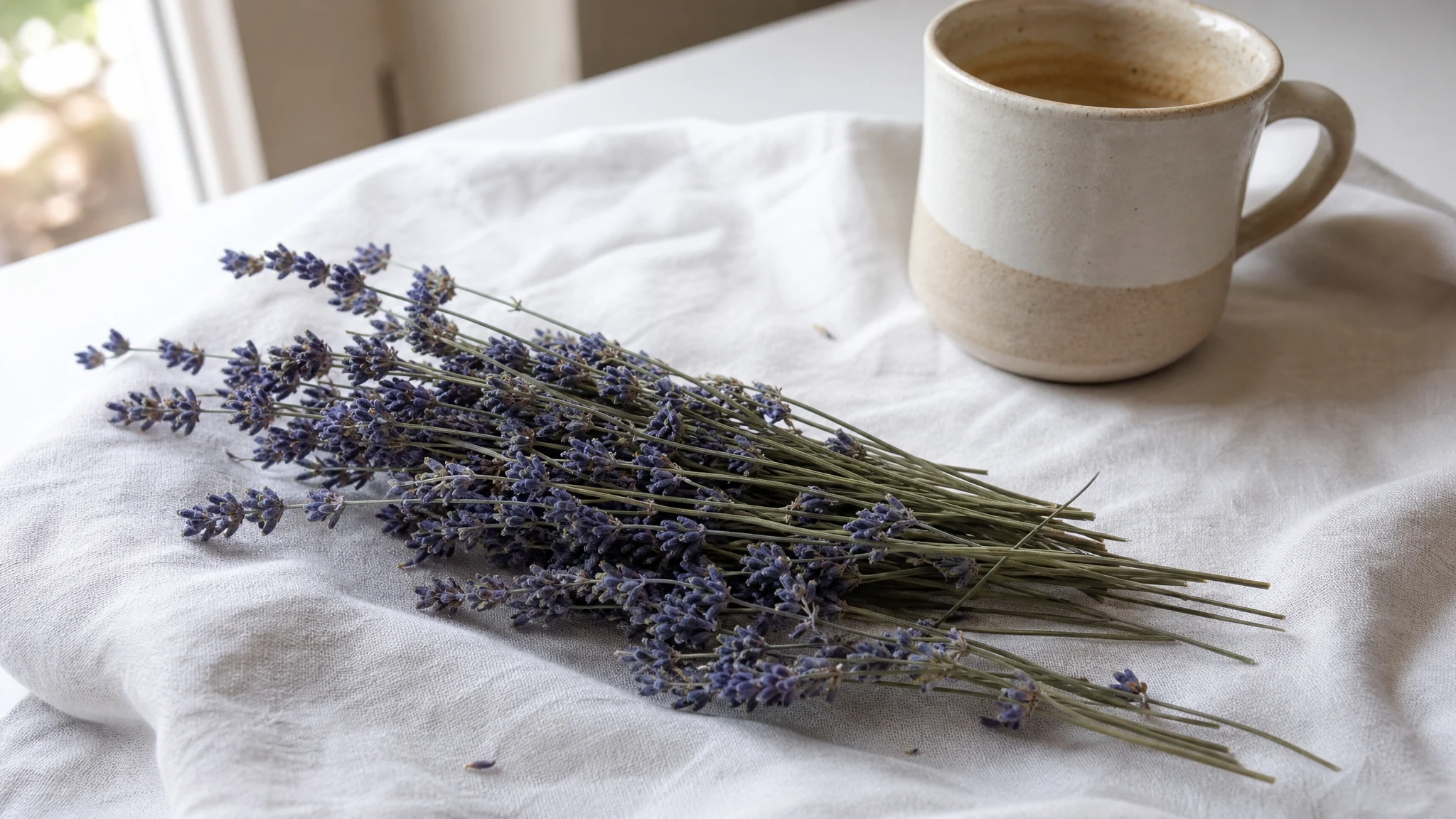
If you are waiting for an appointment, there is no need to feel you are missing out. A bunch of dried lavender in a vase, fresh laundry on the line, a window left open on a warm day and a bowl of citrus on the table all fill a room with scent without involving any bottle at all. Keep the bottle of oil you already own capped and in a cabinet, and leave the decision about it until you have spoken to the person who knows your pregnancy.
It can also help to write your questions down beforehand. Appointments move quickly, and having a short list in your bag means the answer you were hoping for does not get forgotten in the conversation.
Where our oils fit
We sell four lavender-family oils, true lavender, lavandin grosso, spike lavender and a trade-grade 40/42, as aroma and cosmetic ingredients, and no pregnancy, labour or breastfeeding product. The trials above used lavender oil generally and do not tell us how their material compares with any of ours. The Certificate of Analysis we publish covers one batch of our true lavender and lists density, refractive index and appearance, with no constituent data, so it cannot be laid beside a trial's material. For general safety basics, see our skin reaction guide.
If you are pregnant or nursing and curious about any essential oil, bring the bottle and these questions to your midwife, and follow their answer over ours.
Lavender Essential Oil
Lavender Essential Oil from our own shop, in sizes from 0.5 oz to bulk.
From $12.99
Shop Now →Sources & Further Reading
- National Center for Complementary and Integrative Health. Lavender: Usefulness and Safety. nccih.nih.gov/health/lavender
- European Medicines Agency. Assessment report on Lavandula angustifolia Miller, aetheroleum and Lavandula angustifolia Miller, flos (EMA/HMPC/143183/2010), 2012. ema.europa.eu
- NHS Borders. Aromatherapy Guideline for Midwifery Practice. Right Decisions. rightdecisions.scot.nhs.uk
- York and Scarborough Teaching Hospitals NHS Foundation Trust. Aromatherapy During Pregnancy. yorkhospitals.nhs.uk
- Vidal-García E et al. Efficacy of Lavender Essential Oil in Reducing Stress, Insomnia, and Anxiety in Pregnant Women: A Systematic Review. Healthcare (Basel), 2024. europepmc.org/article/MED/39685078
- Karatopuk S, Yarici F. Determining the effect of inhalation and lavender essential oil massage therapy on the severity of perceived labor pain in primiparous women: A randomized controlled trial. Explore (NY), 2023. europepmc.org/article/MED/35987683