Lavender Oil and Acne: What a Lab Dish Cannot Tell You
Search for lavender oil and acne and you will find a tidy-sounding result: lavender wiped out acne bacteria in five minutes. It is a real finding, and it came from a laboratory dish. Knowing what a dish can and cannot tell you saves a lot of guesswork when you are standing in front of your bathroom mirror.
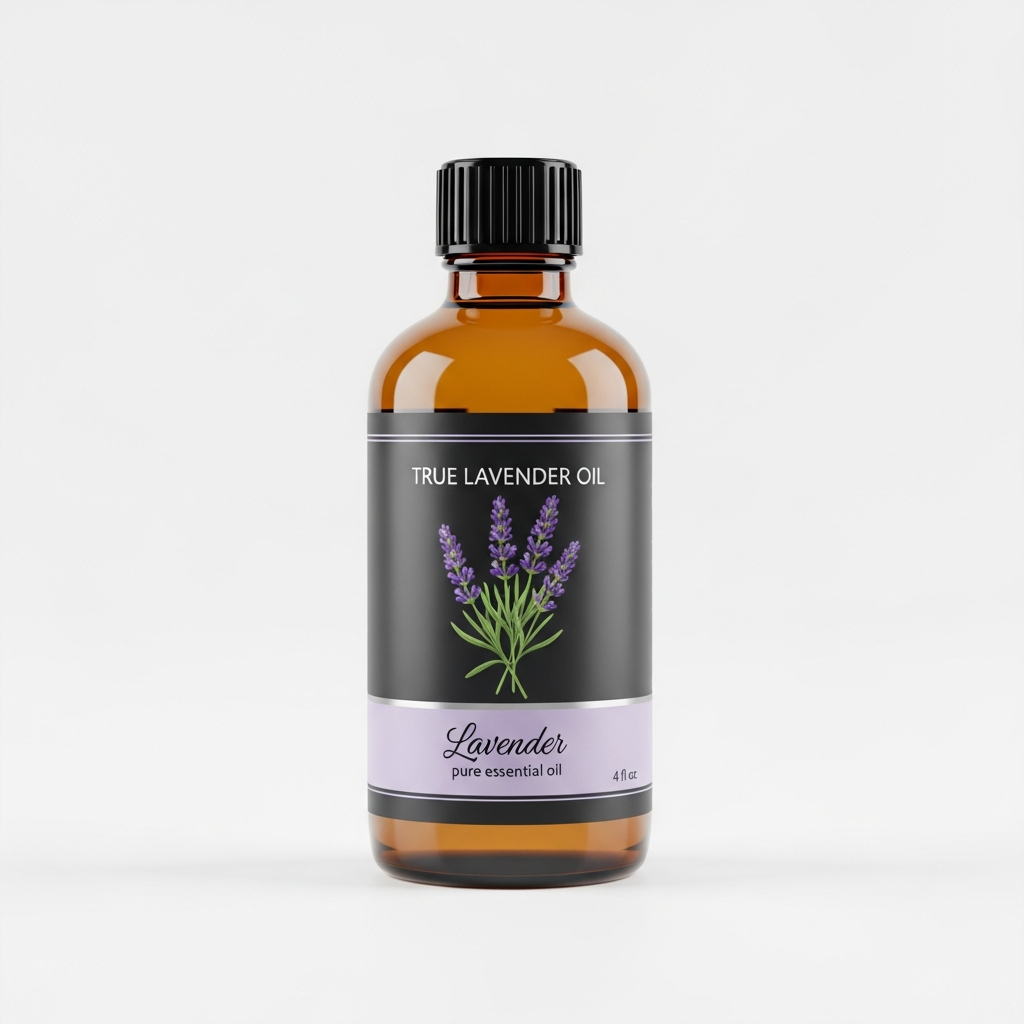
Lavender Essential Oil
Our own Lavender Essential Oil, in sizes from 0.5 oz to bulk.
From $12.99
Shop Now →What the dish study actually showed
In 2010, researchers tested ten essential oils against the bacterium once called Propionibacterium acnes. Thyme, cinnamon and rose were the best at holding the bacteria back. In a separate time-kill test, thyme, cinnamon, rose and lavender were the strongest, and at a concentration of 0.25% by volume the bacteria were completely killed within five minutes (Zu et al., 2010). So lavender did well, though it was not the star, and the abstract does not say which lavender species was used, which means we cannot connect it to any one of our four oils.
The same paper tested the oils on human cell lines, and thyme, the top performer against the bacteria, was also the most toxic to those cells. That is a useful reminder of what a dish measures. Every bacterium sits in the same bath of oil, while a blemish is a blocked pore with oil, dead skin cells and inflammation, and none of that is in the flask. A concentration that disturbs bacteria in a lab is not automatically one that suits your skin.
The wider picture is similar. A 2026 review of herbal acne remedies promoted on social media concluded that gaps remain in clinical research (Parvizi et al., 2026). A systematic review of essential oils in skin care gathered 70 studies on many oils, and it singled out tea tree rather than lavender where acne was concerned (Pezantes-Orellana et al., 2025). If you are curious how lavender stacks up against tea tree as a skincare aroma, our tea tree comparison goes through it.
Where a fragrance oil fits on blemish-prone skin
Lavender oil is a fragrance material, and fragrance is the thing patch-test clinics see people react to. In an Australian clinic series, 2.2% of 2,178 patients tested with lavender had a positive reaction, and the authors described lavender as an uncommon cause of allergic contact dermatitis (Bingham et al., 2019). Those were people already referred with dermatitis, so the number overstates what the general public would see, but it is a good reason to be deliberate.
Our own reasoning, and it is only reasoning, is that skin treated with active acne products is already working hard. Add a new scent and a reaction becomes harder to read, because redness from an allergy and redness from the blemish look alike. That is why we would not put lavender oil on active breakouts.
Keep the routine simple
When skin is acting up, the temptation is to add more products. A simple routine is easier to read: if something changes, you know what caused it. Add one new product at a time, wait a couple of weeks before judging it, and keep short notes with dates. If you are already using something from a pharmacist, ask before adding anything scented on top of it.
What the NHS suggests
The NHS acne page lists plain steps: use non-comedogenic skin care and make-up, try treatments such as salicylic acid or benzoyl peroxide (a pharmacist can advise), and do not pick or squeeze spots because it can cause scars. It says to see a GP if self-treatment is not working, if you have lots of spots or they are deep, painful or leaving scars, if the skin looks infected, or if acne is affecting your mental health. We would hand any reader those same markers, and a pharmacist is the first stop for over-the-counter options.
The FDA decides whether a product is a cosmetic or a drug by its intended use, shown through labelling and claims, so a lavender oil sold for acne would be treated as a drug. We sell fragrance oils for external use, and nothing here says any of ours does anything for blemishes.
If you simply love the scent
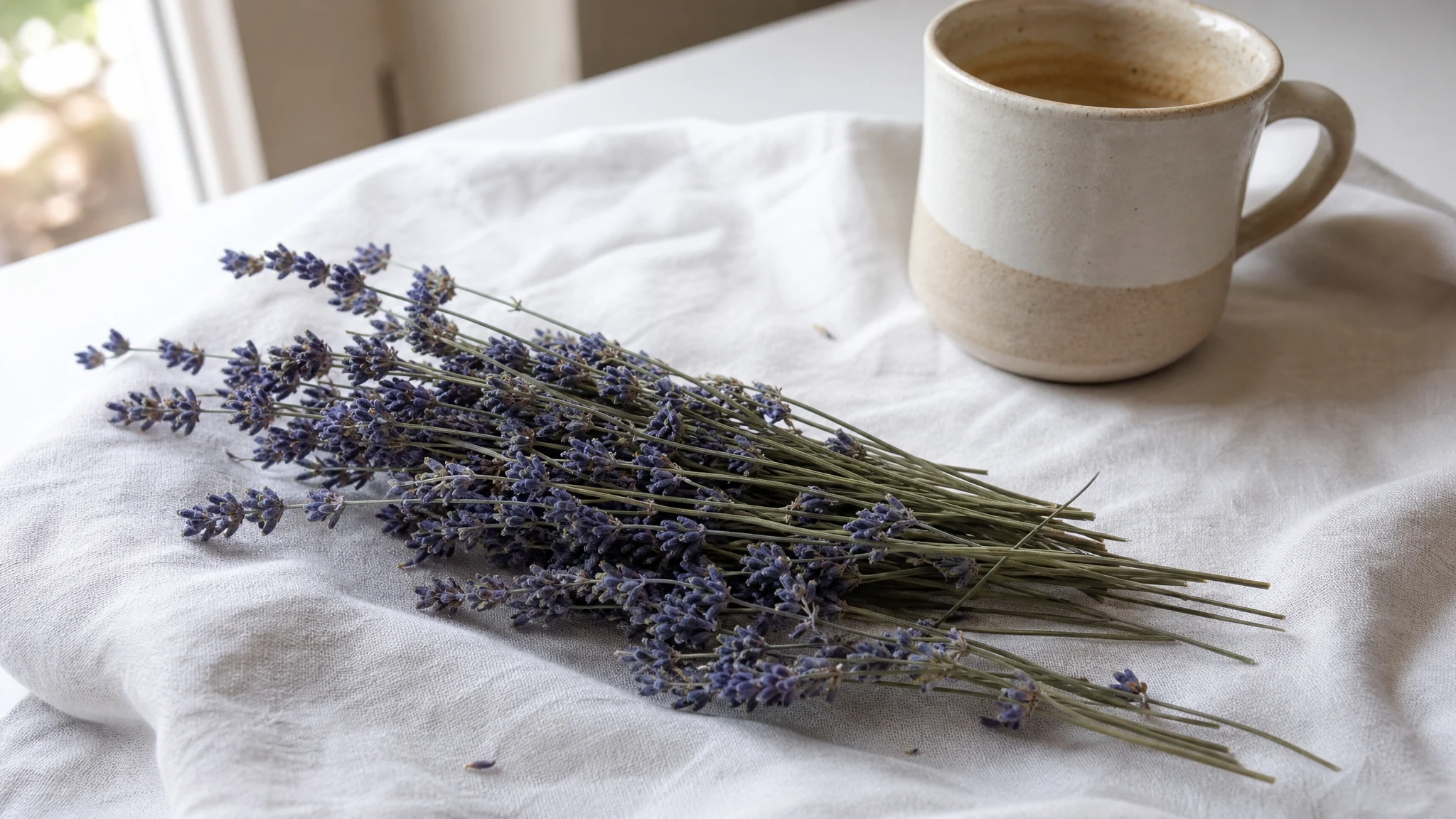
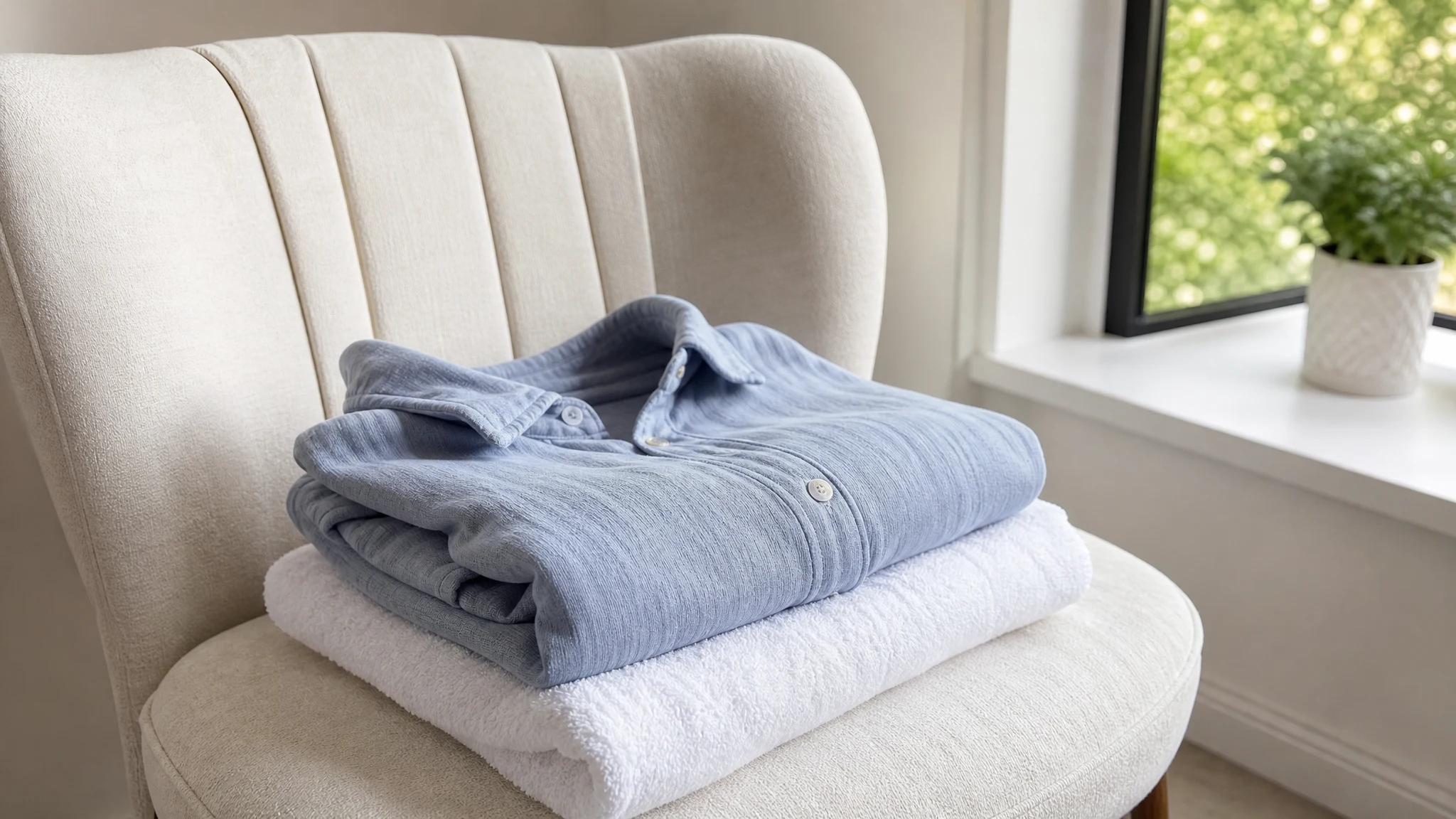
Lavender's place on a bathroom shelf can be purely about smell. There are ways to enjoy it that never touch your face: a diffuser run briefly in a ventilated room, a sachet in a drawer, or a stack of towels kept in a lavender-scented cupboard. That way you keep the pleasure of the aroma and leave your skin out of the experiment entirely. It is a modest plan, and it is one that never needs a patch test.
If you still want lavender near your face
Keep it to clear skin, away from active spots. Our dilution guidance is 0.5% to 2% in a carrier, and for the face we would start at 0.5%. That is about 0.15 ml of oil in one ounce (29.57 ml) of carrier, roughly 3 drops at 20 drops per milliliter, so weigh it if you can. Patch test first and stop if you notice redness, itching or bumps. We sell the oils neat, so the dilution is yours to mix, and carriers come from a craft shop, pharmacy or grocery. Our dilution guide has the math, and the spot-test guide shows how to check a reaction. For wider skin use, see our skin guide.
Lavender does have its place, and it is probably the lamp-lit part of an evening routine, not the part that tackles breakouts.
Lavender Essential Oil
Lavender Essential Oil from our own shop, in sizes from 0.5 oz to bulk.
From $12.99
Shop Now →Sources & Further Reading
- Zu et al., 2010. Activities of ten essential oils towards Propionibacterium acnes and PC-3, A-549 and MCF-7 cancer cells. Molecules, Europe PMC
- Parvizi et al., 2026. Medicinal Plants for Acne Vulgaris: An Evidence-Based Review of Treatments Promoted by Social Media. J Cosmet Dermatol, Europe PMC
- Pezantes-Orellana et al., 2025. Evaluating efficacy, safety, and innovation in skin care applications of essential oils: a systematic review. Front Med, Europe PMC
- Bingham et al., 2019. Contact allergy and allergic contact dermatitis caused by lavender: A retrospective study from an Australian clinic. Contact Dermatitis, Europe PMC
- NHS. Acne. nhs.uk/conditions/acne
- FDA. Is It a Cosmetic, a Drug, or Both? (Or Is It Soap?). fda.gov