How to Patch Test Lavender Oil: A Week-Long Routine
Most of us have heard the advice: dab a little on your arm, wait a day, and if nothing happens you are fine. It is good advice as far as it goes, and it does not go very far. Skin allergies usually announce themselves late, and a one-day test can be over before they do. A better home test is a little longer, uses the exact blend you plan to wear, and treats a clean result as encouraging rather than final.
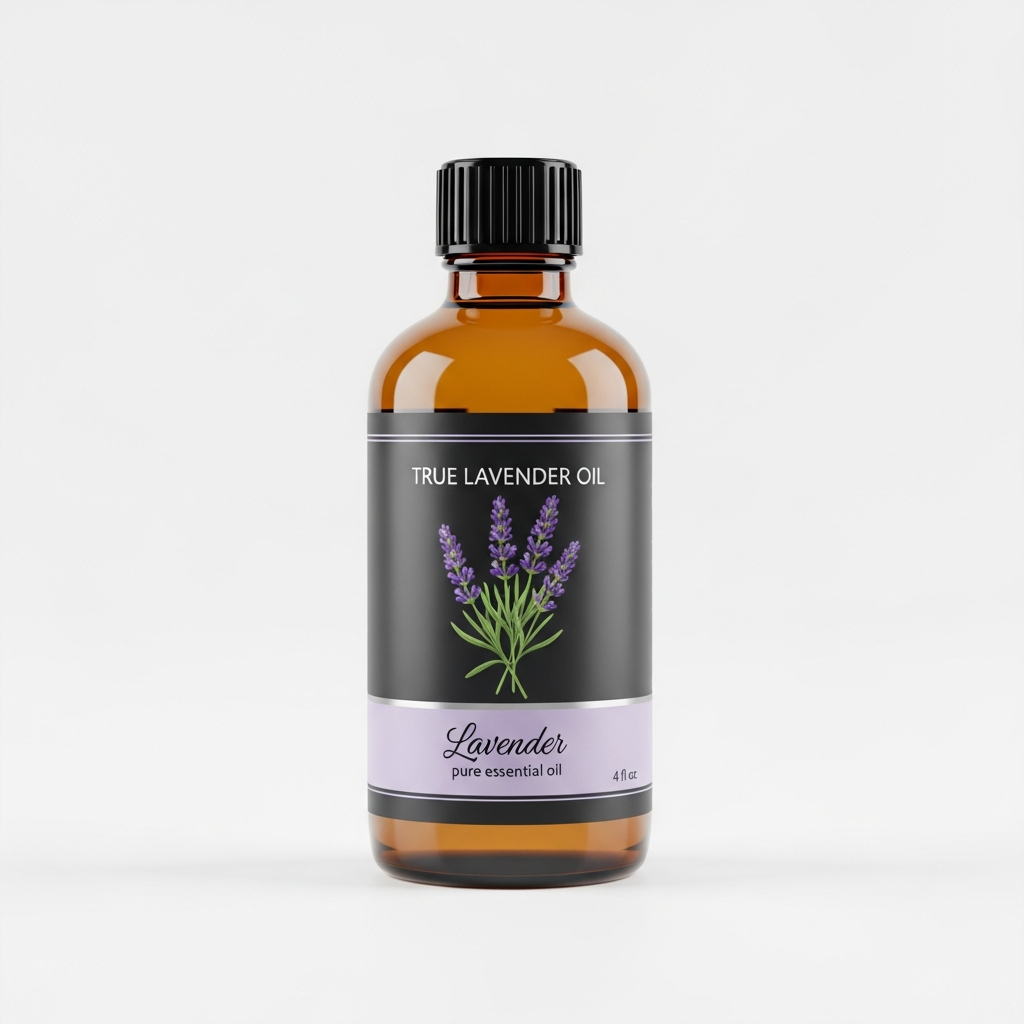
Lavender Essential Oil
Our own Lavender Essential Oil, in sizes from 0.5 oz to bulk.
From $12.99
Shop Now →Irritation and allergy look alike
The NHS describes two main causes of contact dermatitis: an irritant, which directly damages the outer layer of skin, and an allergen, which makes the immune system respond in a way that affects the skin. Both reactions usually occur within a few hours or days of exposure. The American Academy of Dermatology adds that an allergic rash tends to appear hours or days after contact, and that even a brief touch can be enough. Neither can be told apart by eye, so a red, itchy, swollen or blistered patch after a lavender blend counts as a reaction to the blend, whichever kind it turns out to be.
What the clinic numbers say
The best figures come from people already sent to dermatology clinics, so they overstate how common allergy is in the general public, and none of the studies used our oils. They still give a sense of scale. A retrospective review at a clinic in Victoria, Australia, covered 2,178 patients patch tested with lavender between 1993 and 2017 and found a positive prevalence of 2.2 percent, leading the authors to call lavender an uncommon cause of allergic contact dermatitis that is still important to consider. Oxidized linalool, which forms when linalool meets air, is a bigger story: in a later study of 5,773 clinic patients, 7.0 percent were allergic to it, with a rising trend.
Why a fresh bottle matters
That second finding explains a lot. A 2012 study across six countries notes that linalool in pure form is not allergenic or is a very weak allergen, but it autoxidizes on air exposure, and the oxidation products can cause contact allergy. Linalool is a leading component of lavender oil, so a bottle left open on a warm windowsill for months can be a different material from the one you opened. We describe our oils as typically stable for two to three years when stored tightly capped, cool and dark, and our storage guide shows how to keep it that way.
Oxidation is not the whole story. A 2016 study found that patch testing with lavender's main sensitizers does not detect all cases of allergy to oxidized lavender oil, which is why bringing your actual product to a dermatologist is useful.
A home spot test, step by step
This routine is our recommendation, built from published dermatology advice. Our oils are sold neat, so the dilution is yours to make.
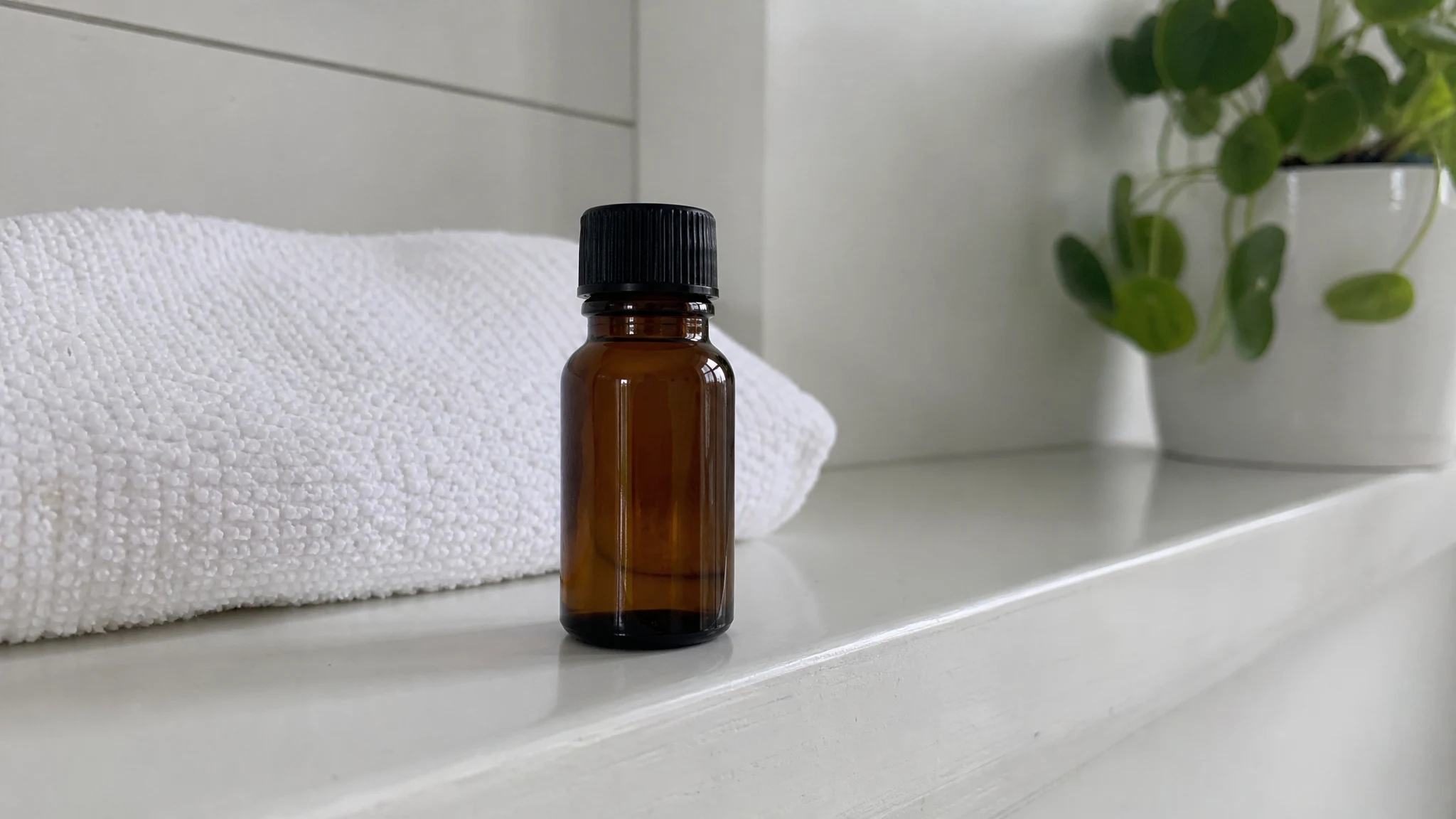
- Test the finished blend, never the bottle. Mix the exact product at the strength you will use. Our guidance for skin is 0.5% to 2% in a carrier, always patch tested first, and we suggest starting at 0.5%, which is arithmetic you can check: 0.5% of a 29.57 ml ounce is about 0.15 ml, roughly 3 drops at 20 drops per milliliter. Do not test undiluted oil.
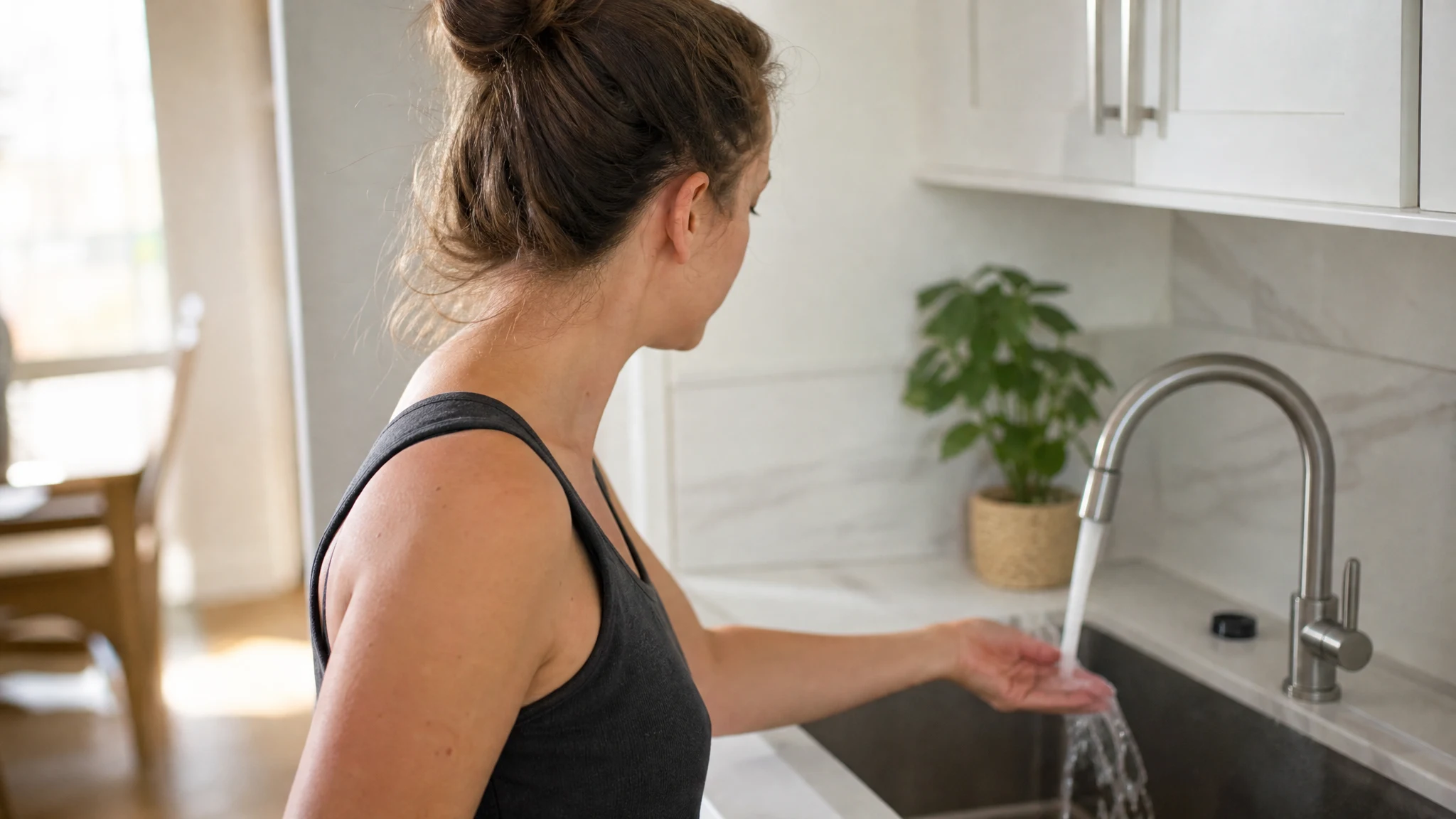
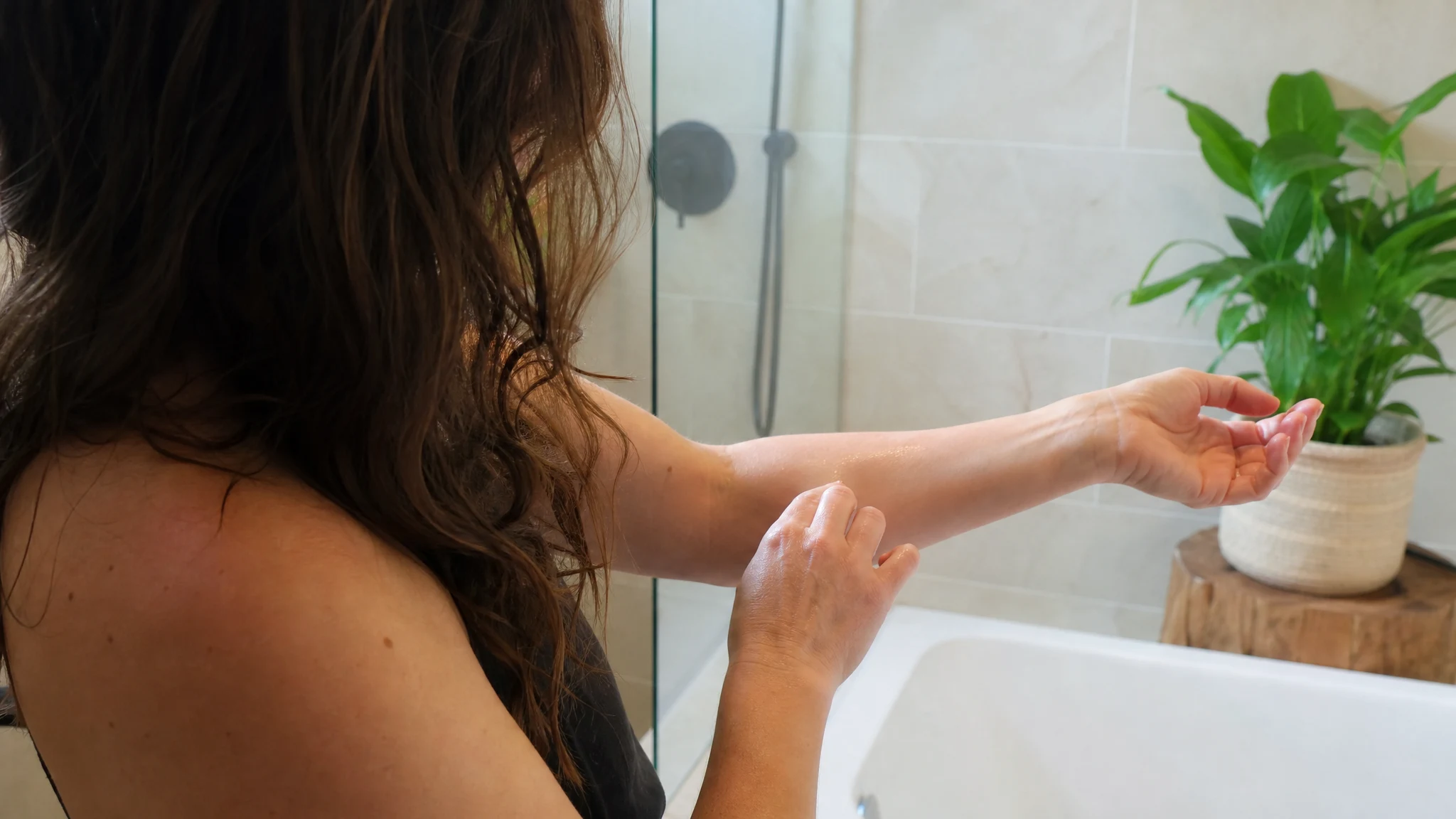
- Use the inside of your arm. The American Academy of Dermatology suggests a quarter-sized amount of a new skin care product on the inside of the arm, applied every day for 7 to 10 days, and going ahead only if the skin is clear after that time.
- Take the full week or more. Reactions often arrive late, and in the clinic study of oxidized linalool, more than 95 percent of the positive cases showed by day 3 or 4 of patch testing.
- Stop at the first sign. Redness, itch, stinging or swelling at the spot counts as a failed test.
- Test the face separately. Facial skin is its own case, so repeat the routine in a small area there before you use the blend more widely.
A clear arm is a screen, not a clearance. It cannot rule out reactions that need repeated use.
Setting up your test week
A little organisation makes the routine easy to follow. Mark the first day on a calendar and count a full week forward, so you are not guessing on day six whether it is time to stop. Write down the date, the oil, the carrier you used and the strength on the label of the small jar you mix in, and keep that jar capped and away from heat and light until the test is over. Pick one spot on the inner arm and use the same spot each day, so any change is easy to see.
Do it at a time of day when you will notice your skin, such as the evening after a shower, rather than in a rush before leaving the house. A clear result is a nice moment, and a reaction is easier to spot when you are paying attention.
If your skin objects
Stop using the product. The NHS says avoiding the trigger usually lets the skin clear and suggests seeing a GP for persistent, recurrent or severe symptoms. A board-certified dermatologist can run a clinical patch test: allergens are taped to your skin and left in place for 48 hours, with readings after that. Bring the bottle and the blend you used. Swelling of the face or lips, nausea, vomiting or trouble breathing is an urgent medical matter, and oil in the eyes or any swallowing is a call to your poison center at 1-800-222-1222 in the US.
If you are pregnant, nursing, taking medication, or have a medical condition, check with your doctor first; our pregnancy article and the piece on babies and children cover those cases, and our dilution guide has the full arithmetic.
Give your blend the full week, trust your skin if it says no, and let a dermatologist take it from there.
Lavender Essential Oil
Lavender Essential Oil from our own shop, in sizes from 0.5 oz to bulk.
From $12.99
Shop Now →Sources & Further Reading
- NHS. Contact dermatitis. nhs.uk/conditions/contact-dermatitis
- American Academy of Dermatology. Eczema types: Contact dermatitis overview. aad.org
- American Academy of Dermatology. Eczema types: Atopic dermatitis skin care. aad.org
- American Academy of Dermatology. Patch testing can find what's causing your rash. aad.org
- Bingham LJ et al. Contact allergy and allergic contact dermatitis caused by lavender: A retrospective study from an Australian clinic. Contact Dermatitis, 2019. europepmc.org/article/MED/30779160
- Bråred Christensson J et al. Air-oxidized linalool: a frequent cause of fragrance contact allergy. Contact Dermatitis, 2012. europepmc.org/article/MED/22906042
- Hagvall L, Christensson JB. Patch Testing with Main Sensitizers Does Not Detect All Cases of Contact Allergy to Oxidized Lavender Oil. Acta Derm Venereol, 2016. europepmc.org/article/MED/26671837
- Sukakul T et al. Contact allergy to oxidized linalool and oxidized limonene: Patch testing in consecutive patients with dermatitis. Contact Dermatitis, 2022. europepmc.org/article/MED/34561893