Choosing a Carrier Oil for Lavender: What to Look For
Lavender gets the credit in a blend, but the carrier does quiet work of its own. It sets how far the lavender stretches, how long the mix stays fresh, and whether anyone in the family has an allergy to it. We sell four lavender-family oils, sold neat, and no carrier oils, so what follows is a way of choosing one, not a list of products to buy from us.
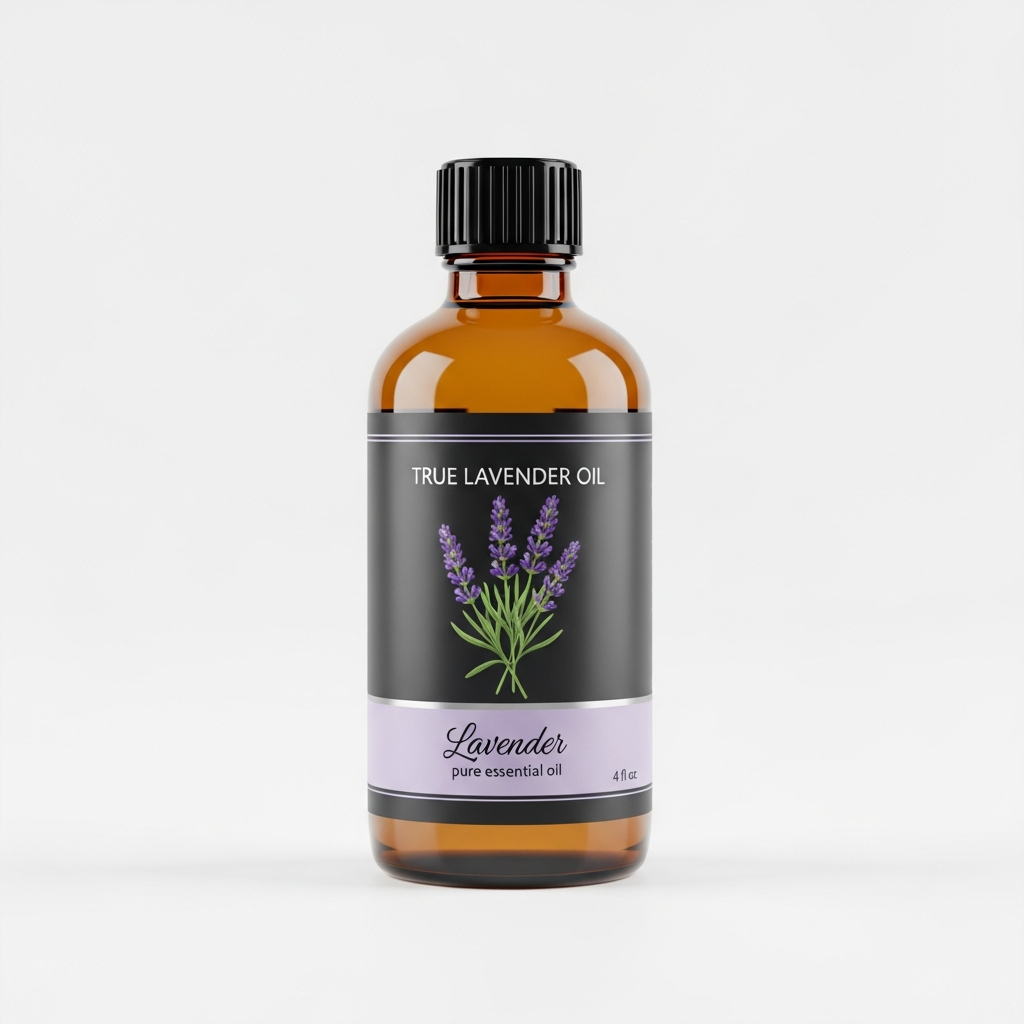
Lavender Essential Oil
Our own Lavender Essential Oil, in sizes from 0.5 oz to bulk.
From $12.99
Shop Now →Start with the percentage
Our dilution guidance for all four of our oils is 0.5% to 2% in a carrier such as sweet almond, grapeseed, fractionated coconut or jojoba, which works out to about 3 to 12 drops per ounce. The Tisserand Institute breaks the numbers down by use. Here they are next to our range, worked out per ounce of carrier (29.57 ml):
| Use | Range | Oil per 1 oz of carrier |
|---|---|---|
| Sensitive or impaired skin (Tisserand) | 0.2% to 1% | about 0.06 to 0.30 ml |
| Facial products (Tisserand) | 0.5% to 1.2% | about 0.15 to 0.35 ml |
| Body oils and lotions (Tisserand) | 1% to 3% | about 0.30 to 0.89 ml |
| Our guidance | 0.5% to 2% | about 0.15 to 0.59 ml |
That arithmetic is ours, and Tisserand points out that conversions using drops are always approximate because no two drops are the same, so weigh when you can. Our guidance spans both the facial and body ranges. We start at the lower end for the face and for anyone with reactive skin, and we do not treat 2% as a figure that is safe for everyone. Lavandin grosso and spike lavender are different oils from the angustifolia, with a more camphor-tinged character, so the lower end is where we would stay with them too. Our posts on dilution and on using lavender neat go further.
Freshness: the carrier ages too
Lavender oil does not protect itself from air. A 2008 study found its main compounds oxidised at the same rate as the isolated compounds, and the oil became a stronger skin sensitiser as they did. A carrier cannot reverse that, but a carrier that is itself turning rancid adds its own off smell on top.
Carriers differ in how long they last, and the driver is how many polyunsaturated fatty acids they hold. In a 2026 laboratory comparison of rosehip, sunflower, olive and jojoba oils, a heated test at 373 K (100 C) found jojoba had the longest induction period, followed by olive, sunflower and rosehip, and the order tracked polyunsaturated content. That is an accelerated test on four oils, not a shelf life in months, and sweet almond, grapeseed and coconut were not in it. What it supports is the principle: the more polyunsaturated the oil, the shorter its window. Reasoning from that, a small batch in jojoba should hold its scent longer than the same batch in sunflower, and a slow-use blend like a face oil is where that matters most.
For sweet almond, grapeseed and fractionated coconut, the supplier's own specification sheet, with the fatty acid profile and a best-by date, is the thing to ask for. Buy the smallest bottle you will finish. Our oils are typically stable 2 to 3 years unopened, which says nothing about a lavender and carrier mix, so make small batches. Our storage guide has more.
The allergy question
Sweet almond oil comes from a tree nut, and tree nuts are among the major food allergens on the FDA's food allergy page. That page is about food, not skin, so it does not give a skin-contact rate. Still, if you or the recipient has a tree nut allergy, the carrier is a question for an allergist before it is a question for a recipe, and a seed or fruit based oil removes it at the outset. No carrier is free of risk, and a plant origin is not a safety label.
Feel matters too
Beyond shelf life, think about how a carrier feels on your hands. Some oils sink in quickly and leave a dry finish, while others stay slick on the surface for a while. Rub a drop of each plain carrier on the back of your hand before you commit to a large bottle. A texture you enjoy is one you will actually use, and an oil you use up is an oil that stays fresh.
Choosing by job
- Slow-use blends such as a roller or a face oil: pick the carrier most resistant to oxidation that you tolerate, and stay in the lower facial range. See our face oil formulation.
- Massage: you use more oil per session, so slip matters more than shelf life. See lavender oil for massage.
- Reactive skin or eczema: stay in the 0.2% to 1% range, start with the carrier alone and ask a dermatologist. See our eczema post.
Start small
If you are undecided, pick up the smallest bottles of two different carriers and make two tiny batches of the same blend, labelled clearly. Compare them in your own routine for a couple of weeks. It costs very little, and you learn more from your own hands than from any chart. Keep notes on how each one smelled, felt and aged, then choose a favourite and buy bigger.
Questions to ask a supplier
- What is the fatty acid profile, and how high is the polyunsaturated share?
- Is there a best-by date for the lot you are buying?
- If it is a nut oil, is it refined, and what does the supplier say about allergens?
Our oils arrive undiluted, so the carrier, the maths and the patch test are yours to manage. If the species matters to your formula, ask us in writing through our contact page, especially for the 40/42 grade, whose species its page does not state. Carriers themselves are easy to find at a craft shop or pharmacy.
Lavender Essential Oil
Lavender Essential Oil from our own shop, in sizes from 0.5 oz to bulk.
From $12.99
Shop Now →Sources & Further Reading
- Tisserand Institute. Dilution for essential oils. tisserandinstitute.org
- Hagvall L et al. Lavender oil lacks natural protection against autoxidation, forming strong contact allergens on air exposure. Europe PMC 18759894
- Fagoaga C et al. Oxidative Stability and Kinetics of Oxidation of Rosehip, Sunflower, Olive and Jojoba Oils. Europe PMC 42193267
- FDA. Food Allergies. fda.gov