Homemade Lavender Gifts: Dry, Oil-Based and Water-Based
The hard part of a homemade lavender gift is not the scent. It is that you cannot patch test the person unwrapping it, and you may not know whether they share a house with a dog, a toddler or a nut allergy. So we like to plan gifts by how much each kind asks of the maker, starting with the easy ones and working up.
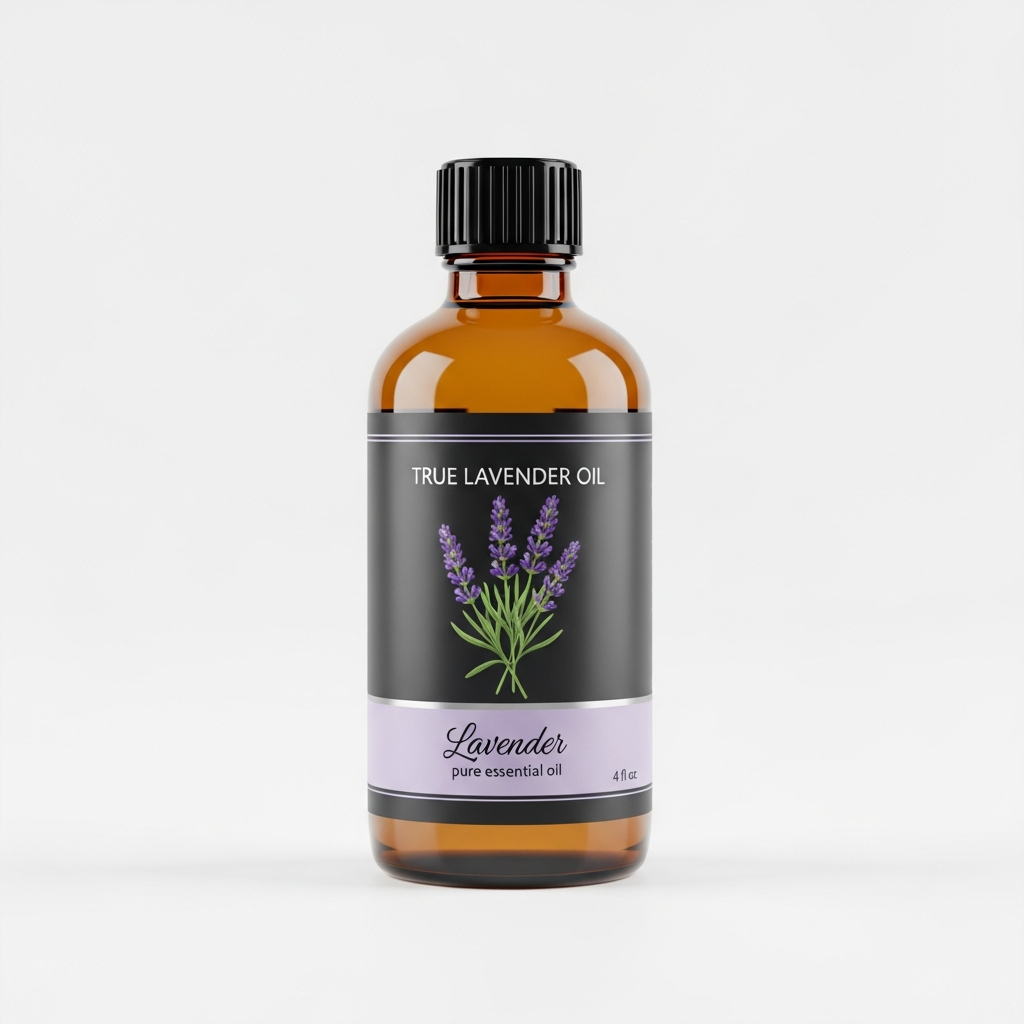
Lavender Essential Oil
Our own Lavender Essential Oil, in sizes from 0.5 oz to bulk.
From $12.99
Shop Now →Dry gifts: the easiest to get right
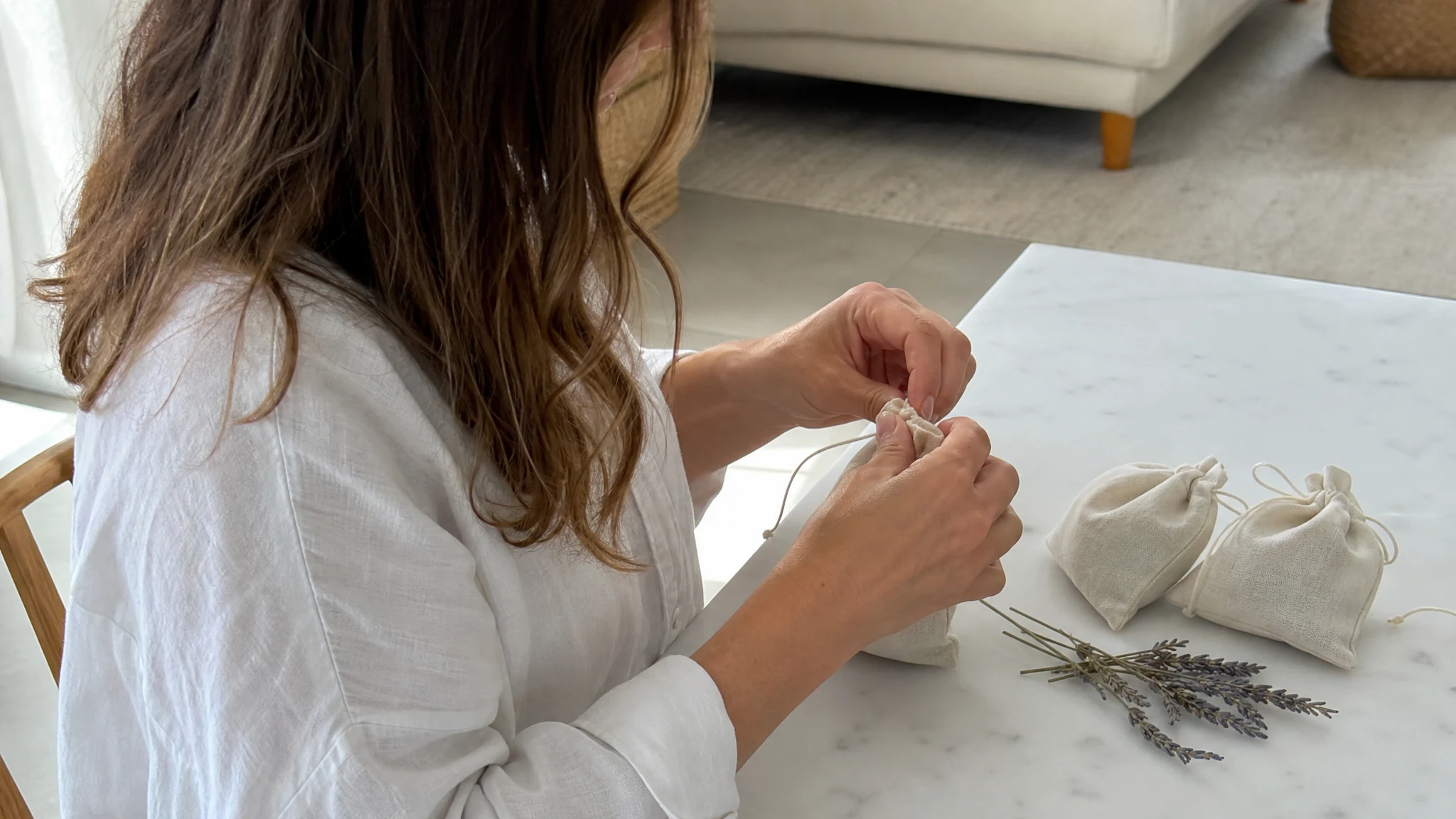
A fabric sachet, a drawer liner or a wax-dipped card holds a small amount of oil in a closed space, with no water to spoil and nothing on skin. They also suit the angustifolia oil well, since its soft, floral, gently herbaceous scent is the one most people picture when they think of lavender. Two small habits still help. Lavender oil does not protect itself from air: in a 2008 study of air-exposed lavender oil, its main compounds oxidised at the same rate as the isolated compounds and the oil became a stronger skin sensitiser as they did. So use a fresh bottle, keep it capped between uses, and write the date on the gift.
The second habit is about the household. The ASPCA lists lavender as toxic to dogs, cats and horses, and the National Capital Poison Center advises keeping essential oils out of reach of children and pets. A sachet hung in a closet is safer from a curious dog than one on a coffee table, and our post on lavender oil and dogs goes into what poison centers say.
Oil-based gifts for skin
A body oil, a roll-on or a solid balm contains no water, which sidesteps the preservation question, and the dilution is entirely in your hands. The Tisserand Institute's dilution page gives 0.5 to 1.2% for facial products, 1 to 3% for body oils and lotions, and 0.2 to 1% for sensitive or impaired skin. Our own dilution guidance on the oils we sell is 0.5% to 2% in a carrier. For a gift going to someone whose skin we cannot know, we start at the low end, 0.5% to 1%. As arithmetic rather than a tested recipe, 1 oz of carrier is 29.57 ml, so 0.5% to 1% is about 0.15 to 0.30 ml of oil, which at the common rough figure of 20 drops per ml is about 3 to 6 drops. Droppers vary, so weigh if you can.
Patch testing is the other piece of advice you will see everywhere, and Tisserand's page on irritation and allergic reactions says it is not 100% reliable, with both false positives and false negatives. For a gift, the recipient is the tester, so a friendly tag does the job: try a little on the inner forearm first and stop if it itches. Anyone with eczema or dermatitis is best given something else, and our eczema post explains why.
Then there is the carrier. Sweet almond is a popular choice, and it comes from a tree nut, one of the major food allergens listed on the FDA's food allergy page. That page is about food, so it does not tell us how skin contact behaves, but a nut-free carrier is an easy way to remove the question. Our carrier oil guide walks through the options; we do not sell carriers, so a craft shop or pharmacy is the place to look.
Anything with water in it
Linen sprays, room mists and mixed scrubs are lovely, and they ask the most. A review of cosmetics preservation explains that products containing water need protection against microbial contamination, and that validating a preservative system involves a challenge test, which is beyond a home kitchen. Reasoning from that, a water-based gift is best treated as a short-lived treat: make it close to the gift date, keep it cool and say so on the tag.
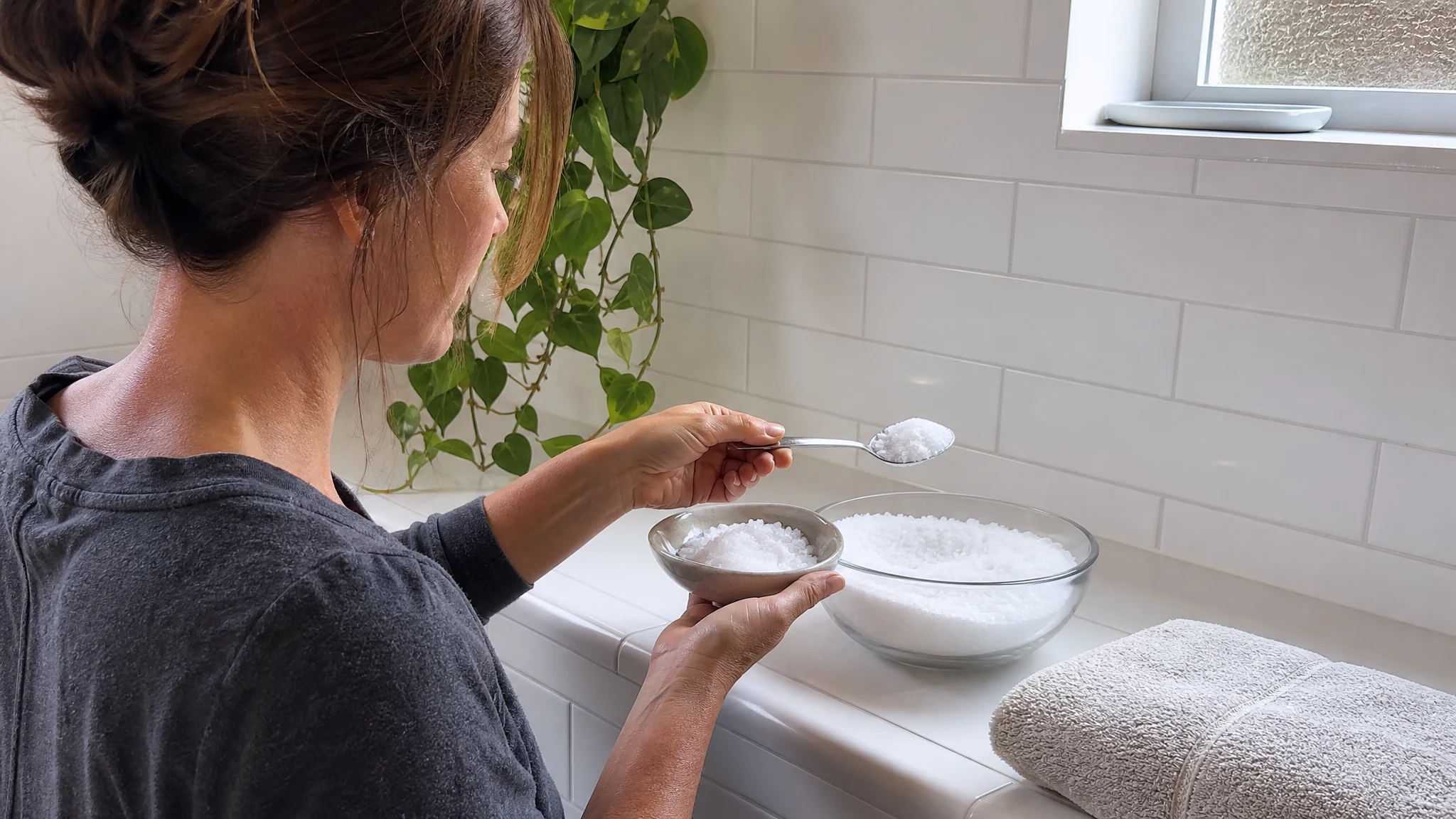
Oil and water also do not mix, which matters more than people expect. Tisserand's bath safety page notes that vodka, at about 40% alcohol, cannot dissolve essential oils, and that oils poured into a bath float on top. A shaken vodka and water spray lands the oil in droplets on fabric or skin. If you cannot source a proper dispersant, an oil-based or dry gift is the kinder choice.
Picking the oil for a gift
We sell four lavender-family oils, and they smell different. The angustifolia oil is soft, floral and gently herbaceous with a clean, sweet finish. Lavandin grosso is fresh and herbaceous with a camphor-tinged lift, and spike lavender is sharper and camphoraceous with little sweetness. Our 40/42 is a trade grade described as smooth, sweet and floral-herbaceous, and its species is not stated on its page, so contact us before ordering if identity matters for your project. For a gift, choose by the scent the recipient will expect. If you are making something to sell, ask us in writing through our contact page for the documentation you need before you order.
Wrapping it up
Presentation does a lot of the work. Wrap a sachet in plain paper and twine, tuck a sprig of dried lavender from a florist or your own garden under the ribbon, and write the tag by hand. People remember the care you took far longer than the formula, and a neat tag with the date and a few plain words about what is inside makes a small gift feel considered.
What goes on the tag
- The oil and its species, with the percentage: "Lavandula angustifolia essential oil, 1%".
- The carrier, so an allergic recipient can see it.
- The date it was made.
- A plain line about children, pets and pregnancy. The NIH's NCCIH says little is known about lavender in pregnancy or breastfeeding, so "ask a professional first" is the honest wording. See our pregnancy post.
Keep health promises off the tag altogether. A gift that says it will help someone sleep promises more than a scented oil can, so let the scent do the talking. If you like the idea of a first project, our DIY hub collects the formulations, and a single-oil sachet is a gentle place to begin.
Lavender Essential Oil
Lavender Essential Oil from our own shop, in sizes from 0.5 oz to bulk.
From $12.99
Shop Now →Sources & Further Reading
- Hagvall L et al. Lavender oil lacks natural protection against autoxidation, forming strong contact allergens on air exposure. Europe PMC 18759894
- Halla N et al. Cosmetics Preservation: A Review on Present Strategies. Europe PMC 29958439
- Tisserand Institute. Dilution for essential oils. tisserandinstitute.org
- Tisserand Institute. Irritation and allergic reactions. tisserandinstitute.org
- Tisserand Institute. Bath Safety: how to use essential oils safely in the bath. tisserandinstitute.org
- NCCIH. Lavender. nccih.nih.gov
- FDA. Food Allergies. fda.gov
- ASPCA. Toxic and Non-toxic Plants: Lavender. aspca.org
- National Capital Poison Center. Essential oils: Poisonous when misused. poison.org