Easy Lavender Face Oil Recipe: 3 Drops in 30 ml
Here is a lavender face oil recipe that fits on a sticky note: 30 ml of a fresh carrier oil and three drops of lavender oil. If that sounds almost too simple, good. At face strength lavender is a whisper, a faint floral note over a carrier you chose for how it feels, and the recipe is mostly about doing the small things carefully.
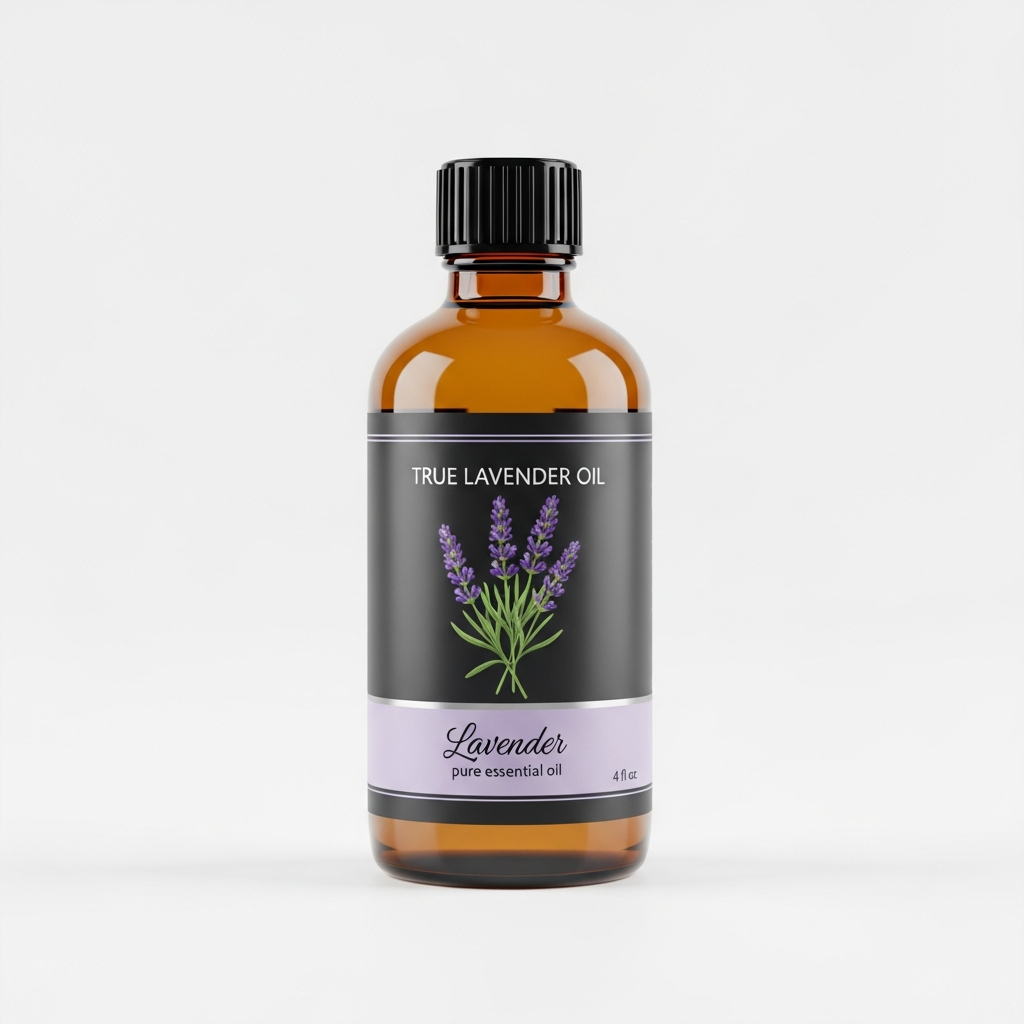
Lavender Essential Oil
Our own Lavender Essential Oil, in sizes from 0.5 oz to bulk.
From $12.99
Shop Now →Why three drops
Our dilution guidance for skin runs 0.5% to 2% in a carrier oil, with a patch test first. For the face we start at the bottom of that range, 0.5%, which is also the bottom of the 0.5-1.2% range the Tisserand Institute lists for facial cosmetics (Tisserand Institute). We start low because the face is a sensitive area and because we cannot point to a lavender-specific ceiling from the sources we use, so 0.5% is our recommendation, not a regulatory limit. Formulating to sell? Check current IFRA standards for your product type.
The arithmetic, at about 20 drops per ml (droppers vary):
| Batch | Strength | Lavender oil | Drops (about) |
|---|---|---|---|
| 30 ml | 0.5% | 0.15 ml | 3 |
| 30 ml | 1% | 0.30 ml | 6 |
| 10 ml | 0.5% | 0.05 ml | 1 |
Each drop in a 30 ml bottle is about 0.17 percentage points, so a heavy fourth drop is already a step toward the next strength. Count slowly and use the same dropper every time. In a 10 ml bottle one drop is the whole dose, which makes small bottles hard to get precise; the 30 ml size is more forgiving.
The carrier is nearly the whole product
Because the carrier makes up almost all of a face oil, its freshness matters more than anything else in the bottle. We sell our four lavender oils and no carrier oils, so you will find jojoba, sweet almond, grapeseed or fractionated coconut at a craft shop, pharmacy or grocery. Look for a best-before date, buy small bottles, and choose the carrier by feel: lighter oils absorb quickly, richer ones sit on top. If anyone using it has a tree-nut allergy, pick something other than almond. Our carrier oil guide compares the options in more detail.
Which lavender
For a leave-on face product the scent decides. We describe our true lavender (Lavandula angustifolia) as soft and floral with a clean, sweet finish, lavandin grosso as fresher with a camphor-tinged lift, and spike lavender as sharp and herbaceous; the 40/42 grade is smooth and floral-herbaceous, and its page does not state the species. Most of the patch-test research we cite concerns true lavender, so we do not stretch it to the other oils. The Certificate of Analysis we publish covers one batch of the angustifolia oil: appearance, smell, density 0.894 and refractive index 1.458. If you want GC-MS, an allergen declaration or an SDS, ask us in writing through the contact page before ordering.
Making it
- Start with a clean, dry 30 ml dark glass dropper bottle.
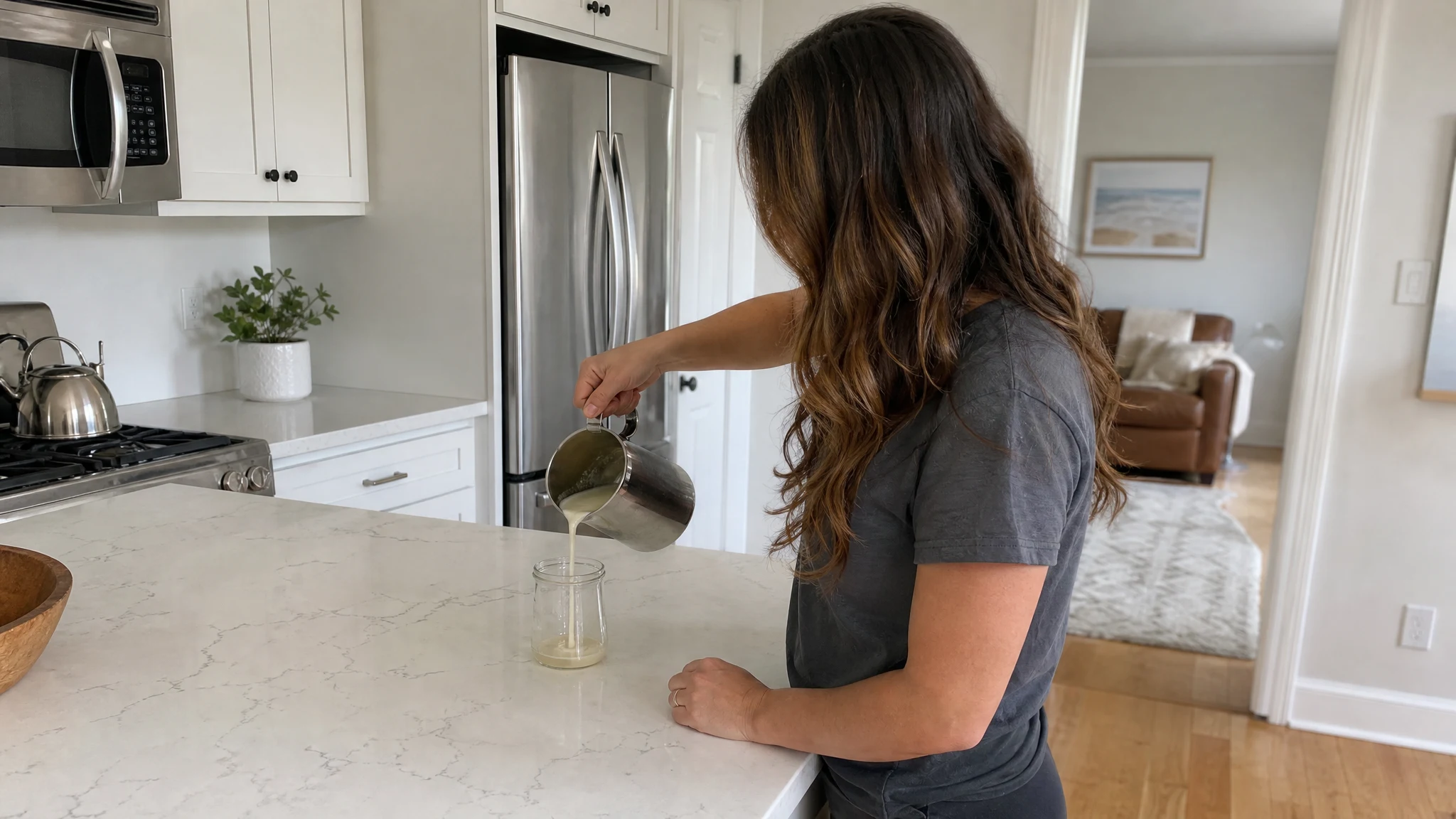
- Pour in about 30 ml of your carrier, leaving a little room at the top.
- Add 3 drops of lavender oil, counted slowly, then cap and swirl for a minute.
- Label it with the date and the carrier's best-before date.
- Patch test a small amount of the finished oil on your inner forearm and watch it for a few days. Allergic reactions can appear later than irritation does. Stop at any itch, redness or stinging.
- If all is well, start with a few drops on a small area, away from the eyes.
Make small batches and cap the bottle after each use. Lavender oil that sits in air oxidizes, and in a study of air-exposed lavender oil the oxidized oil was a stronger skin sensitizer in mice (Hagvall et al., 2008). We suggest keeping the bottle in a cool, dark cabinet.
Using it
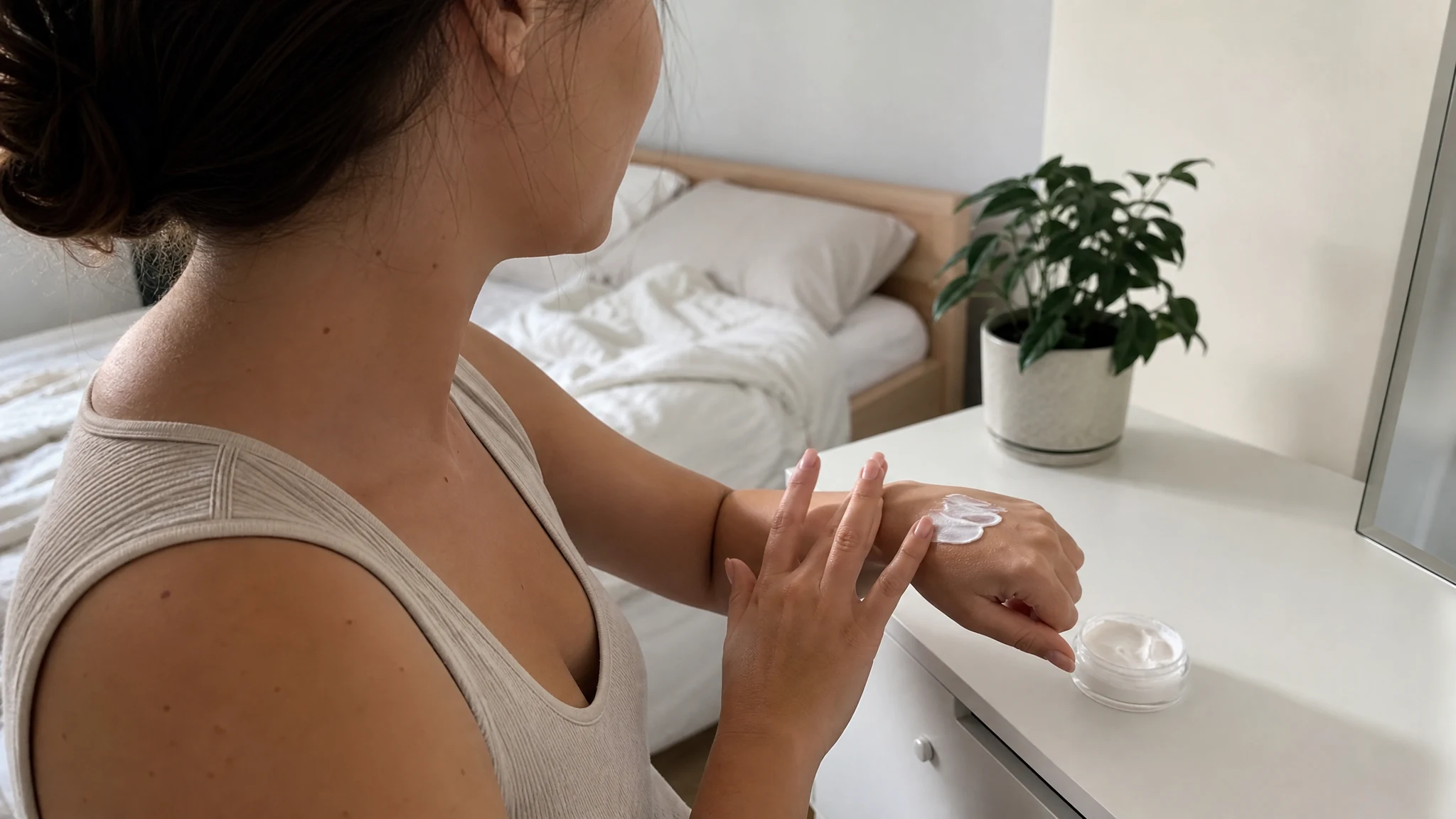
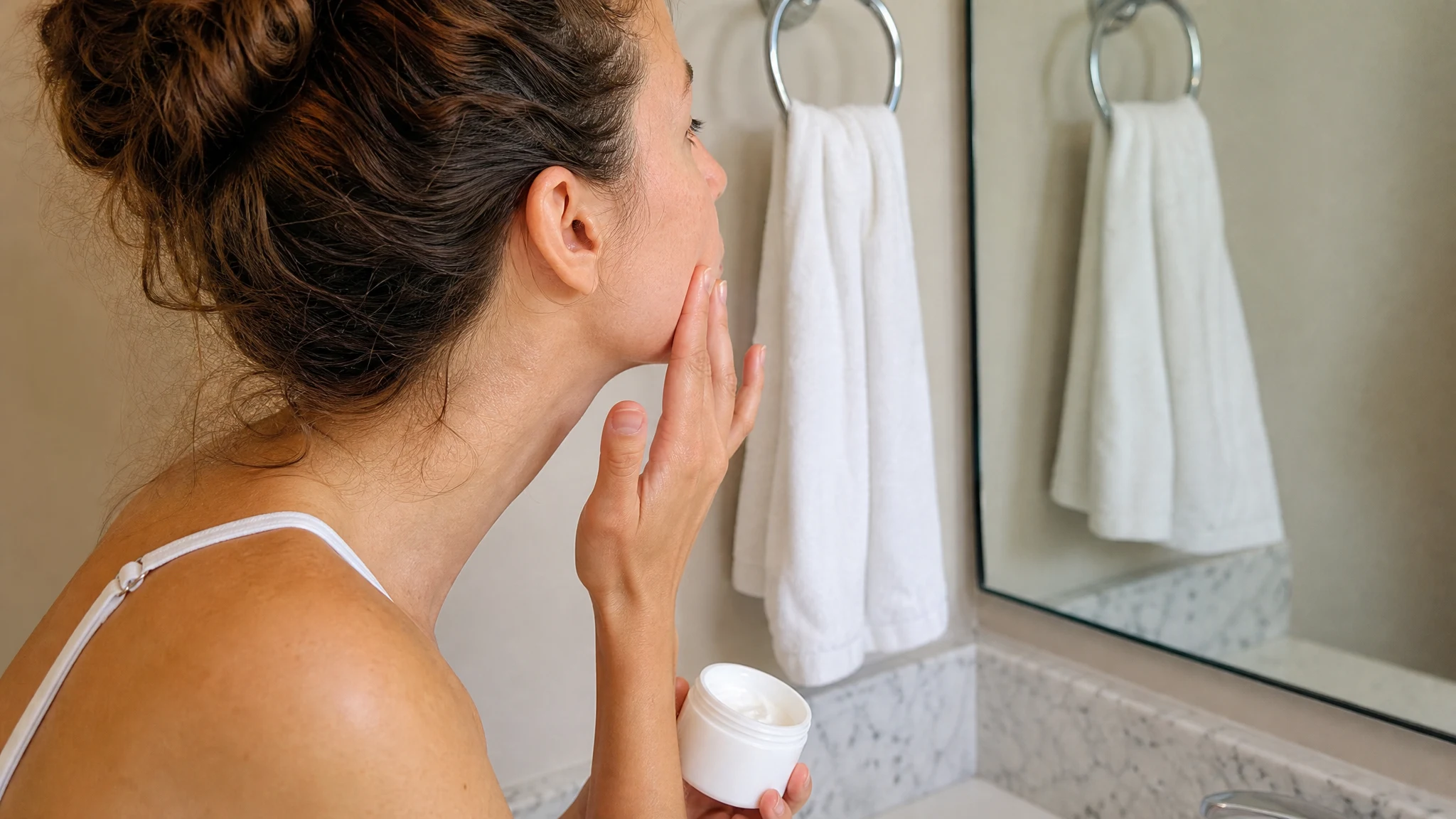
Warm a few drops of the finished oil between clean fingertips and press it lightly over clean skin, keeping well away from the eyes. A little goes a long way: if your skin feels slick, you used more than you needed. Give it a minute to settle, then take a breath. At this strength the lavender should be a faint floral whisper, there when you lean in and gone when you do not.
Keep the bottle out of the steam of a hot shower and out of direct sun, and put the cap back on every time.
Who should check first
Lavender is an uncommon cause of allergic contact dermatitis, but a review of an Australian patch-test clinic found 2.2% of patients tested with lavender reacted, and it concluded it is worth keeping in mind because lavender turns up in so many personal care products (Bingham et al., 2019). Those patients were already seen for skin problems, so it is not a rate for everyone. Still, if you have eczema, broken or inflamed skin, or you have reacted to fragrance before, ask a dermatologist first; Poison Control advises against essential oils on damaged skin (Poison Control). Pregnant or nursing, or living with a medical condition, talk to your physician. Keep oils away from children and pets; our allergy guide has more.
The FDA treats a product's intended use as the line between a cosmetic and a drug (FDA), so we describe this oil by its aroma and feel and make no promises about changing skin. For a lighter, water-based alternative, see the face mist.
Three drops, a fresh carrier and a bit of patience. It is a small recipe with a pleasant, quiet scent.
Lavender Essential Oil
Lavender Essential Oil from our own shop, in sizes from 0.5 oz to bulk.
From $12.99
Shop Now →Sources & Further Reading
- Tisserand Institute. Dilution for essential oils. tisserandinstitute.org
- Hagvall et al., 2008. Lavender oil lacks natural protection against autoxidation, forming strong contact allergens on air exposure. Contact Dermatitis. pubmed.ncbi.nlm.nih.gov/18759894
- Bingham et al., 2019. Contact allergy and allergic contact dermatitis caused by lavender: A retrospective study from an Australian clinic. Contact Dermatitis. pubmed.ncbi.nlm.nih.gov/30779160
- Poison Control. Essential oils: Poisonous when misused. poison.org
- FDA. Is It a Cosmetic, a Drug, or Both? (Or Is It Soap?) fda.gov