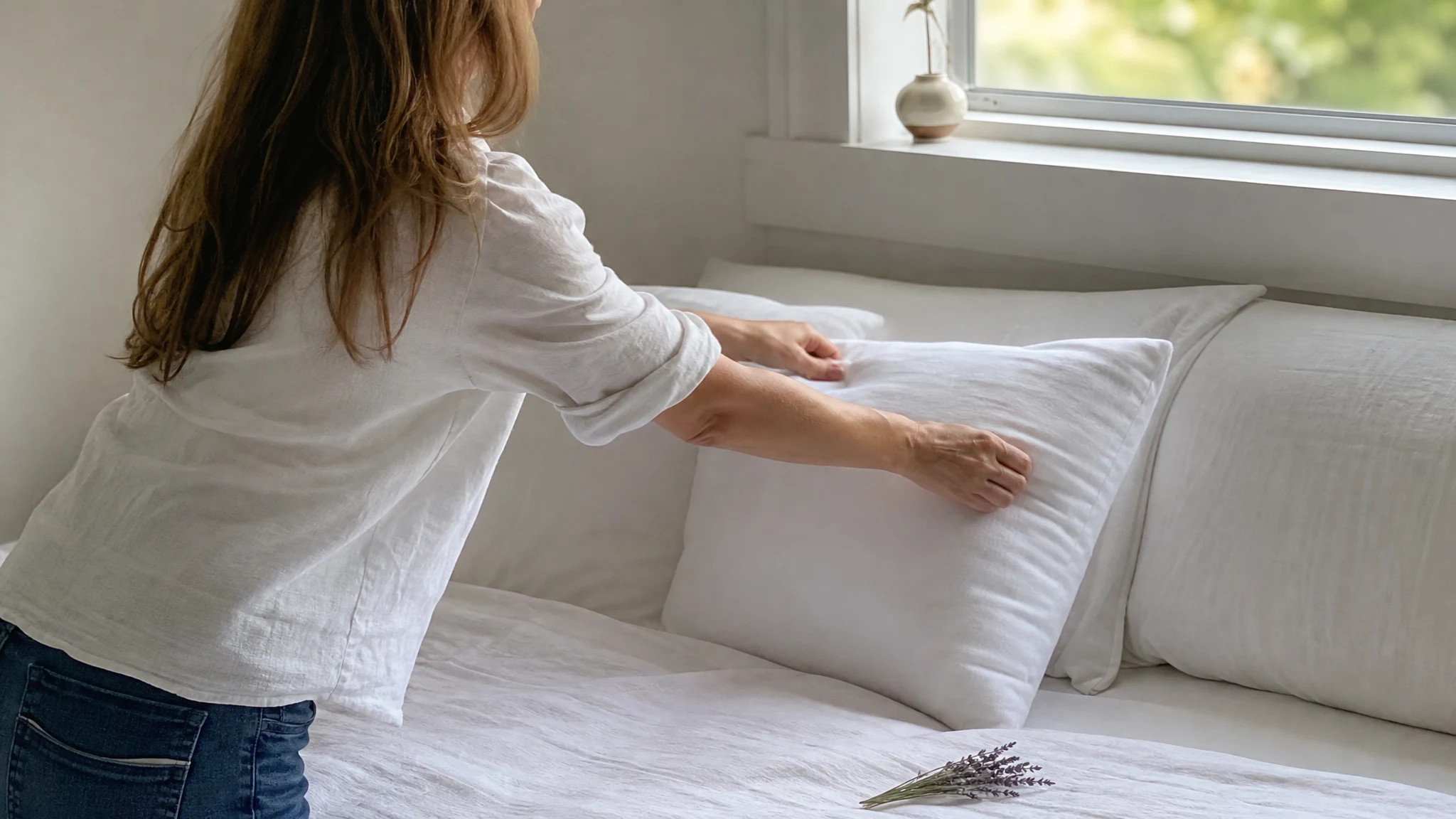
Lavender Pillow Mist: How to Make One and Keep It Fresh
A pillow mist is one of the nicest small ideas in the lavender world: a light spritz on the linen, the scent of a field, the quiet signal that the day is over. It is often sold on the promise of better sleep, and that is where we want to be careful and honest. We sell lavender oil for external, aromatic use and make no sleep claim for it, so let us talk about what a pillow mist really is: a nicely scented pillow, and a good one if you make it well.
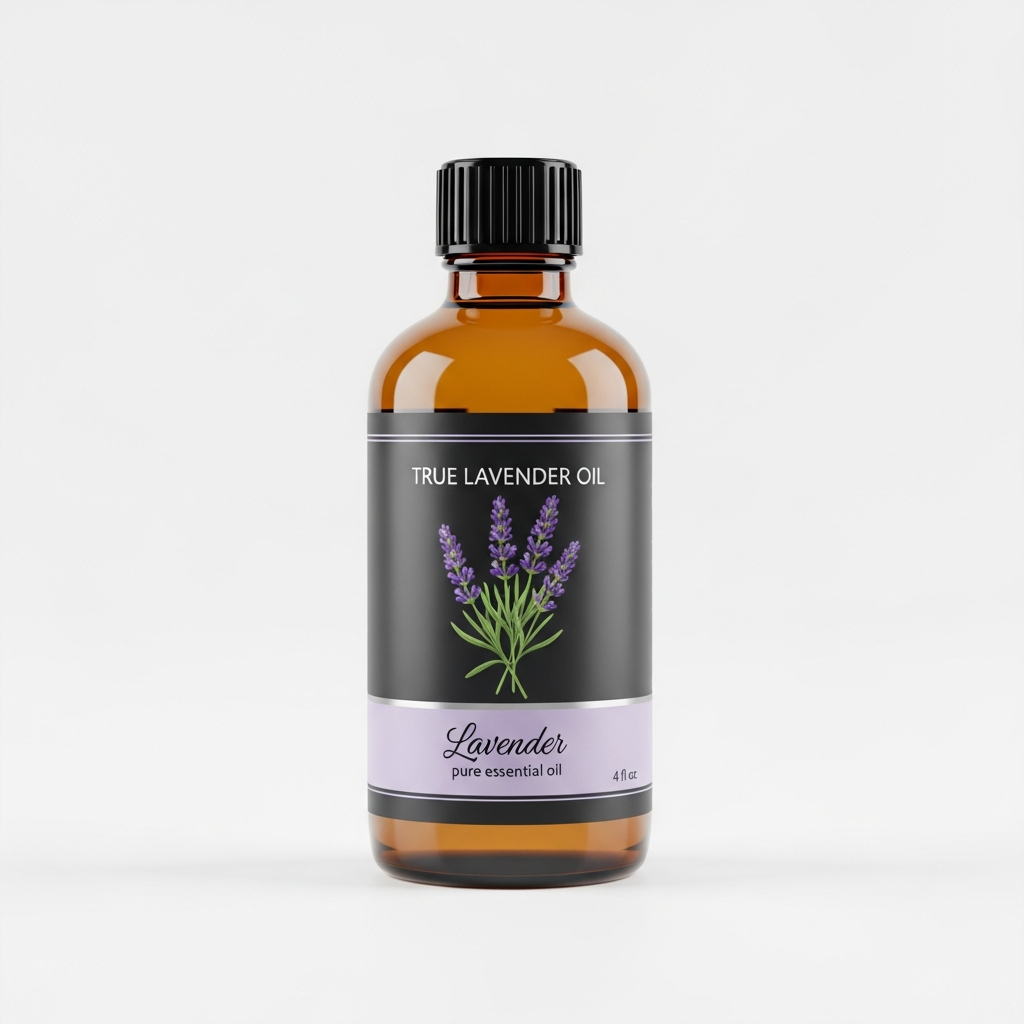
Lavender Essential Oil
Our own Lavender Essential Oil, in sizes from 0.5 oz to bulk.
From $12.99
Shop Now →What the sleep studies tested
The best-known trial did not use a pillow spray at all. In a randomized trial, 79 college students with self-reported sleep issues practiced sleep hygiene for five nights and wore a chest patch at night, with one group's patch carrying 55 microliters of Lavandula angustifolia oil and the other group's blank (Lillehei et al., 2015). Sleep quality scores improved in the lavender group, and the authors noted that sleep hygiene alone improved scores to a lesser degree. The NCCIH, for its part, calls it unclear whether lavender aromatherapy has benefits for anxiety (NCCIH). Our takeaway is that the habits around bedtime, such as a regular routine and a tidy room, are doing real work, and a lovely scent is a pleasant part of that. Our research map sets out what has and has not been studied.
How much lavender is in a spritz?
A chest patch holds a fixed amount all night, while a mist leaves whatever the sprays carry. Here is the arithmetic for 100 g of mist, using 0.894 g/ml (the one angustifolia batch on our Certificate of Analysis; we publish no density for our other three oils) and an assumed spray of 0.1 ml, which you can check by spraying your own bottle onto a scale:
| Mist strength | Oil in 10 sprays (about 1 ml) | Compared with 55 microliters |
|---|---|---|
| 0.5% | about 5.6 microliters | about a tenth |
| 1% | about 11 microliters | about a fifth |
| 2% | about 22 microliters | about two fifths |
A pillow mist is a much lighter touch than the trial's patch, and a mist evaporates where a patch stays against the body, so we draw no conclusion from the comparison. We also do not suggest turning the strength up to compensate. Your face rests on the cloth, so we stay with our low start of 0.5%, in line with the 0.5-1.2% range the Tisserand Institute lists for facial products (Tisserand Institute), and enjoy a soft scent.
Mixing the base
Oil will not mix with water on its own. The Tisserand Institute names polysorbate 20 as a dispersant, with "2-3% is ideal, or whatever is skin safe, but you can go up to 15% or so if needed" for water-based products and an equal amount of polysorbate 20 to oil in the bath (Tisserand Institute). Our suggestion is the simple version: blend the oil with an equal weight of polysorbate 20, then stir into the water. A cosmetic-ingredient supplier carries it; we sell lavender oil only.
Water-based products need protection from microbes (Halla et al., 2018), and some bacteria that worry the industry in water-based personal care products are a particular risk for people with cystic fibrosis or weakened immunity (Tavares et al., 2020). Because a pillow sits next to your nose and mouth, we suggest a small batch of about 100 g, made in a well-washed bottle and used the same day. For a mist that lasts, a cosmetic supplier's broad-spectrum preservative is the route. The same method applies to our linen spray.
Choosing the oil
The trial used true lavender. We describe our Lavandula angustifolia as soft, floral and gently herbaceous with a clean, sweet finish, lavandin grosso as fresher with a camphor-tinged lift, and spike lavender as sharp and herbaceous, with the 40/42 grade a smooth floral-herbaceous oil whose species is not stated on its page. For a pillow, scent is the guide. The Certificate of Analysis we publish for one batch of the angustifolia oil lists appearance, smell, density and refractive index; if you want more documentation, ask us in writing through the contact page.
Setting up the bottle
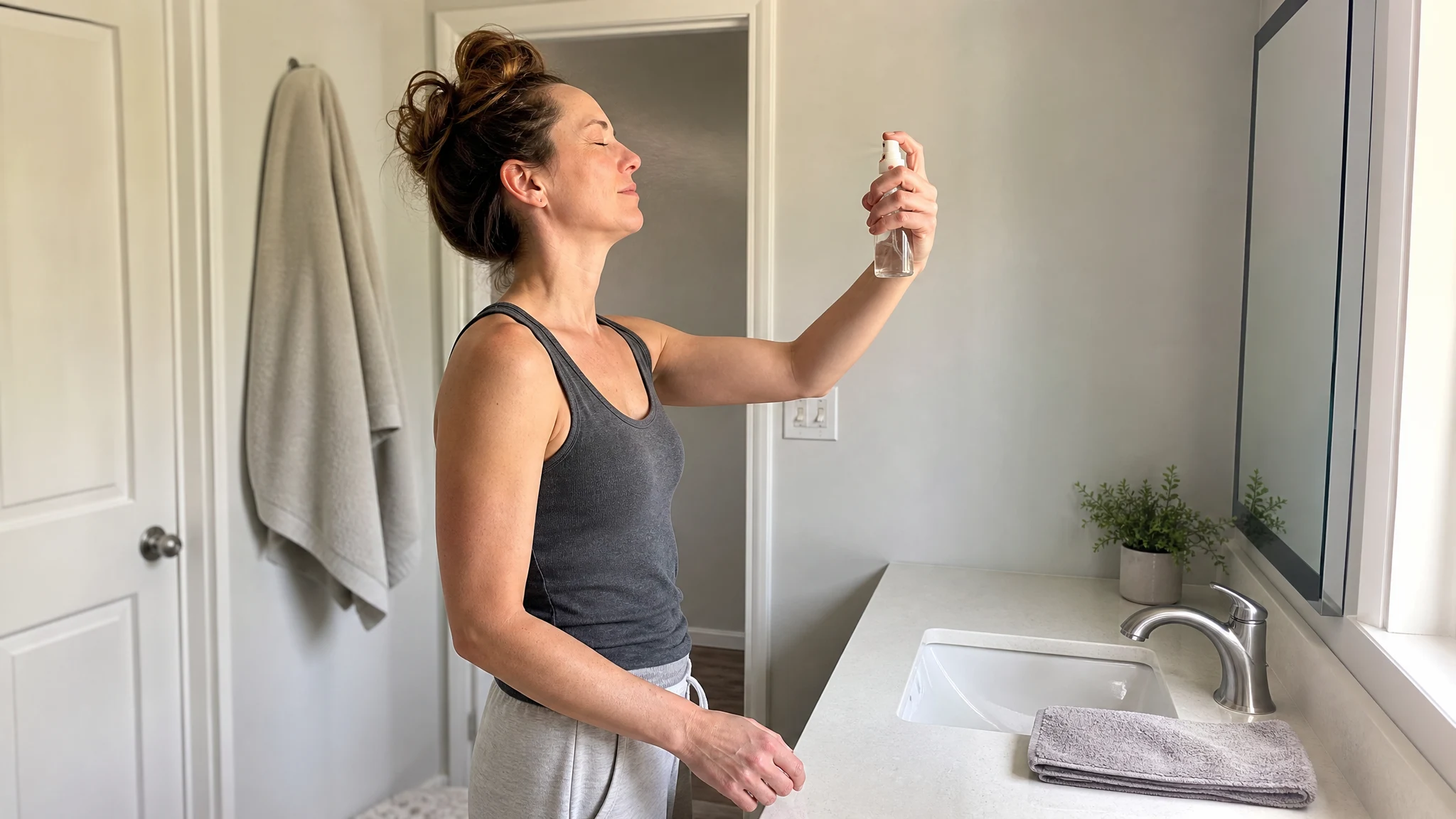
A good bottle makes a bigger difference than most people expect. Choose a fine-mist spray bottle in glass or sturdy plastic, wash it well, rinse it with hot water and let it dry fully before you fill it. Before you add the lavender, test the spray with plain water: hold the bottle at arm's length from a cloth and see how wide and how wet the spritz is. You want a light, even mist, not a wet patch.
When you use the finished mist, spray from a little distance, aim at the corners of the pillowcase instead of the middle, and give the cloth time to dry before anyone lies down on it. A soft scent that arrives gradually is nicer than a loud one that hits you in the face.
Keeping the pillow pleasant
Pillowcases are not washed after every spritz, so oil accumulates on cloth that touches your skin. Air-exposed lavender oil oxidizes into a stronger sensitizer (Hagvall et al., 2008), and that study looked at the oil, not at fabric. So we suggest spraying lightly, letting the cloth dry, and washing the case often. If you have ever reacted to fragrance, skip the spot where your face rests and see our allergy guide.
People who are pregnant or nursing should ask a physician, since NCCIH notes little is known about lavender then, and anyone with asthma should ask theirs too. Persistent trouble sleeping is a question for a physician, not a spray. See lavender oil and cats and lavender oil around children for households with cats or little ones.
If you want a pillow that smells like lavender, a light 0.5% mist does that nicely. Enjoy the scent, keep the bedtime routine, and let the two work together.
Lavender Essential Oil
Lavender Essential Oil from our own shop, in sizes from 0.5 oz to bulk.
From $12.99
Shop Now →Sources & Further Reading
- Lillehei et al., 2015. Effect of Inhaled Lavender and Sleep Hygiene on Self-Reported Sleep Issues: A Randomized Controlled Trial. J Altern Complement Med. pubmed.ncbi.nlm.nih.gov/26133206
- NCCIH. Lavender: Usefulness and Safety. nccih.nih.gov
- Tisserand Institute. Dilution for essential oils. tisserandinstitute.org
- Tisserand Institute. Bath Safety: how to use essential oils safely in the bath. tisserandinstitute.org
- Halla et al., 2018. Cosmetics Preservation: A Review on Present Strategies. Molecules. pubmed.ncbi.nlm.nih.gov/29958439
- Tavares et al., 2020. Burkholderia cepacia Complex Bacteria: a Feared Contamination Risk in Water-Based Pharmaceutical Products. Clin Microbiol Rev. pubmed.ncbi.nlm.nih.gov/32295766
- Hagvall et al., 2008. Lavender oil lacks natural protection against autoxidation, forming strong contact allergens on air exposure. Contact Dermatitis. pubmed.ncbi.nlm.nih.gov/18759894