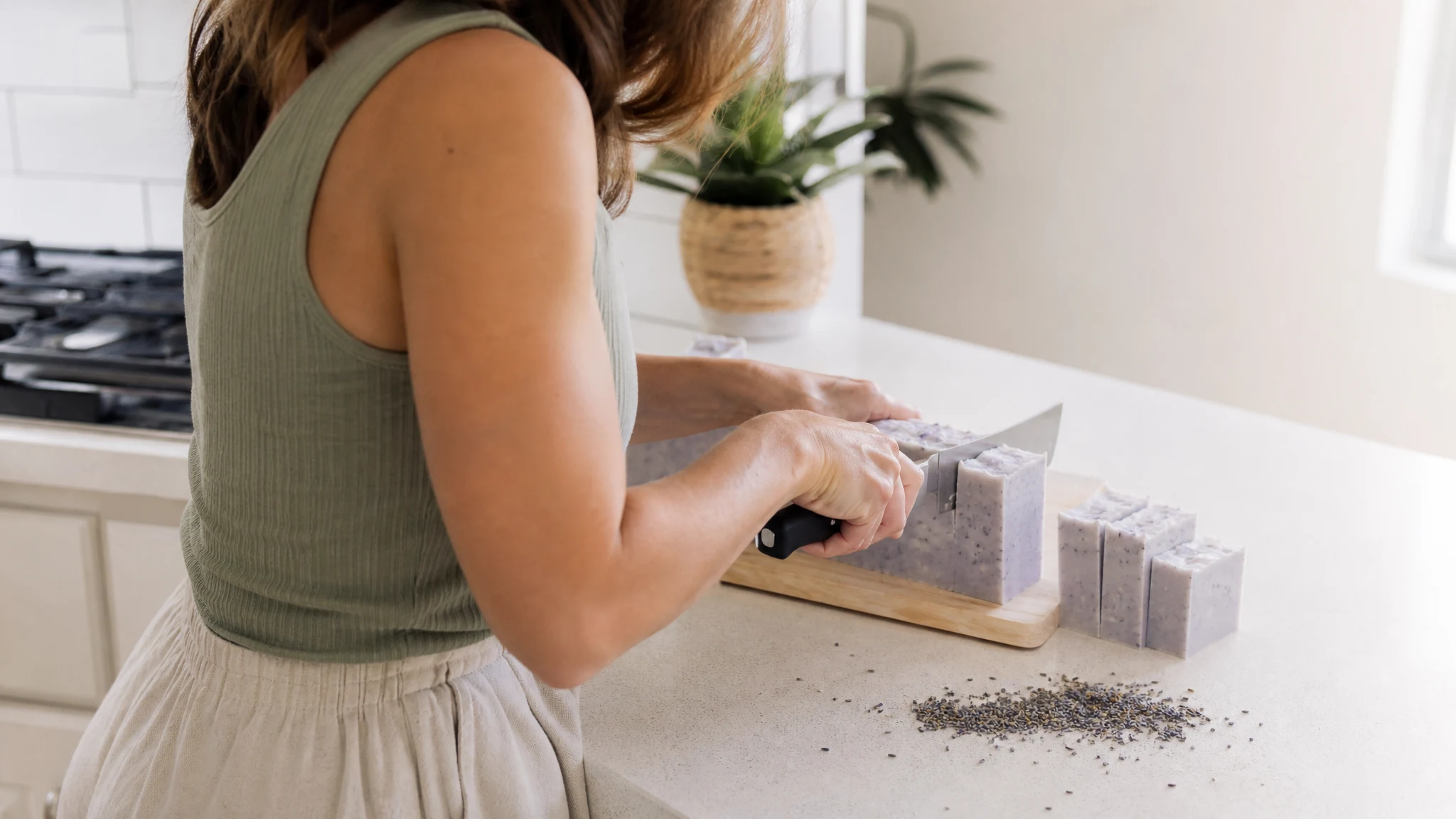
Making Lavender Soap at Home: Why Melt and Pour First
There is nothing quite like a bar of lavender soap you made yourself, and nothing about the lavender in it is the tricky part. The tricky part is lye. If you have never made soap, the kindest thing we can tell you is to begin with melt and pour and save the cold-process project for later.
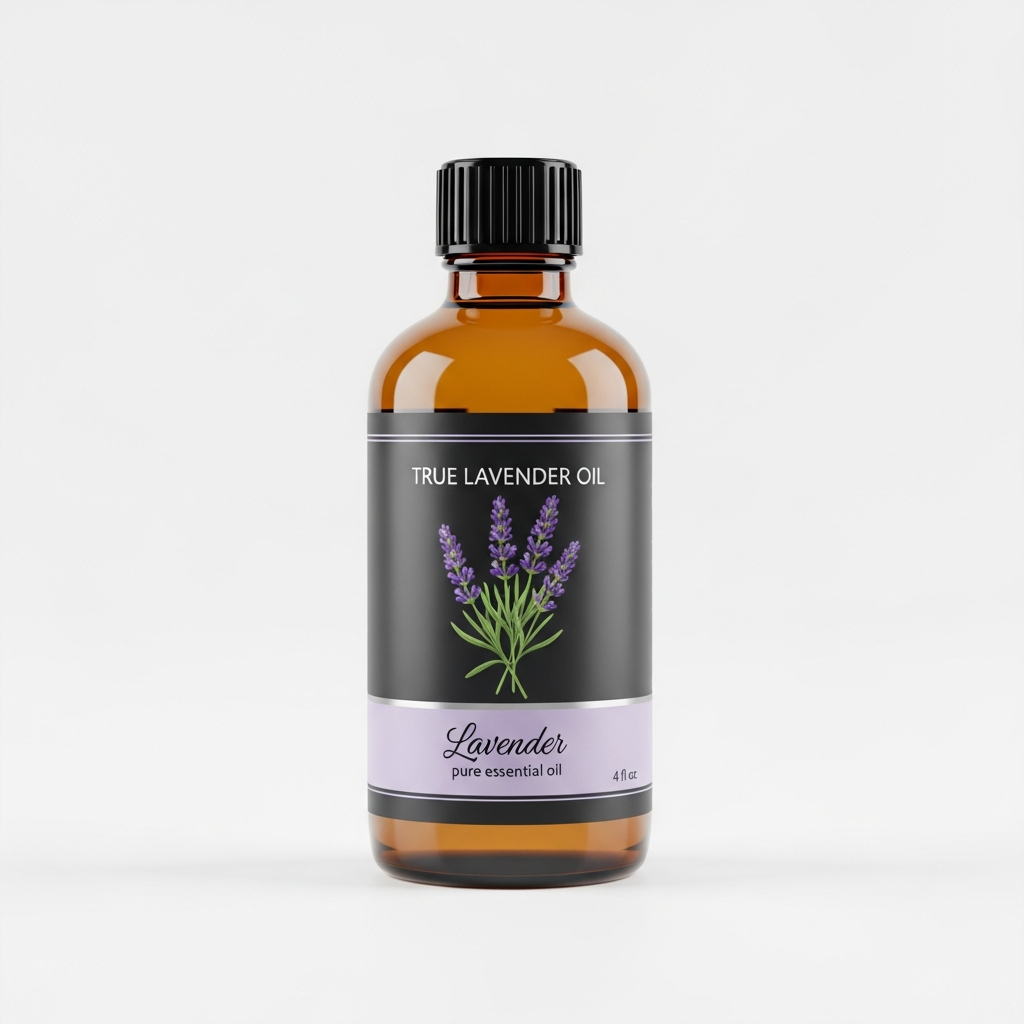
Lavender Essential Oil
Our own Lavender Essential Oil, in sizes from 0.5 oz to bulk.
From $12.99
Shop Now →Why we would start with melt and pour
Cold-process soap is made with sodium hydroxide. The NIOSH Pocket Guide lists its health hazards as irritation of eyes, skin and mucous membranes, pneumonitis, eye and skin burns, and temporary loss of hair. First aid is to irrigate the eyes immediately, flush skin with water immediately, and get medical attention immediately if it is swallowed. NIOSH gives a ceiling of 2 mg/m3 for airborne sodium hydroxide.
Reasoning from that, a purchased melt-and-pour base is a gentler way to learn: someone else has already handled the caustic step, and you can focus on the part that makes the bar yours, the scent. Melt-and-pour is still hot liquid, so treat it with care. If you later move to cold process, use a lye calculator from a reputable soap-making supplier for your particular fats, and follow their safety guidance rather than ours.
How much lavender goes in
Soap is a wash-off product, but it still touches skin. The Tisserand Institute's dilution page puts bath products in its 2 to 4% range. Our own guidance for all four of our lavender-family oils is 0.5% to 2% in a carrier with a patch test first. Where those meet is exactly 2%, and we would go lower: 1% of the finished bar is where we would start.
Here is the arithmetic for a 500 g batch of soap, counting the percentage on the whole batch (some formulas count it on the weight of the fats, so check which yours uses). At 1%, that is 5 g of lavender oil. Using a relative density of 0.894, which is what the certificate we publish for one batch of our angustifolia oil lists, 5 g is about 5.6 ml, or about 112 drops at a rough 20 drops per millilitre. Nobody should count 112 drops, so weigh the oil on a scale that reads to 0.1 g. For melt and pour, stir the oil in after the base has cooled a little from fully melted; your base supplier's data sheet gives the window.
Setting up your workspace
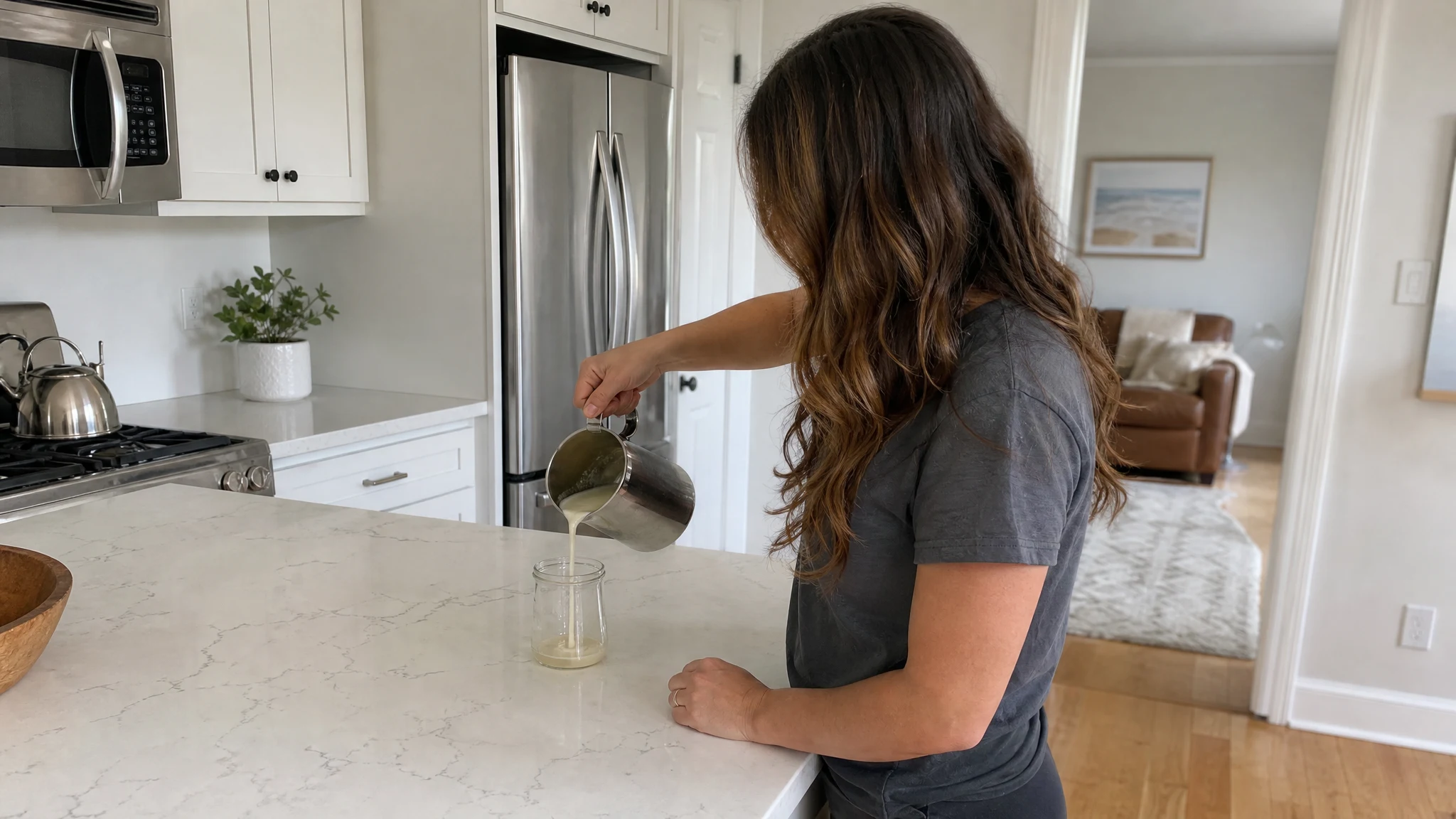
Most of a good first batch is preparation. Cover the table with newspaper or a wipeable mat, and lay out everything before you start: the base cut into small cubes, a heat-safe jug, a spoon you will not use for food again, the mold, and the scale with your oil already weighed into a small cup. Having the oil ready matters because the window for stirring it in is short, and you do not want to be hunting for a measuring spoon with a jug of hot liquid in your hand.
Stir slowly once the oil goes in. Quick stirring makes bubbles, and bubbles show up on the surface of the finished bar. If a few do appear, a quick pass of the jug lip over the mold usually clears them, and your base supplier's instructions will say how long to leave it before you unmold.
Picking the oil
For soap, the main difference between our oils is scent. We describe our angustifolia oil as soft, floral and gently herbaceous with a clean, sweet finish, lavandin grosso as fresh and herbaceous with a camphor-tinged lift, and spike lavender as sharp and camphoraceous. See our comparison of lavender and lavandin to decide which fits the bar you have in mind. If the exact species matters to you, ask us in writing through the contact page before ordering.
Let the scent settle
Expect your finished bar to smell softer than the open bottle did. That is normal when the oil is only about 1% of the whole, and it is not a sign to add more next time. Give the bars a day or two on a rack, wrap them in paper once they have set, and smell them again. A lavender bar that smells quietly of lavender when you pick it up is exactly what we would aim for.
What to call the bar
The FDA treats a product as soap, rather than a cosmetic, only when the bulk of its nonvolatile matter is an alkali salt of fatty acids and it is labeled, sold and represented solely as soap. Soap in that sense is regulated by the Consumer Product Safety Commission, not by FDA. Wording matters too: the FDA says claims about anxiety, depression or helping you sleep are drug claims, and that they are sometimes made for soaps and lotions marketed as aromatherapy. A plain label, lavender soap, keeps you on the right side of that line. If you plan to sell soap, a trade association or the CPSC can give you the rules that apply to your situation.
Skin, children and pets
The National Center for Complementary and Integrative Health notes that topical products containing lavender may cause allergic skin reactions in some people, so lavender soap is best skipped if you have reacted to a lavender product before or have eczema (our allergy guide explains how a reaction happens and how to run a spot test). If you are pregnant, nursing or have a medical condition, check with your physician first.
Poison Control says essential oils must be locked up, out of the sight and reach of children and pets, which applies to the bottle on your workbench and to lye and uncured soap as well. Our pages on cats and dogs cover the pet side.
Make your first bar with melt and pour, weigh the oil, and keep the strength modest. The result is a bar that smells like a lavender field and a hobby you can grow into.
Lavender Essential Oil
Lavender Essential Oil from our own shop, in sizes from 0.5 oz to bulk.
From $12.99
Shop Now →Sources & Further Reading
- CDC - NIOSH Pocket Guide to Chemical Hazards - Sodium hydroxide.
- Tisserand Institute. Dilution for essential oils.
- FDA. Is It a Cosmetic, a Drug, or Both? (Or Is It Soap?)
- FDA. Aromatherapy.
- National Center for Complementary and Integrative Health. Lavender.
- Poison Control. Essential oils: Poisonous when misused.