Lavender Roll-On Recipe: How Many Drops, Exactly?
A roller bottle is the smallest piece of lavender chemistry most people ever mix, and it is almost entirely a counting problem. In a 10 ml bottle, one single drop of oil moves the strength by about half a percentage point, so a recipe that says "a few drops" can mean very different things. Here is how we would work it out so the bottle ends up exactly as strong as you meant it to be.
Lavender Essential Oil
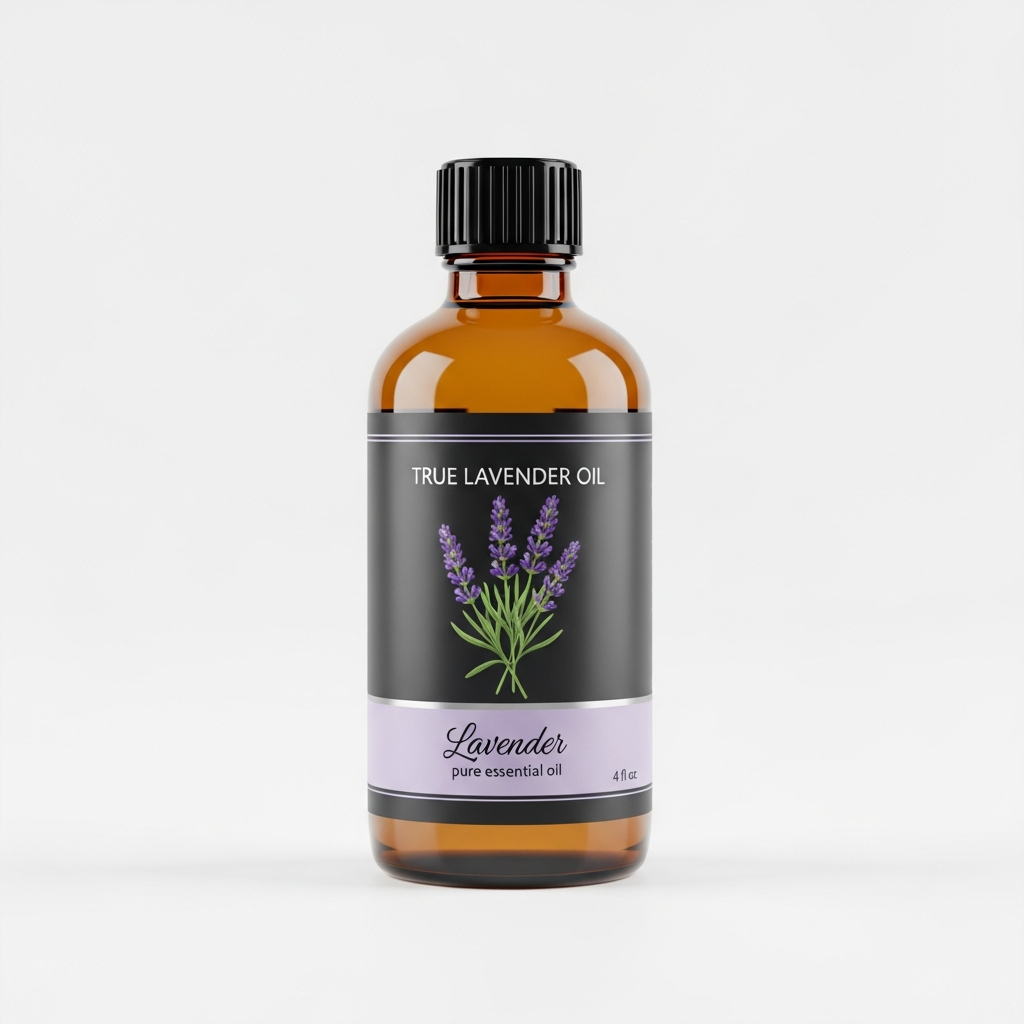
Our own Lavender Essential Oil, in sizes from 0.5 oz to bulk.
From $12.99
Shop Now →Two drops, one percent
The arithmetic runs on a rough convention of about 20 drops to a millilitre. A 10 ml bottle filled with carrier oil at 1% holds 0.1 ml of lavender oil, which is about two drops. At 0.5% it is one drop, and at 2% it is four. Every drop you add or lose shifts the result by half a point, which is a big swing when the target is small.
Drops are also less exact than they sound. The Tisserand Institute notes that conversion rates using drops "are always approximate, because no two drops of essential oil are the same" (Tisserand Institute, Dilution for essential oils). A dropper bottle that gives you 0.04 ml a drop and one that gives 0.06 ml will make a 0.8% roll-on or a 1.2% roll-on from the same two drops. That is why we like a graduated pipette or a small syringe marked in 0.1 ml for a bottle this size: measure 0.1 ml, and the answer does not depend on the dropper.
Choosing a strength
The published ranges are not all in the same place, and it is worth knowing why. The Tisserand Institute lists 0.5 to 1.2% for facial products, 1 to 3% for body oils and lotions, and 0.2 to 1% where skin is sensitive or impaired. It also has a separate range of 3 to 10% for what it calls "feel good" rollerballs, noting that this assumes use on a small area of skin. Our own dilution guidance for the lavender oils we sell is 0.5% to 2% in a carrier, with a patch test first.
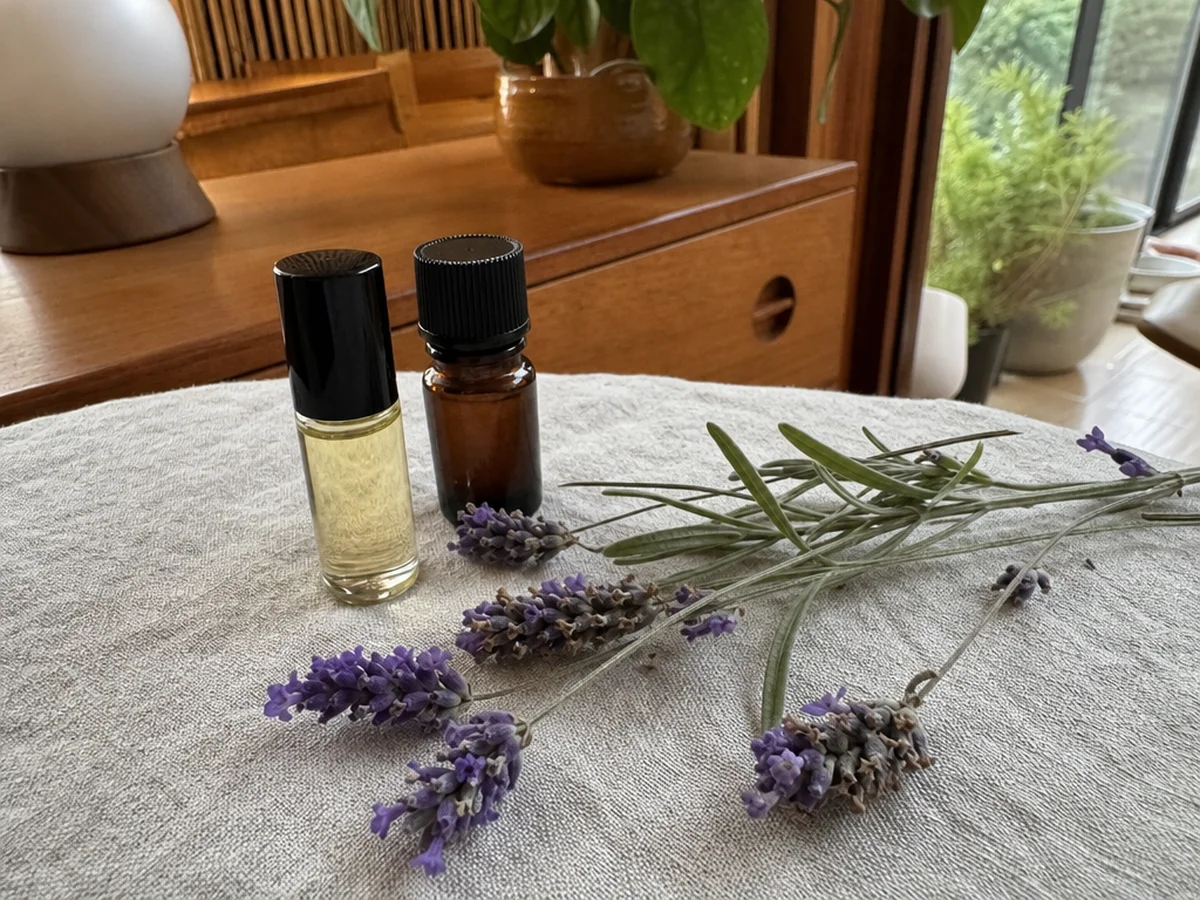
Our recommendation is to start at the low end of that guidance, around 1%, and to treat the rollerball range as something for people who have a particular reason and a professional to ask, not as a target. Published limits can differ by species, and lavandin and spike lavender carry more camphor than true lavender, so check them for the oil you use. For anyone with sensitive skin, the Tisserand page points out a gentler route altogether: put the scent on clothing or use a jewelry diffuser such as a pendant rather than on skin.
Building the bottle
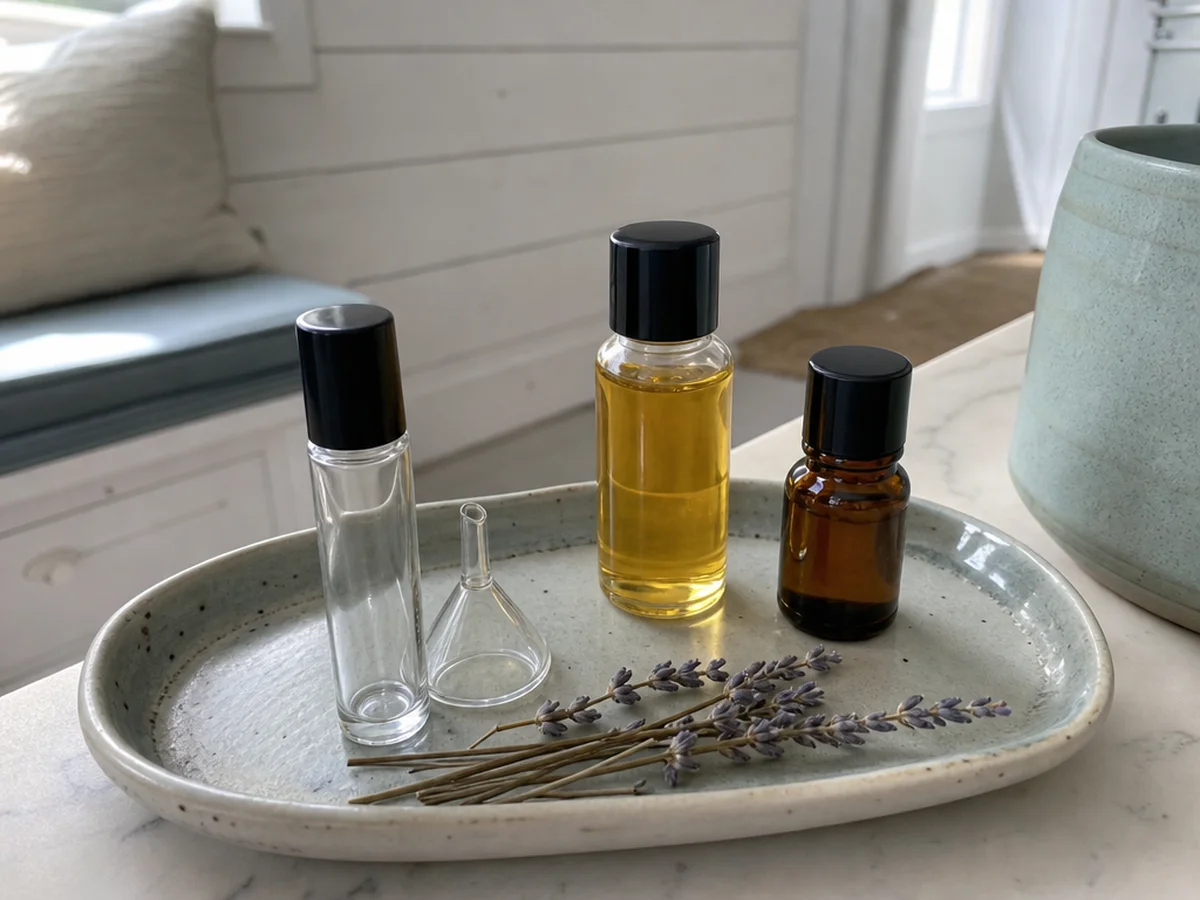
Here is the formulation, worked out from the arithmetic above. For a 10 ml roller bottle: add 0.1 ml of lavender oil (about two drops) first, then fill with a liquid carrier oil such as sweet almond, jojoba or fractionated coconut, cap it and tilt it slowly a few times. Label it with the date and the strength. An oil-only blend has no water in it, so it does not need a preservative; keep water out of it.
Carrier oils, roller bottles and pipettes are things you will find at a craft or supply shop or a pharmacy, since we sell only our four lavender-family oils. If you are choosing a carrier, our carrier oil guide compares the options, and nut or coconut allergies are the first thing to rule out. We would also keep to lavender alone for a first bottle. Every oil you add brings its own limits, and a blend makes it hard to trace a reaction to one ingredient.
Before you fill a bottle, give the oil a proper sniff from the open bottle. Notice whether the aroma is the soft floral kind or something fresher and sharper, and let that guide your choice of oil. A roll-on lives close to your nose all day, so it is worth choosing a scent you will still enjoy at four in the afternoon, not just in the first minute.
Where it goes
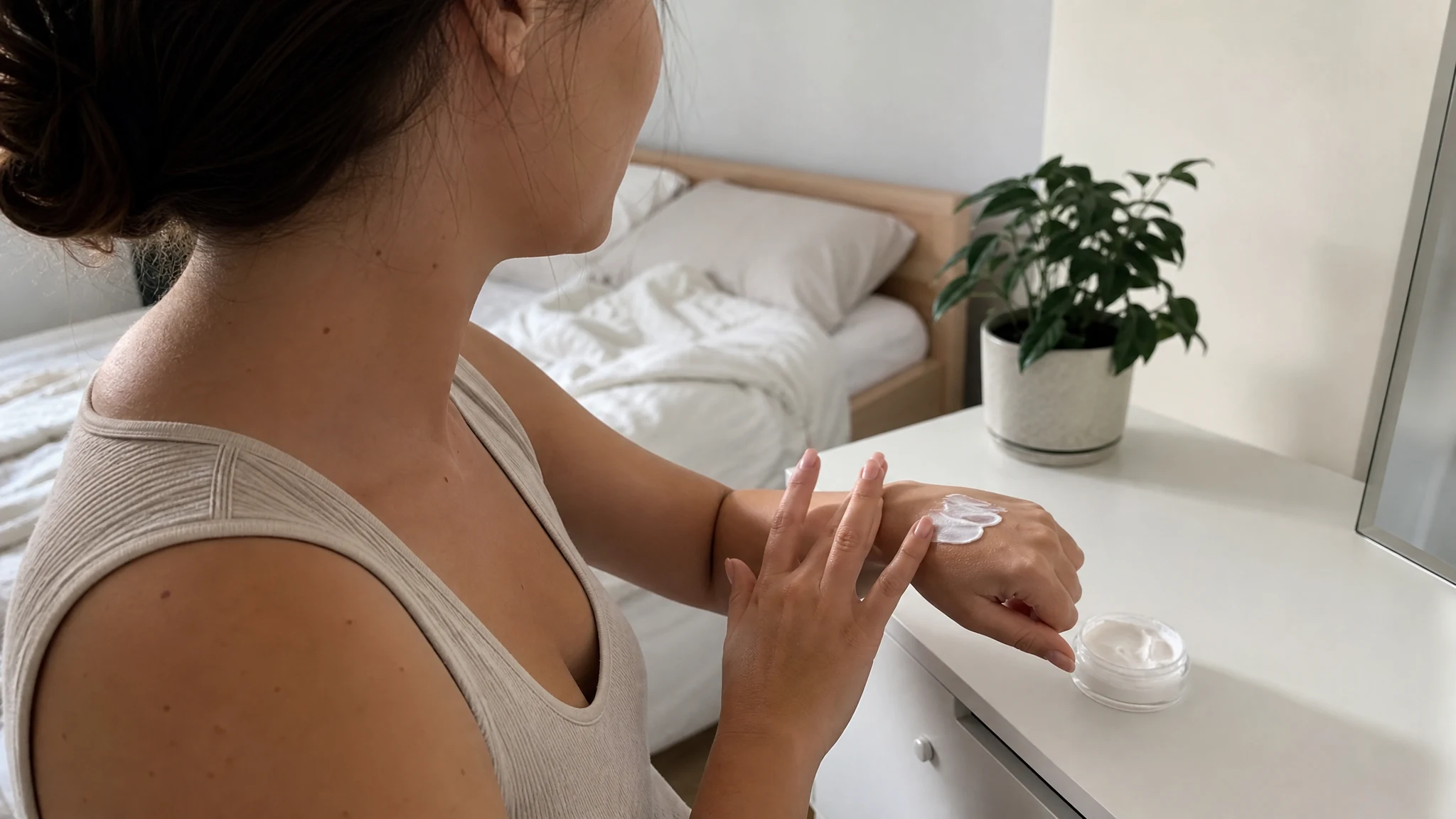
A roll-on lives on wrists and behind the ears, which puts it close to the nose and also close to thin skin and the eyes. Keep it away from eyelids and from skin that is broken or irritated, and use a body-strength roll-on on the body only; our face oil formulation covers the lower facial range. Do a small patch test on the inner forearm first; our patch test guide explains how, and the Tisserand Institute adds that no patch test is perfect, which is another reason to begin low.
Freshness matters more for a roll-on than for most bottles, because it gets carried around and opened again and again. A 2008 study found that lavender oil lacks natural protection against autoxidation and forms strong contact allergens on air exposure (Hagvall et al.). Reasoning from that, we would make one small bottle at a time, keep the cap on, keep it out of a hot car, and replace it if the scent turns flat or sharp. The storage guide goes through the details for the oil itself. If you make roll-ons often, our bulk sizes and guide to buying lavender oil in bulk explain how larger quantities work.
What the scent does, and what we say about it
People reach for a roller bottle because they like carrying a scent they enjoy, and that is a perfectly good reason. The National Center for Complementary and Integrative Health says aromatherapy with lavender oil is considered possibly safe but may cause headache or coughing, and that it is unclear whether it helps with anxiety, stress or sleep. The FDA says that claims about anxiety, depression or sleep make a product a drug, even a lotion or massage oil sold as aromatherapy. So if you are giving a bottle away, describe the scent as soft, floral and herbal, and leave it there. We sell an external cosmetic oil, and anyone with questions about anxiety, sleep or headaches, or who is pregnant, nursing or on medication, should ask a doctor or pharmacist before using essential oils.
A well-measured, freshly made roll-on is a small, pleasant thing: two drops, a clean bottle, and a scent that is yours.
Lavender Essential Oil
Lavender Essential Oil from our own shop, in sizes from 0.5 oz to bulk.
From $12.99
Shop Now →