Lavender Sugar Scrub: How Much Oil Per Jar?
Sugar, a carrier oil and a few drops of lavender: that is the whole idea behind a sugar scrub, and it is why the recipe shows up everywhere. It is also why most versions leave out the one number that matters, which is how much lavender goes into a jar of something you rub onto wet skin. Let us put a number on it, and talk about keeping the jar fresh too.
Lavender Essential Oil
Our own Lavender Essential Oil, in sizes from 0.5 oz to bulk.
From $12.99
Shop Now →A body scrub, not a face scrub
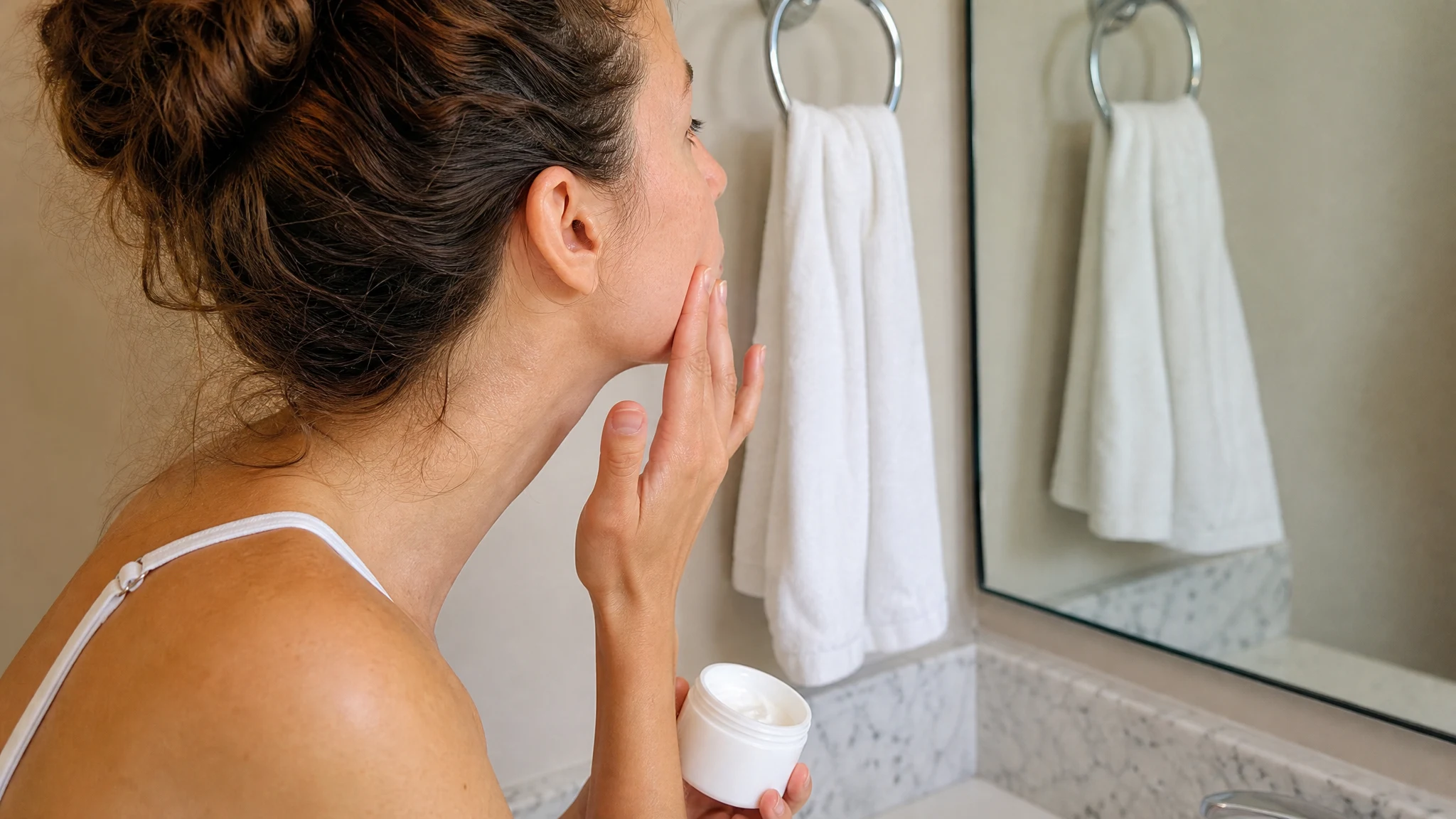
The Tisserand Institute groups essential oil dilutions by use: 0.5-1.2% for facial cosmetics, 1-3% for body oils and lotions, and 2-4% for bath products, a range that includes wash-off products such as soap and body wash (Tisserand Institute). A scrub is rubbed on and rinsed off, so it sits in the wash-off family, but our own guidance for skin is 0.5% to 2%, and we start at the lower end. We would keep this one for the body, away from the face, and well away from broken, freshly shaved or irritated skin; Poison Control advises against essential oils on damaged skin (Poison Control).
A formulation by weight
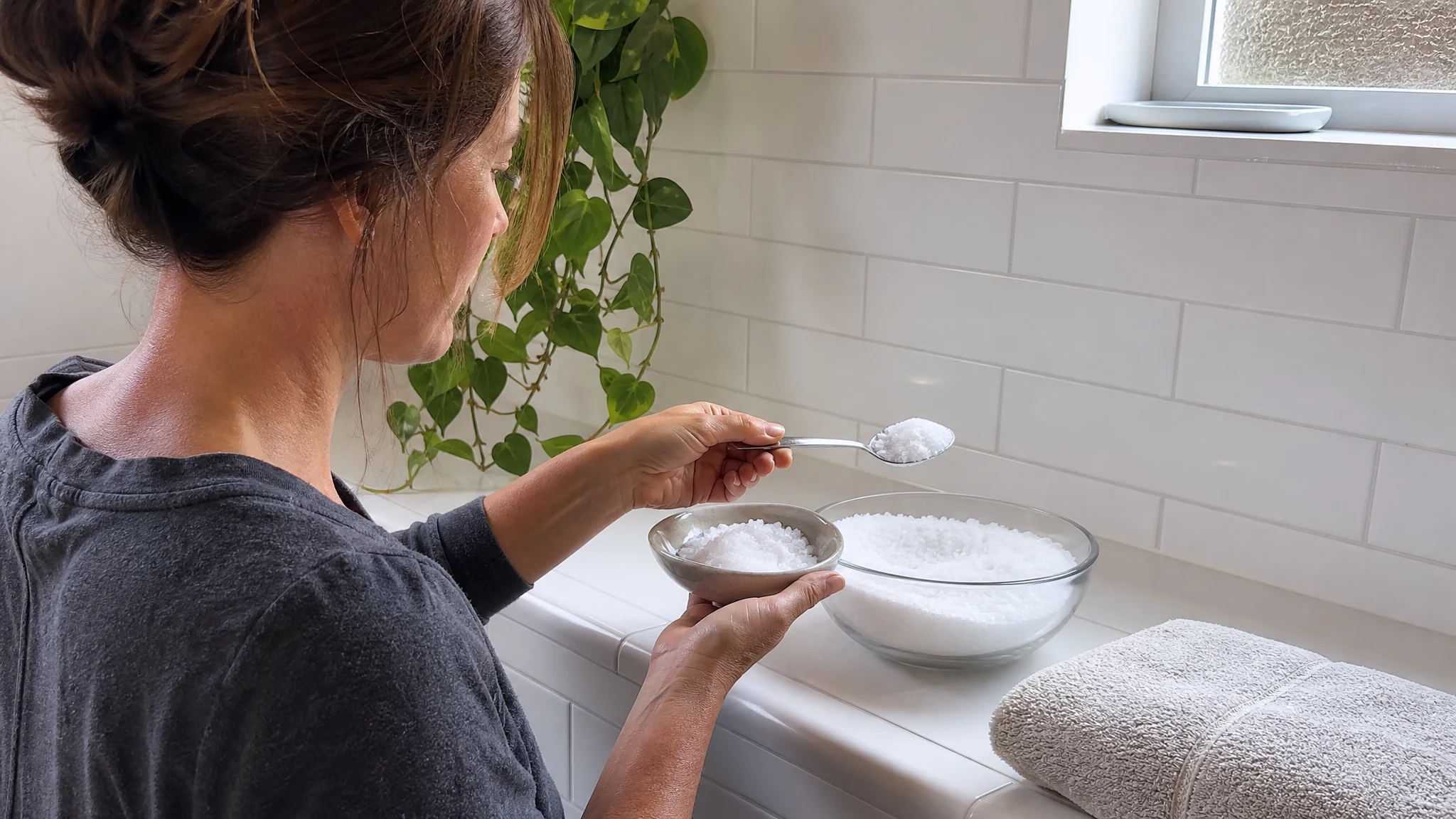
This makes one jar of about 260 g. The 200 g to 60 g ratio of sugar to carrier is our suggestion for a lightly clumping, spoonable scrub, so adjust the carrier until it feels right. Use fine granulated sugar and a carrier oil such as sweet almond, fractionated coconut or jojoba, all from a grocery, pharmacy or cosmetic supplier; we sell lavender oil only.
- 200 g fine granulated sugar
- 60 g carrier oil
- Lavender oil, per the table
Mix the lavender into the carrier first, then fold in the sugar. The oil amounts use about 20 drops per ml (droppers vary) and 0.894 g/ml, the relative density of the one angustifolia batch on our Certificate of Analysis; we publish no density for our other three oils.
| Strength (of 260 g) | Lavender oil | Volume | Drops (about) |
|---|---|---|---|
| 0.5% | 1.3 g | 1.5 ml | 29 |
| 1% | 2.6 g | 2.9 ml | 58 |
| 2% | 5.2 g | 5.8 ml | 116 |
We suggest 0.5% to 1%, which gives a pleasant aroma without reaching for the top of our range. Counting 58 drops is an easy way to lose track, so weigh the oil on a scale that reads to 0.1 g.
Texture and feel
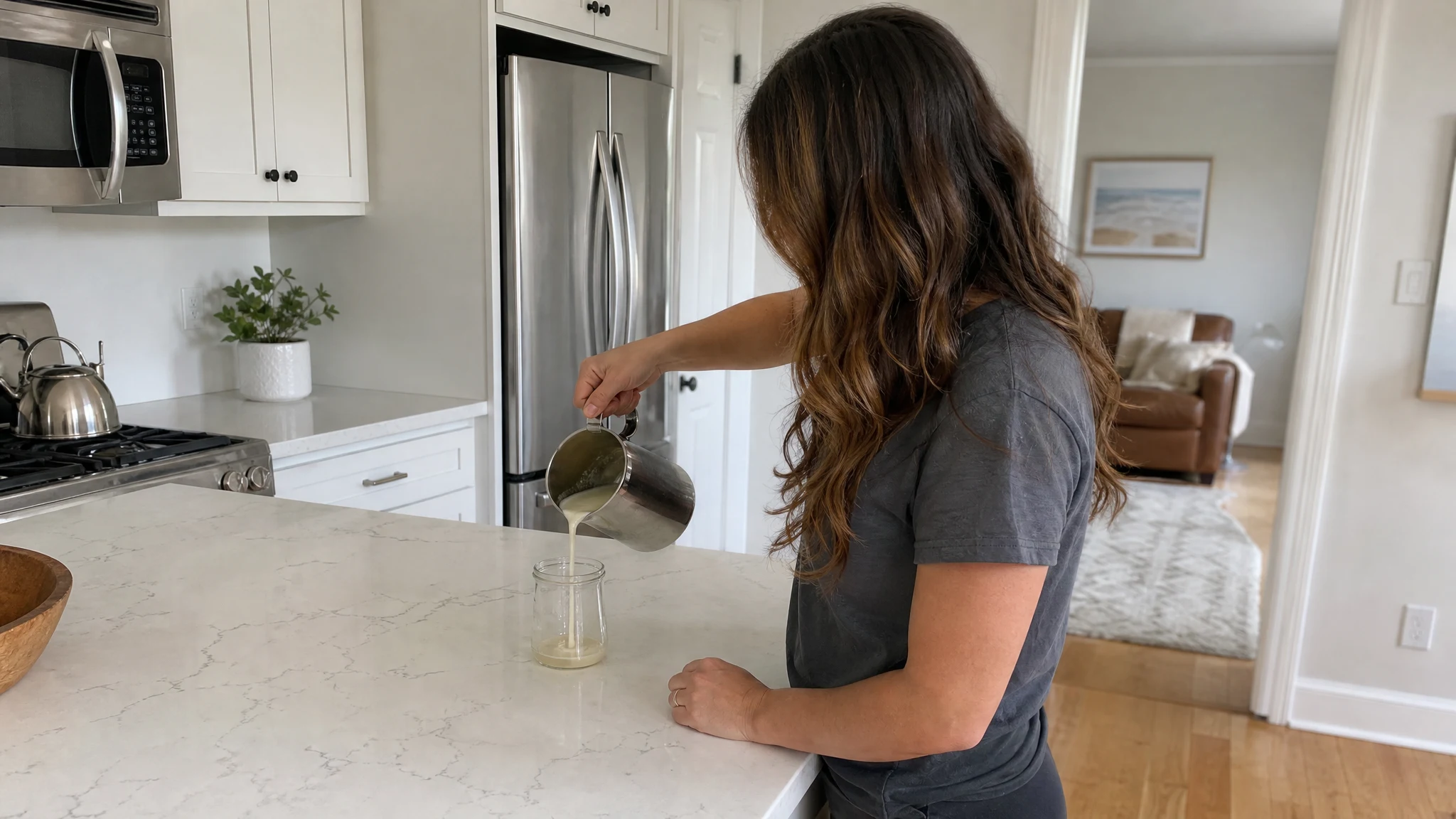
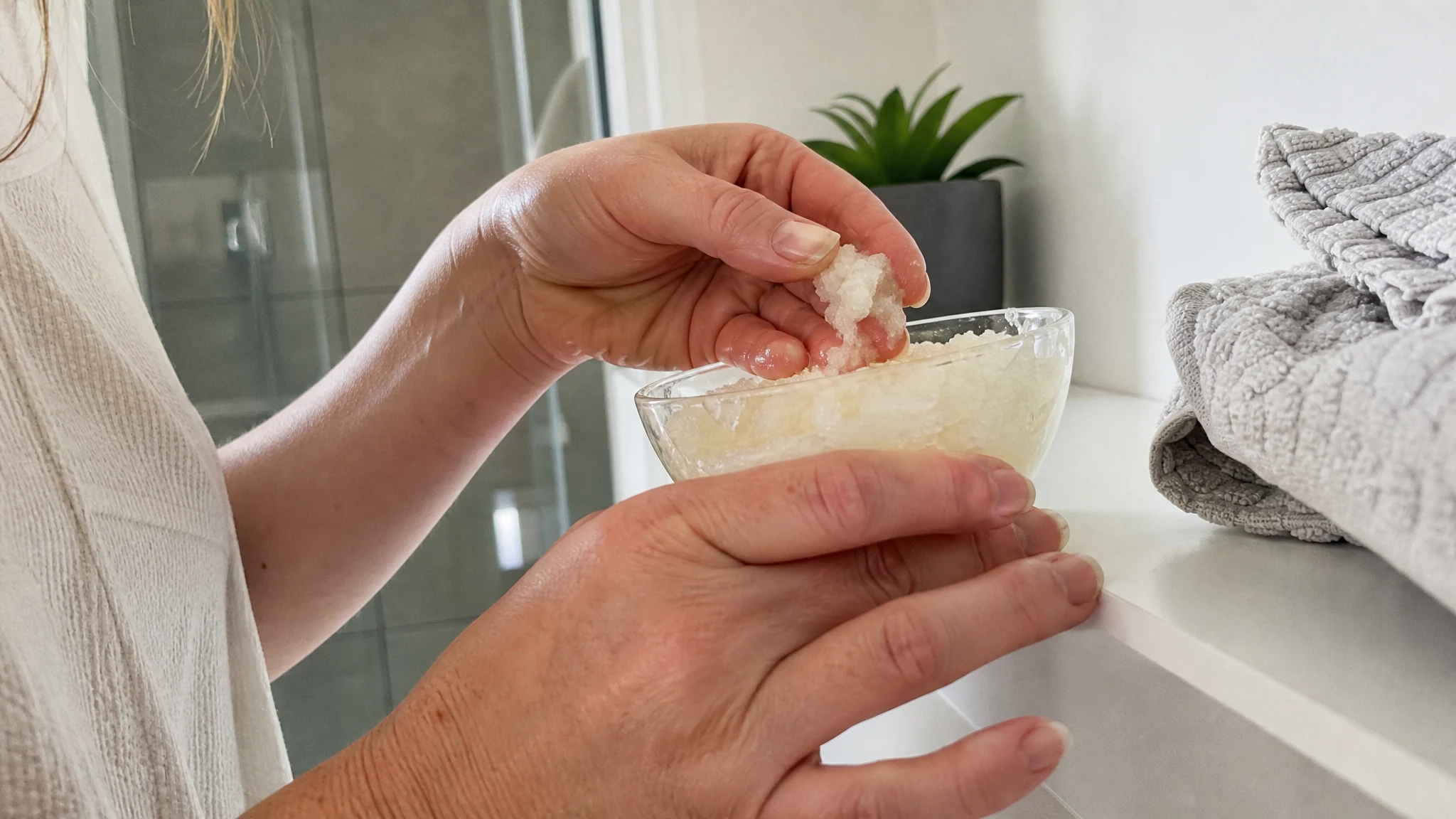
The mixture should look like damp sand: sugar grains coated in oil, holding together when you press them, but not sitting in a puddle. If it looks dry and crumbly, add carrier a teaspoon at a time and stir; if it looks wet, fold in a spoonful more sugar. Do this before you add the lavender, so the scent does not get stirred around while you adjust.
A wide-mouthed jar with a snug lid is the easiest to scoop from. Glass looks lovely and is easy to wash, though it can be slippery in a bathroom, so keep it somewhere you will not knock it off the edge of the tub.
Keep the jar dry
With no water in it, a sugar-and-oil scrub is far simpler to keep than a spray. Water-containing cosmetics need a validated preservation system (Halla et al., 2018), and the shower is where water can sneak in. A review describes Burkholderia cepacia complex bacteria as a feared contaminant of water-based products, with particular risk for people with cystic fibrosis or weakened immunity (Tavares et al., 2020). So our habits are simple ones: scoop with a dry spoon, keep the lid on, and store the jar on a shelf rather than in the shower. Small jars also keep the scent fresher.
Why not more oil for more scent
Every extra gram of oil moves you up the dilution ranges above, and a stronger scrub is not a better one. If the scent seems faint, a fresher oil, a smaller jar and a lid that closes well will do more than a higher percentage. Air exposure matters too: in a study of air-exposed lavender oil, the oil oxidized at the same rate as its pure terpenes and became a stronger skin sensitizer in mice (Hagvall et al., 2008). Make a small jar, keep it closed, and discard it if it smells off. We recommend storing the oil itself in a cool, dark cabinet, as our storage guide explains.
Which oil, and who should check first
For a scrub the choice is scent. We describe our true lavender (Lavandula angustifolia) as soft, floral and sweet, lavandin grosso as fresher with a camphor-tinged lift, and spike lavender as sharp and herbaceous; the 40/42 grade is smooth and floral-herbaceous, with a species its page does not state. Our varieties guide helps you decide.
Lavender can cause allergic skin reactions in some people (NCCIH). Patch test a little of the finished scrub on your inner forearm first, and if you have eczema or have reacted to fragrance before, ask a dermatologist; our eczema and sensitization guide and allergy guide go into the details. Pregnant or nursing? NCCIH says little is known about lavender then, so ask your physician. Keep oils away from eyes, children and pets, since a jar that smells like candy is easy for a child to open.
Oil makes a tub slippery, so rinse the tub as well as yourself. And if you gift a jar, write the date and the oil on the label. We would keep the label to aroma and the pleasure of the scrub.
A jar of lavender sugar scrub is a small thing to make, and a pleasing one, especially when the number on the oil is one you chose on purpose.
Lavender Essential Oil
Lavender Essential Oil from our own shop, in sizes from 0.5 oz to bulk.
From $12.99
Shop Now →Sources & Further Reading
- Tisserand Institute. Dilution for essential oils. tisserandinstitute.org
- Poison Control. Essential oils: Poisonous when misused. poison.org
- Halla et al., 2018. Cosmetics Preservation: A Review on Present Strategies. Molecules. pubmed.ncbi.nlm.nih.gov/29958439
- Tavares et al., 2020. Burkholderia cepacia Complex Bacteria: a Feared Contamination Risk in Water-Based Pharmaceutical Products. Clin Microbiol Rev. pubmed.ncbi.nlm.nih.gov/32295766
- Hagvall et al., 2008. Lavender oil lacks natural protection against autoxidation, forming strong contact allergens on air exposure. Contact Dermatitis. pubmed.ncbi.nlm.nih.gov/18759894
- NCCIH. Lavender: Usefulness and Safety. nccih.nih.gov