Lavender Linen Spray: A 5-Minute Mix for Fresher Sheets
There is a small pleasure in smoothing a freshly made bed that smells faintly of lavender. A linen spray is how a lot of people chase that feeling, and it is also a five-minute project, as long as you give the water and the oil a way to get along. Here is how we would put one together, from what the guidance says and some simple arithmetic.
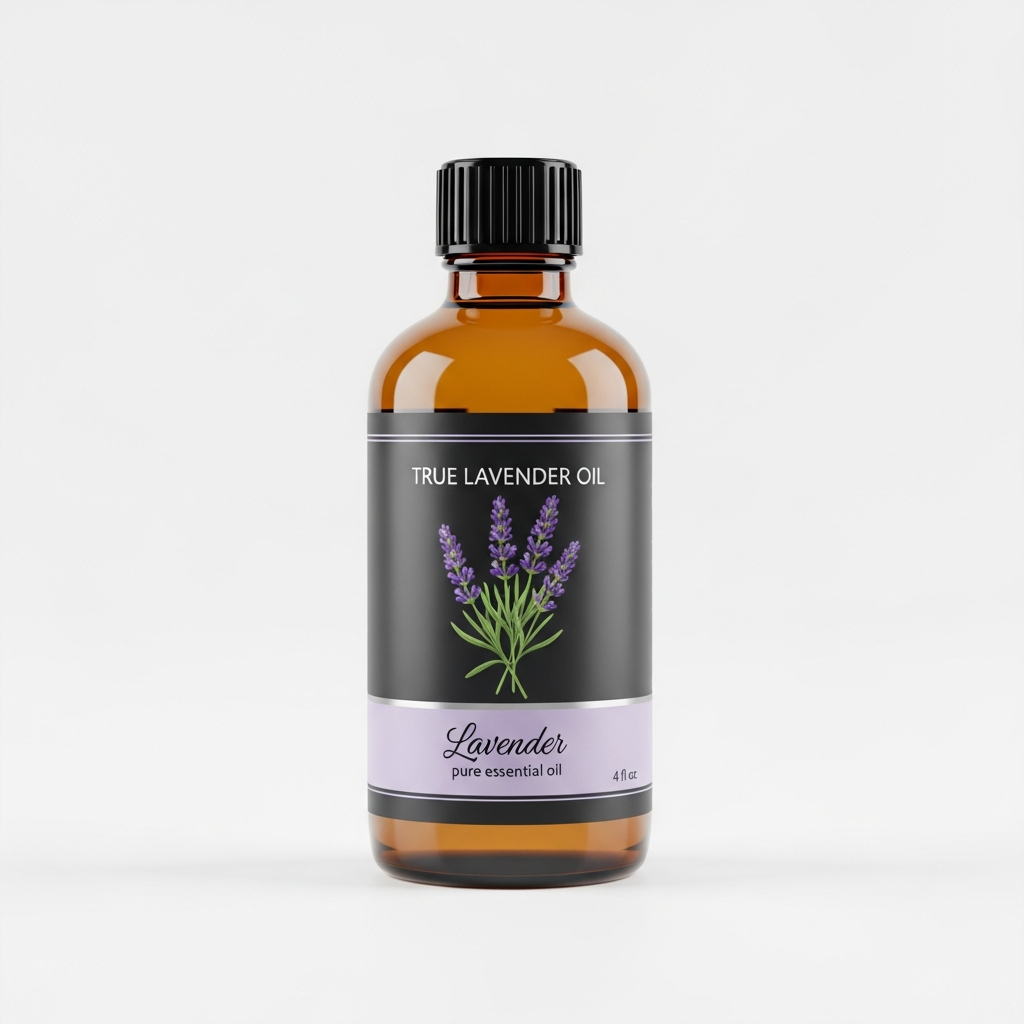
Lavender Essential Oil
Our own Lavender Essential Oil, in sizes from 0.5 oz to bulk.
From $12.99
Shop Now →A spray is water, oil and a go-between
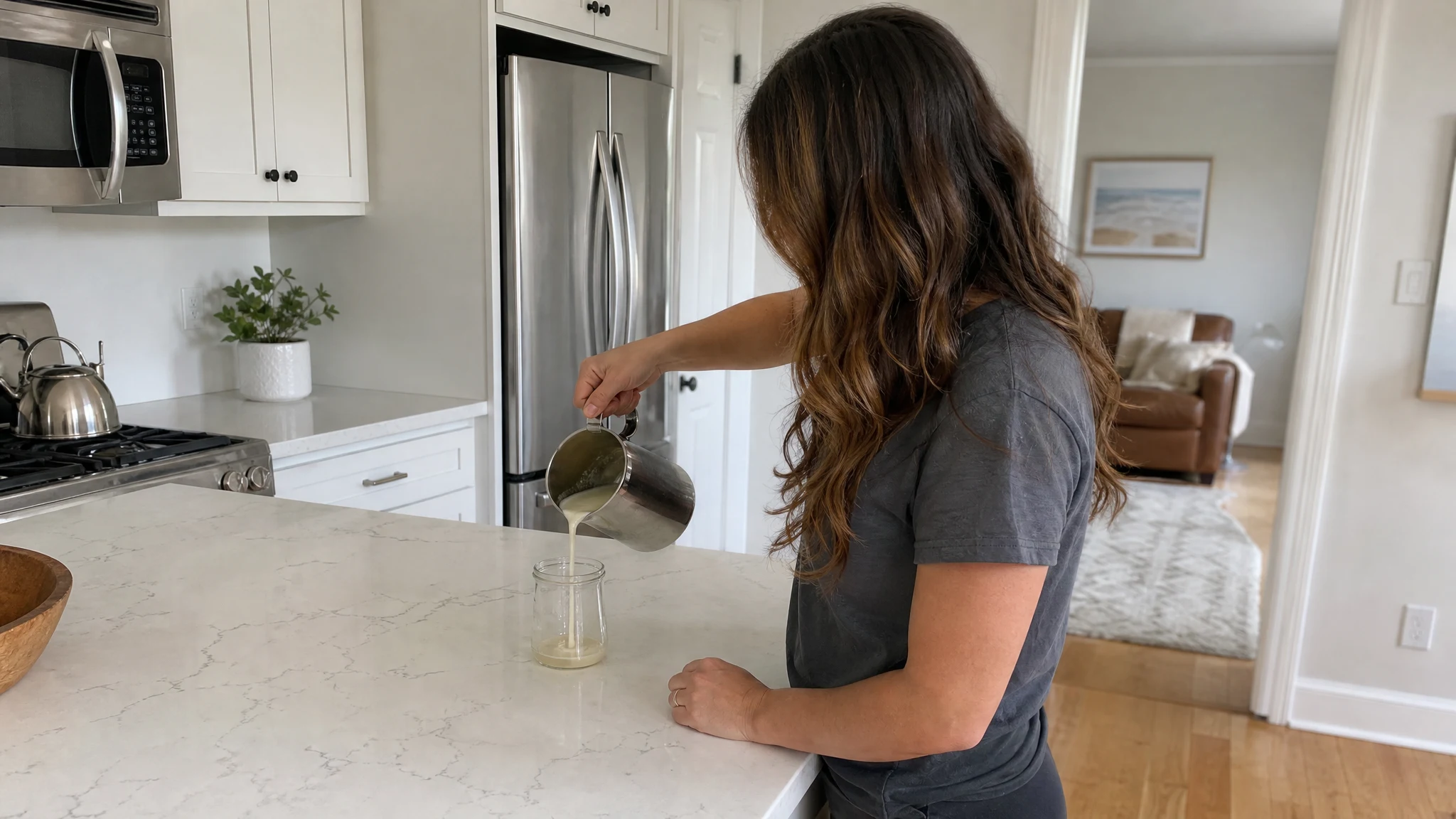
Lavender oil will not dissolve in water, so a plain mix separates into a watery spray and a few oily drops. The fix is a dispersant. The Tisserand Institute names polysorbate 20 for water-based products, saying "2-3% is ideal, or whatever is skin safe, but you can go up to 15% or so if needed", and for the bath suggests mixing 5-20 drops of oil with an equal amount of polysorbate 20 (Tisserand Institute). Our suggestion for a linen spray is the simple version: blend the oil with an equal weight of polysorbate 20, stir until clear, then add the water. Polysorbate 20 comes from a cosmetic-ingredient or soap-making supplier; we sell lavender oil only.
How strong to make it
Linen is not skin, and only a fraction of any spray reaches you, but a bed is where you spend hours, so we borrow the skin figures as a sensible yardstick. Our guidance for skin is 0.5% to 2%, and the Tisserand Institute lists 0.5-1.2% for facial cosmetics and 1-3% for body oils and lotions (Tisserand Institute). Starting at 0.5% keeps you at the bottom of every one of those ranges, and it is plenty for a light, fresh scent on cotton.
The arithmetic per 100 g of spray, at about 20 drops per ml and 0.894 g/ml, the density of the one angustifolia batch on our Certificate of Analysis (no density is published for our other three oils):
| Strength | Oil by weight | Oil by volume | Drops (about) |
|---|---|---|---|
| 0.5% | 0.5 g | 0.56 ml | 11 |
| 1% | 1 g | 1.12 ml | 22 |
| 2% | 2 g | 2.24 ml | 45 |
A typical 100 ml spray bottle holds about 100 g of water-based spray. Weighing the oil is easier than counting drops, since droppers differ.
Keep the batch small and fresh
Anything made with water needs protection from microbes. A review of cosmetic preservation says products containing water require preservation, with a challenge test used to verify a preservative system (Halla et al., 2018), and another review calls Burkholderia cepacia complex bacteria a feared contaminant of water-based personal care products, with particular risk for people with cystic fibrosis or weakened immunity (Tavares et al., 2020). A bed spray lands where someone sleeps, so we treat it with the same care: use a well-washed bottle, make about 100 g or less, and use it the same day. A spray meant to last needs a broad-spectrum cosmetic preservative from a cosmetic supplier, used at the supplier's rate.
Choosing the bottle and the moment
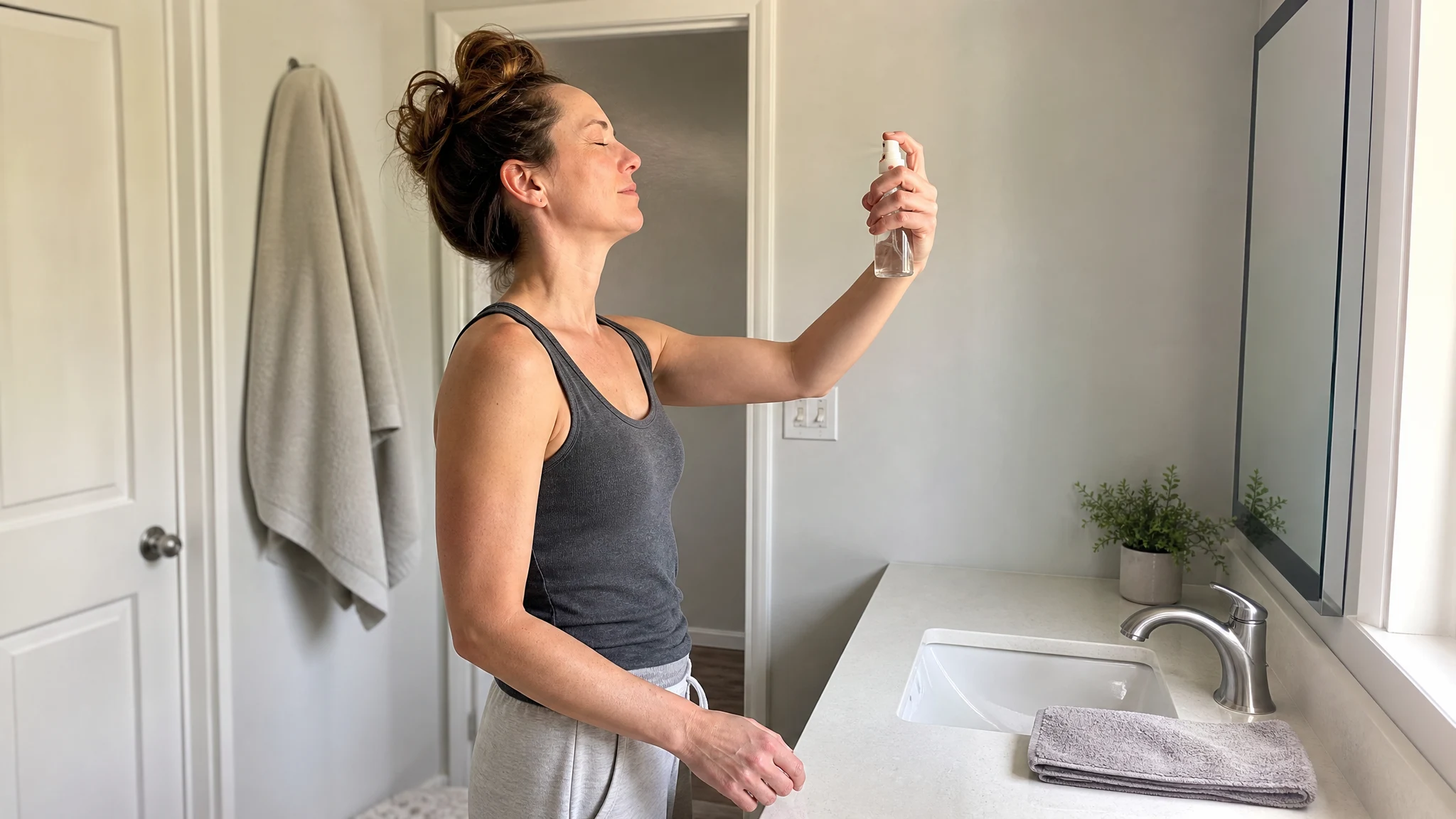
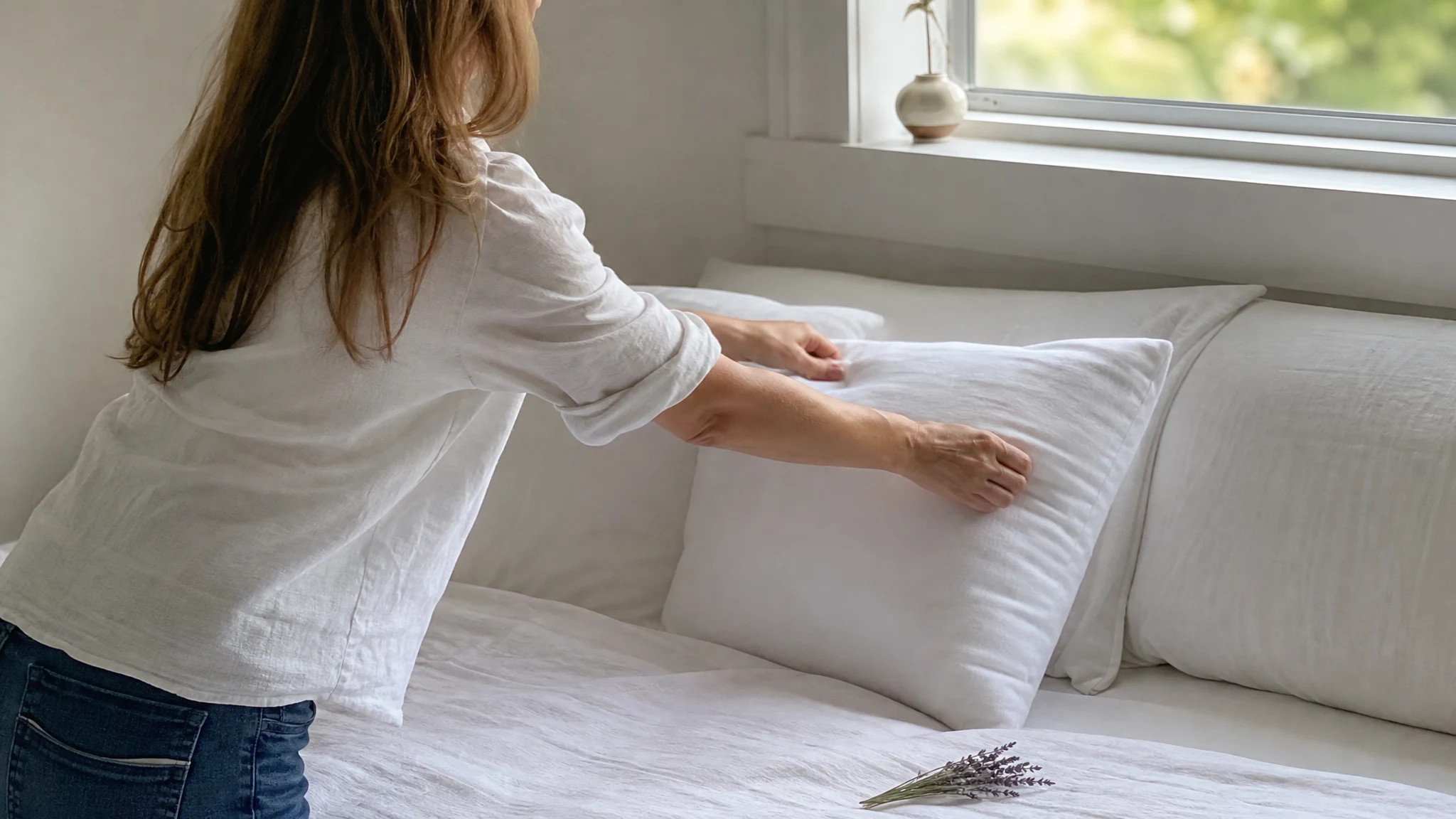
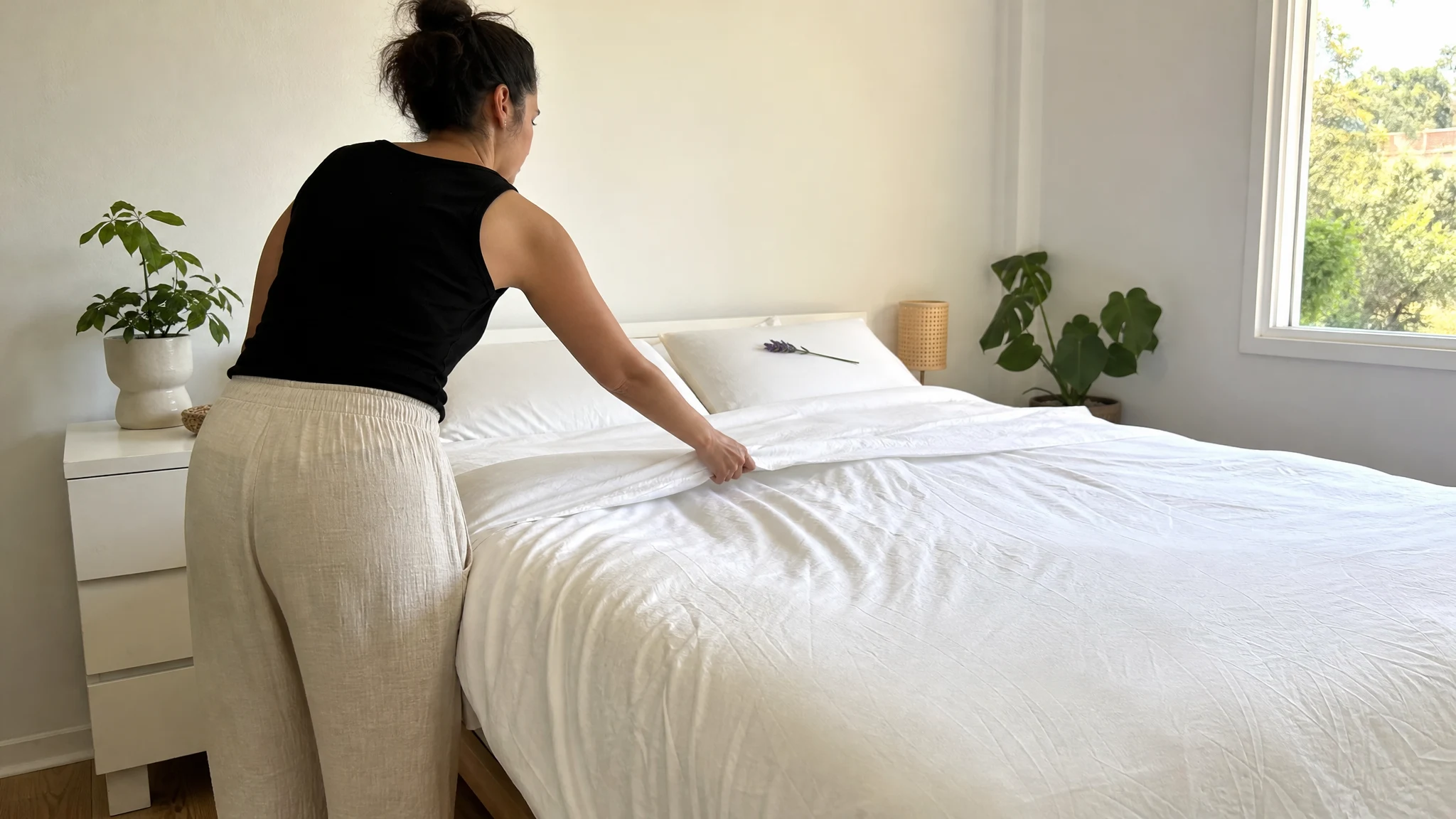
A fine-mist bottle gives an even, light cloud, and you will find one at a craft shop or pharmacy. Test the spray with plain water first so you know how far it reaches. Spray from arm's length when you make the bed, give the sheets a few minutes to dry, and then tuck them in. A light pass is plenty, since the point of a linen spray is a hint of scent, not a wet sheet.
Why we spray lightly
A fine spray exposes a lot of oil to air, and lavender oil oxidizes readily: in one study, the terpenes in air-exposed lavender oil oxidized at the same rate as the pure compounds, and the oil became a stronger skin sensitizer in mice (Hagvall et al., 2008). That study used the oil, not fabric, so we reason from it: mist the sheets lightly, let them dry, and wash them regularly rather than spraying the pillow where your face lies. Lavender can cause allergic skin reactions in some people (NCCIH); if you have reacted to fragrance before, ask a dermatologist before using it, and see our allergy guide.
Spray an inside seam or hidden corner first, since oil can mark some fabrics, and treat silk and dry-clean-only fabrics with the same caution or leave them out. Keep the bottle and sprayed bedding away from pets and young children, and take a look at lavender oil and cats if a cat shares your bed. Pregnant or nursing? NCCIH says little is known about lavender at those times, so ask your physician.
Beyond the bed
The same spray can scent a stack of towels or a linen cupboard shelf. Mist a cloth rather than the shelf itself, and try a hidden corner first, just as you would on the bed. A small bottle you finish in a day or two is more pleasant than a big one that sits around.
Picking your lavender
Here the choice is about scent. We describe our true lavender (Lavandula angustifolia) as soft, floral and sweet, a natural fit for a bedroom scent. Lavandin grosso has a fresher, camphor-tinged lift, spike lavender is sharp and herbaceous, and the 40/42 grade is smooth and floral-herbaceous with a species its page does not state. Our varieties guide helps you choose, and for more ways to scent a summer day see our summer lavender projects.
One recipe to remember: 100 g of water, 0.5 g of lavender oil, an equal weight of polysorbate 20, a clean spray bottle, and a plan to finish it today. We stick to aroma here, with no promises about sleep.
Lavender Essential Oil
Lavender Essential Oil from our own shop, in sizes from 0.5 oz to bulk.
From $12.99
Shop Now →Sources & Further Reading
- Tisserand Institute. Bath Safety: how to use essential oils safely in the bath. tisserandinstitute.org
- Tisserand Institute. Dilution for essential oils. tisserandinstitute.org
- Halla et al., 2018. Cosmetics Preservation: A Review on Present Strategies. Molecules. pubmed.ncbi.nlm.nih.gov/29958439
- Tavares et al., 2020. Burkholderia cepacia Complex Bacteria: a Feared Contamination Risk in Water-Based Pharmaceutical Products. Clin Microbiol Rev. pubmed.ncbi.nlm.nih.gov/32295766
- Hagvall et al., 2008. Lavender oil lacks natural protection against autoxidation, forming strong contact allergens on air exposure. Contact Dermatitis. pubmed.ncbi.nlm.nih.gov/18759894
- NCCIH. Lavender: Usefulness and Safety. nccih.nih.gov