Lavender Oil Glossary: Labels, Latin Names and COAs
On a lavender oil label, one word does the most work: the Latin name. "Lavender oil" on its own can mean true lavender, spike lavender or a hybrid, and scent, chemistry and safety information differ among them. Here are the terms you will meet on labels, reports and safety pages, with a plain note on what to do with each.
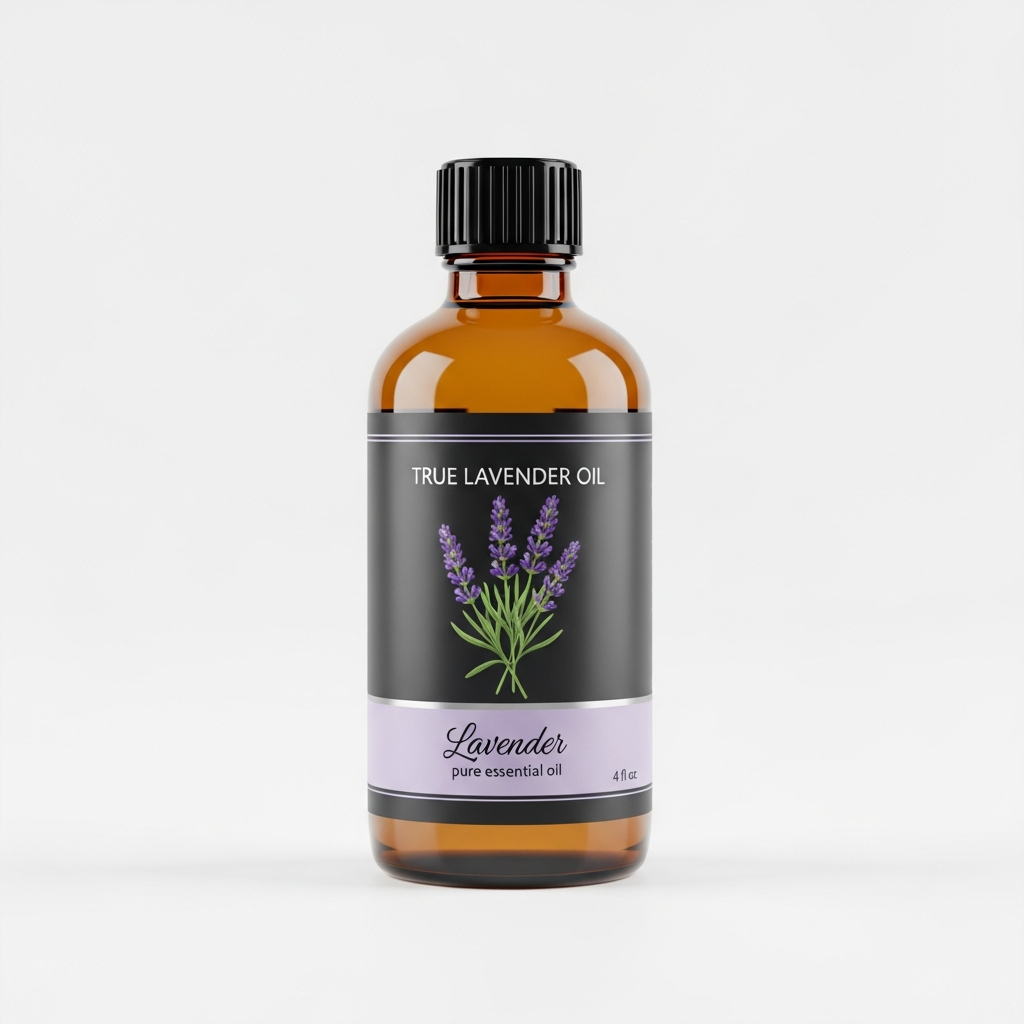
Lavender Essential Oil
Our own Lavender Essential Oil, in sizes from 0.5 oz to bulk.
From $12.99
Shop Now →Names on the label
Latin name
Genus plus species, such as Lavandula angustifolia. Look for it first. A label that says only "lavender" or "40/42" has not told you the species, and a buyer who needs to know can ask the seller in writing.
Lavandula angustifolia
True lavender, the soft, floral one. Older books also use L. officinalis and L. vera, so equivalence is worth checking when a label uses them. We describe our angustifolia oil as soft, floral and gently herbaceous with a clean, sweet finish, and as steam-distilled from the flowering spikes.
Lavandula latifolia
Spike lavender, a broad-leaved relative. We describe our spike lavender as sharp and camphoraceous, with a green edge and little sweetness.
Lavandin
The hybrid of true and spike lavender, written Lavandula × intermedia. A 2023 review notes that lavandin is sterile and "does not reproduce by seed", and that ISO set standards for two lavandin cultivars, 'Grosso' (ISO 8902) and 'Abrial' (ISO 3054), but no overall standard for the hybrid (Lavandula × intermedia-A Bastard Lavender or a Plant of Many Values? Part I. Biology and Chemical Composition of Lavandin). We sell lavandin grosso, which our shop lists as Lavandula hybrida, so you will see both names around.
40/42
A trade-grade name for lavender oil. Our page for it does not state the species, so if identity matters for your project, ask us before ordering.
Grade words
"Botanical grade", "therapeutic-grade" and similar phrases are not defined for cosmetics: the FDA's aromatherapy page does not define "natural", "organic" or "therapeutic-grade" (FDA, Aromatherapy). Treat them as descriptions to be backed by a document.
Making and quality
Steam distillation and hydrosol
The 2023 review describes essential oils as obtained "through the process of steam distillation or hydrodistillation of plant material", and the water left over, called hydrolate or hydrosol, carries volatile compounds. A hydrosol is not diluted essential oil, and we do not sell one. Our how lavender oil is made post tells the story.
Chemotype
A chemically distinct form within one species. A 2020 study identified four distinct chemotypes among three genetic populations of true lavender grown together in a garden (Structure of the Chemical and Genetic Diversity of the True Lavender over Its Natural Range). In practice, one Latin name can still produce oils with different linalool and camphor figures.
Adulteration
Cheaper oils or synthetics added to, or used in place of, the real thing. A 2023 review reports that lavender oil can be adulterated with lavandin or spike lavender, and that ISO standards alone "are not always sufficient" to separate authentic from adulterated oil, so a GC-MS report is more useful than a promise (Current Trends for Lavender (Lavandula angustifolia Mill.) Crops and Products with Emphasis on Essential Oil Quality).
Chemistry terms
Linalool and linalyl acetate
The two main compounds in true lavender oil, responsible for much of its floral character. One study gives typical ranges of 22 to 38% linalool and 25 to 45% linalyl acetate for the species (Structure of the Chemical and Genetic Diversity of the True Lavender over Its Natural Range). Read more in our chemistry post.
Camphor and 1,8-cineole
These are the markers that help separate the species. A table of standards puts camphor at 0 to 1.2% for true lavender, 8 to 16% for spike and 6.5 to 8% for lavandin 'Grosso', with 1,8-cineole at 0 to 2.5%, 16 to 39% and 4 to 8% respectively (Comparative Evaluation of the Essential Oil of the New Ukrainian Lavandula angustifolia and Lavandula x intermedia Cultivars Grown on the Same Plots). That is why spike and lavandin smell sharper.
Documents
Certificate of analysis (COA)
A batch document. The one we publish covers a single batch of our angustifolia oil: relative density 0.894 and refractive index 1.458 at 20 C, with appearance and smell. It does not list constituents or origin, and there is no COA for our other three oils. If you need GC-MS, species confirmation or a safety data sheet for a particular oil, ask us in writing through the contact page before ordering.
GC-MS
Gas chromatography with mass spectrometry: the laboratory method that lists an oil's constituents and their percentages. Our guide to reading a report shows what to look at.
ISO and pharmacopoeia standards
ISO 3515 covers true lavender, ISO 4719 covers spike lavender and the European Pharmacopoeia has its own lavender monograph (Comparative Evaluation of the Essential Oil of the New Ukrainian Lavandula angustifolia and Lavandula x intermedia Cultivars Grown on the Same Plots). When a claim says "meets the standard", ask which one.
Skin terms
Neat, carrier oil and dilution
Neat means undiluted, which is how we sell all four oils. A carrier is the plain vegetable oil you dilute into, from a craft supplier or pharmacy. Dilution is oil as a percentage of the finished product: our guidance is 0.5% to 2% in a carrier with a patch test first, and our dilution guide has the drop counts.
Patch test and oxidation
A patch test tries a diluted blend on a small area first. Oxidation is what happens as oil meets air, and for lavender it matters, since air-exposed oil became a stronger sensitiser in a 2008 study (Lavender oil lacks natural protection against autoxidation, forming strong contact allergens on air exposure). Keep caps tight and store cool and dark; see our patch test post.
Bookmark this page for the next time a label or a report throws an unfamiliar word at you. The Latin name is usually the place to begin.
With these terms in hand, a lavender label, report or recipe gets much easier to read.
Lavender Essential Oil
Lavender Essential Oil from our own shop, in sizes from 0.5 oz to bulk.
From $12.99
Shop Now →Sources & Further Reading
- Lavandula × intermedia-A Bastard Lavender or a Plant of Many Values? Part I. Biology and Chemical Composition of Lavandin. Molecules, 2023
- Structure of the Chemical and Genetic Diversity of the True Lavender over Its Natural Range. Plants (Basel), 2020
- Current Trends for Lavender (Lavandula angustifolia Mill.) Crops and Products with Emphasis on Essential Oil Quality. Plants (Basel), 2023
- Comparative Evaluation of the Essential Oil of the New Ukrainian Lavandula angustifolia and Lavandula x intermedia Cultivars Grown on the Same Plots. Molecules, 2022
- Hagvall L et al., Lavender oil lacks natural protection against autoxidation, forming strong contact allergens on air exposure. Contact Dermatitis, 2008
- FDA, Aromatherapy