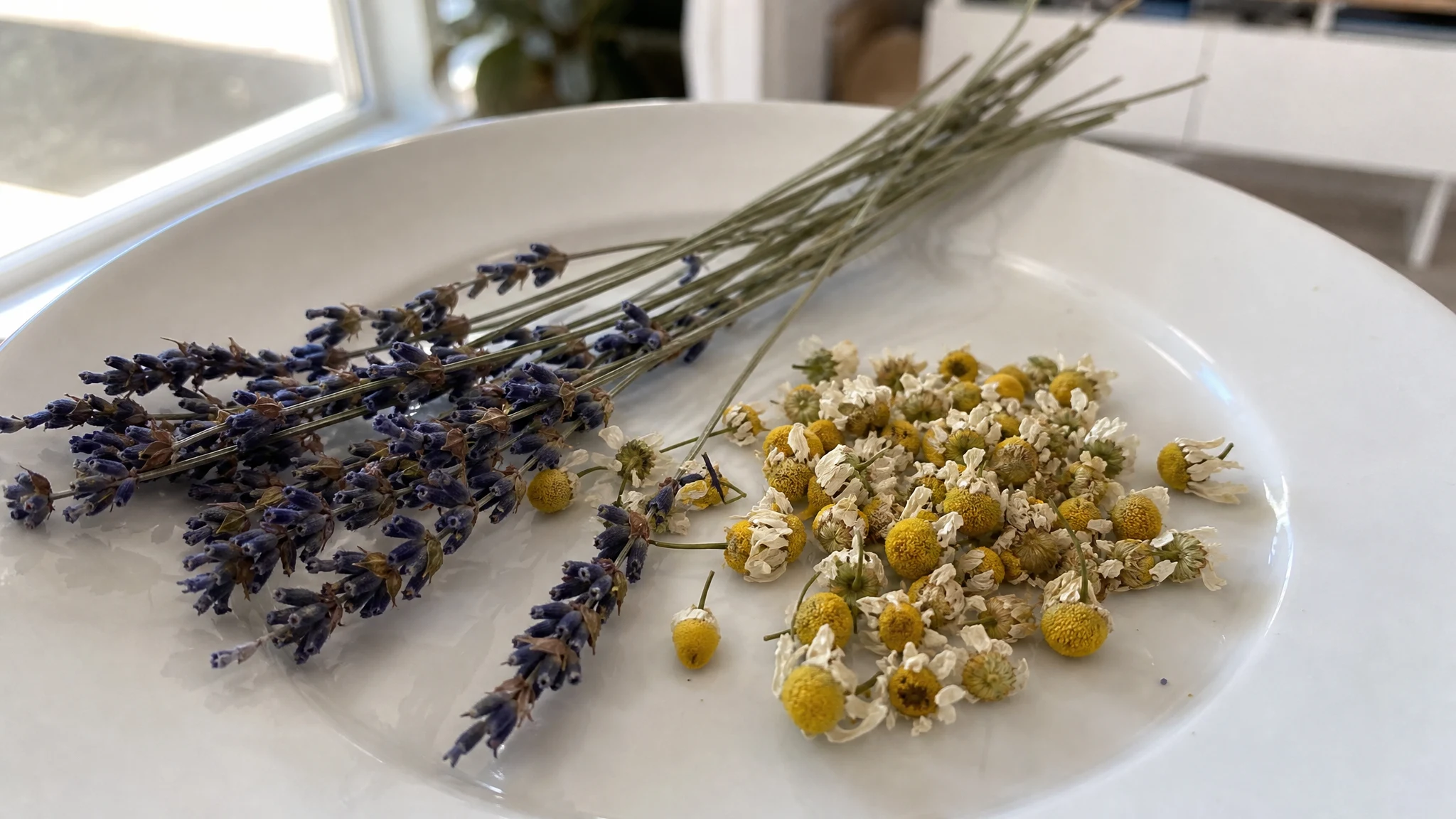
Lavender or Chamomile Oil: Two Plants, Two Labels
Lavender and chamomile are the two plants most often pictured on a bedside table, so it is natural to wonder which oil belongs there. The honest answer is that they are not really rivals. One is a single, well-defined species with a published standard, and the other is a name that covers two different plants. Knowing that is the quickest way to choose well.
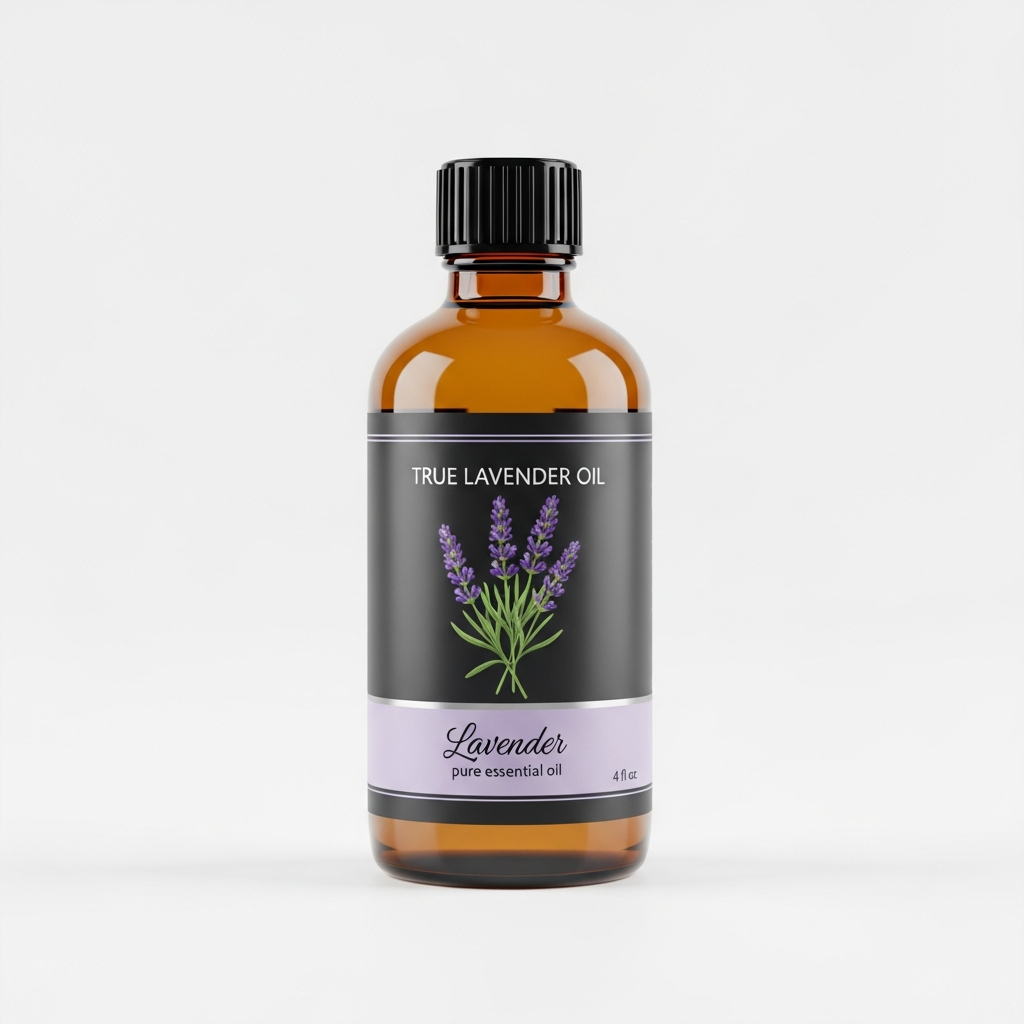
Lavender Essential Oil
Our own Lavender Essential Oil, in sizes from 0.5 oz to bulk.
From $12.99
Shop Now →Two chamomiles behind one label
A bottle that simply says "chamomile oil" does not tell you which plant it came from. Roman chamomile (Chamaemelum nobile) and German chamomile (Matricaria chamomilla) are different species, and a 2026 review compares them side by side. It describes German chamomile as rich in alpha-bisabolol and chamazulene, and Roman chamomile as having an ester-rich oil with nobilin derivatives that contribute to its characteristic aroma. The same review stresses that chamomile preparations differ substantially depending on species, extraction method and processing.
So if you are shopping for chamomile oil, the first question to ask is which one. We do not sell chamomile, and we would rather say so than guess at what is in someone else's bottle. A seller who names the species and shows documentation is giving you what you need.
Lavender has a yardstick
For Lavandula angustifolia, the trade works from published ranges. A 2023 review tabulates the ISO 3515 and European Pharmacopoeia limits: linalool from 20% to 45% and linalyl acetate from 25% to 47%, with camphor held low, under 1.5% depending on origin. That gives a buyer something to hold a report against, which is why we like to explain how to read one in our GC-MS guide.
It also means lavender is not one single scent. We sell four lavender-family oils: Lavandula angustifolia, lavandin grosso, spike lavender and a trade-grade 40/42. Our angustifolia oil is soft, floral and gently herbaceous with a clean, sweet finish, while lavandin and spike lavender are sharper and more camphoraceous. If you want the soft profile people associate with an evening, the angustifolia oil is where to start; our lavender versus lavandin post explains the difference.
What the health agencies say about each
This is the part where it pays to keep expectations modest. The National Center for Complementary and Integrative Health says it is unclear whether lavender aromatherapy helps with anxiety, stress or sleep. For chamomile it says there is very little information on insomnia, and that preliminary anxiety findings concern a dietary supplement, not an essential oil. Neither agency page is a verdict on a diffuser at your bedside. We sell cosmetic oils for fragrance and make no sleep claims for any of them; our anxiety research post shows what the studies actually tested.
We did not find a head-to-head trial of lavender oil against chamomile oil in the sources we read, so any ranking of the two on sleep or calm would be a guess. They are better compared on what you can check: scent, label clarity and your own sensitivities.
A quiet evening scent is partly about the setting. A tidy room, a lamp turned low and a small amount of aroma tend to feel nicer than a heavily scented space, and that is as true of lavender as of anything else. If you are scenting a bedside, a single drop on a cotton pad kept a little way off is plenty, and a clean pad each week keeps it fresh.
Allergy is a reason to choose carefully
The NCCIH page on chamomile notes that people allergic to related plants, including ragweed, chrysanthemums, marigolds and daisies, are more likely to react to chamomile. Lavender has its own record as a fragrance allergen, since topical products containing lavender may cause allergic skin reactions in some people. Whichever oil you choose, dilute it in a carrier, patch test first and keep it capped and away from heat and light. Our patch test guide walks through the steps. Anyone pregnant, nursing or on medication should talk to a physician first, since the NCCIH describes chamomile safety in pregnancy as poorly understood.
Three questions before you choose
When you stand in front of two bottles, it helps to have a short list. We would ask these:
- What do I want the room to smell like? Decide on the scent first, and let the plant follow.
- Does the label name the species? A Latin name tells you far more than the common name alone.
- Do I have any plant allergies? If you know you react to daisy-family plants or to fragrance, that is a reason to go carefully with either bottle.
If you keep both on the shelf
Keep each bottle capped tightly and label each one with the date you opened it. Two oils of different plants can look almost the same in amber glass, and a quick label saves a mix-up. Store them cool and dark, together, in a cabinet where children and pets cannot reach.
How we would choose
If you love a soft floral aroma and want a species with an established yardstick, lavender is the easy choice, and our angustifolia oil is the one we would suggest for that. If you prefer chamomile's character, buy from a seller who names the species, and ask what documentation exists. You can also keep both on the shelf; they are different pleasures, and we are happy to supply the lavender side.
Evenings are better with a scent you enjoy, whichever plant it comes from.
Lavender Essential Oil
Lavender Essential Oil from our own shop, in sizes from 0.5 oz to bulk.
From $12.99
Shop Now →Sources & Further Reading
- Lavender: Usefulness and Safety, NCCIH
- Chamomile: Usefulness and Safety, NCCIH
- Such S et al. German and Roman Chamomile: Species-Specific Phytochemical Profiles, Bioactive Potential, and Relevance for Functional Foods and Nutraceutical Development. 2026
- Crisan I et al. Current Trends for Lavender (Lavandula angustifolia Mill.) Crops and Products with Emphasis on Essential Oil Quality. Plants, 2023