Linalool and Linalyl Acetate: What They Do in Lavender
If you want to know why true lavender smells the way it does, two molecules do most of the talking: linalool and linalyl acetate. Together they make up a large share of a typical true lavender oil, and they are the numbers quality standards are built around. They are also easy to over-read, so here is what they are, what they do for the scent, and what a report listing them can and cannot tell you.
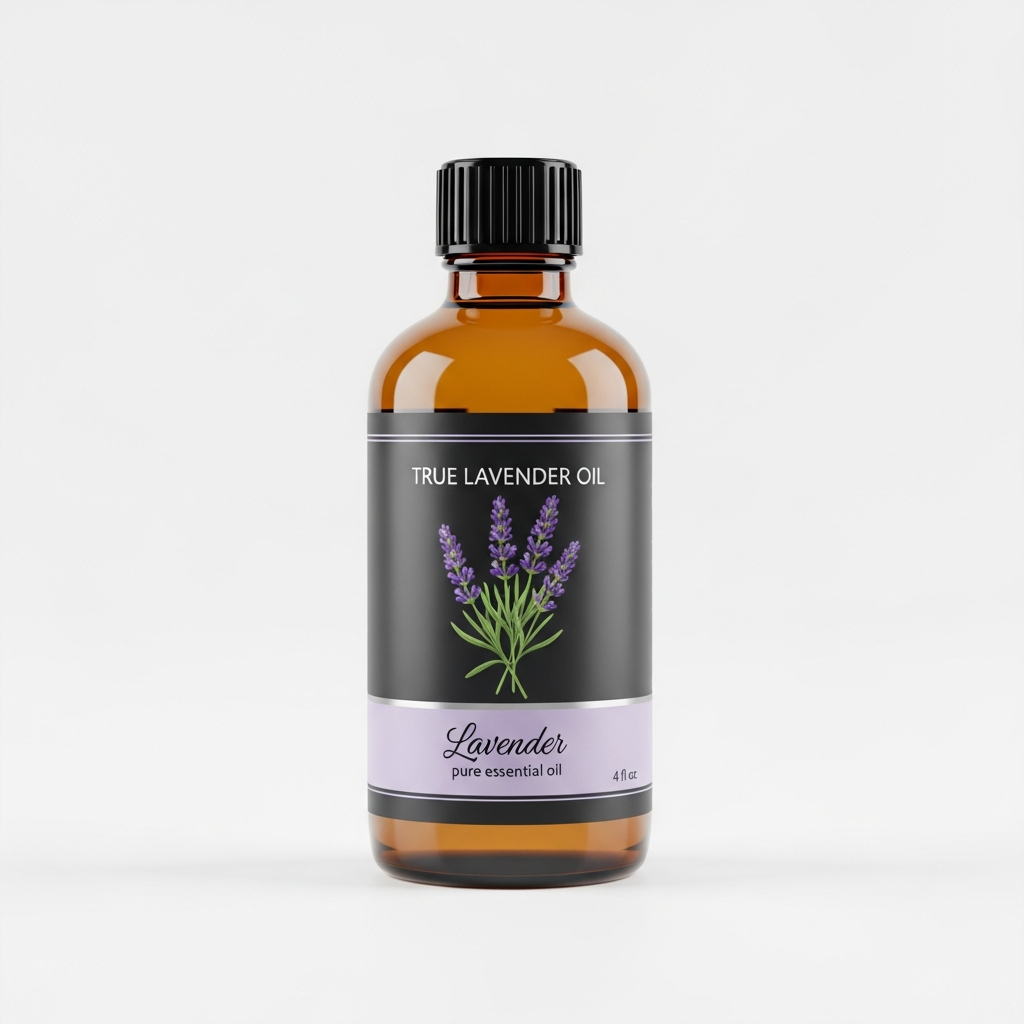
Lavender Essential Oil
Our own Lavender Essential Oil, in sizes from 0.5 oz to bulk.
From $12.99
Shop Now →The sweet floral core
Linalool is a terpene alcohol, and linalyl acetate is the same molecule with an acetate group attached. A 2023 review of lavender quality says linalyl acetate content determines the superior or inferior quality of lavender oil and that it is responsible for the floral-woody character of the aroma (Crisan et al.). That is why a good true lavender smells round and sweet instead of sharp.
The standards behind these molecules give a window, not a single number. ISO 3515 and the European Pharmacopoeia, as tabulated in that review, allow roughly 20 to 45 percent linalool and 25 to 47 percent linalyl acetate in Lavandula angustifolia oil, with the exact window shifting by origin and cultivar. Equally important are the limits on what should be small: camphor and 1,8-cineole, the notes that read as medicinal, are held low, with camphor capped between under 0.5 and under 1.5 percent depending on origin.
Real oils sit all over the window
A standard is a limit, not a portrait. In 2007, Robert Adams and Tonya Yanke at Baylor University compared nine commercial lavender oils with two new Kashmir oils. Linalool ranged from 27.3 to 42.2 percent and linalyl acetate from 27.2 to 46.6 percent, and eight of the eleven oils met the European Pharmacopoeia standard they used. Their remark on camphor is the one we like to repeat: they wrote that camphor gives lavender oil an undesirable medicinal and camphoraceous odor, and that the two Kashmir oils, both very low in camphor, had excellent fragrance.
The takeaway is a pleasant one. Lavender is a natural material, and a wide range of compositions can all be good lavender. A single linalool figure on its own does not make an oil better or worse, and the whole profile, including how little camphor there is, tells you more.
What your nose already knows
You do not need a report to notice the effect of these molecules. When a lavender smells round, sweet and soft, you are smelling the floral side at work. When it smells sharper or has a medicinal edge, that is the other end of the story. Smell an oil slowly: the opening, then the middle, then what is left on the paper after a few minutes. A good lavender tends to change as it sits, and it is that gentle shift that makes the scent interesting.
Why the mirror image matters
Both molecules come in two mirror-image forms, written as R and S, and real lavender strongly prefers one of them. In the Baylor data, the S form of linalool was only 1.1 to 2.9 percent of the oils. That is useful because synthetic linalool and linalyl acetate usually contain both forms in equal parts. A 2021 study of adulteration found that in 20 genuine lavender batches the R forms dominated by 93.8 percent for linalool and 99.4 percent for linalyl acetate; adding synthetic material pushed the S form of linalool from 6.2 to 33.6 percent, while the headline totals looked plausible (Capetti et al.). Only a chiral column on the gas chromatograph tells the two situations apart, so a normal report with two plausible totals is not the full picture. The papers we read do not say what the two forms smell like, so we make no claim about that.
Fresh matters
These same molecules are the ones that change when a bottle sits open to the air. Linalyl acetate, in one mouse study, was a weak sensitiser when it was highly purified, but a sample exposed to air for ten weeks became a much stronger one (Sköld et al., 2008), and a companion study found lavender oil lacks natural protection against autoxidation and forms strong contact allergens on air exposure (Hagvall et al., 2008). This is worth keeping in perspective: they were laboratory studies of oxidised material, not of a fresh, capped bottle. The practical reading is simple, and it is why we suggest keeping the cap on and the bottle cool and dark. Our storage guide goes through the habits that help.
How we would use the numbers
Our advice is simple. Treat percentages as a map, not a verdict. Look at the whole profile, ask for the report that matches your lot, and then smell the oil. If you love the scent and the paper makes sense, you have what you need. If the numbers look odd, ask a question before you plan a project around the bottle.
We love lavender for how it smells, and the chemistry is a pleasant way to understand why. It would be a shame to let a column of figures get in the way of enjoying it.
Using this when you buy
We sell four lavender-family oils, and only true lavender is meant to sit in the ranges above; lavandin and spike lavender have their own, camphor-richer profiles, which our guide to the four lavender types explains. The Certificate of Analysis we publish covers one batch of our angustifolia oil and lists density and refractive index, not constituents. If you need a GC-MS report with linalool and linalyl acetate figures for a particular lot, ask us in writing through our contact page, and our guide to reading a GC-MS report shows what to look for when it arrives.
Chemistry is a good way to understand lavender, but the nose still has the last word, and the two molecules are a lovely place to start.
Lavender Essential Oil
Lavender Essential Oil from our own shop, in sizes from 0.5 oz to bulk.
From $12.99
Shop Now →Sources & Further Reading
- Crisan et al., Current Trends for Lavender (Lavandula angustifolia Mill.) Crops and Products with Emphasis on Essential Oil Quality. Plants, 2023
- Adams and Yanke, Kashmir Lavender Oil: A comparison of new Kashmir lavender oils with commercial lavender oils. Perfumer & Flavorist, 2007
- Capetti et al., Adulteration of Essential Oils: A Multitask Issue for Quality Control. Three Case Studies: Lavandula angustifolia Mill., Citrus limon (L.) Osbeck and Melaleuca alternifolia (Maiden & Betche) Cheel. Molecules, 2021
- Sköld et al., Autoxidation of linalyl acetate, the main component of lavender oil, creates potent contact allergens. Contact Dermatitis, 2008
- Hagvall et al., Lavender oil lacks natural protection against autoxidation, forming strong contact allergens on air exposure. Contact Dermatitis, 2008