What Does Lavender Oil Smell Like? Sweet to Sharp
Ask ten people what lavender smells like and most will say "relaxing" or "like grandma's drawer", which tells you what they feel and not what they smell. A bottle labelled lavender can be soft and sweet, or fresh and a little medicinal, or sharp and green, and the difference is mostly down to which plant it came from and how much camphor it carries. Here is how to read the scent, from the sharp edge to the sweet middle.
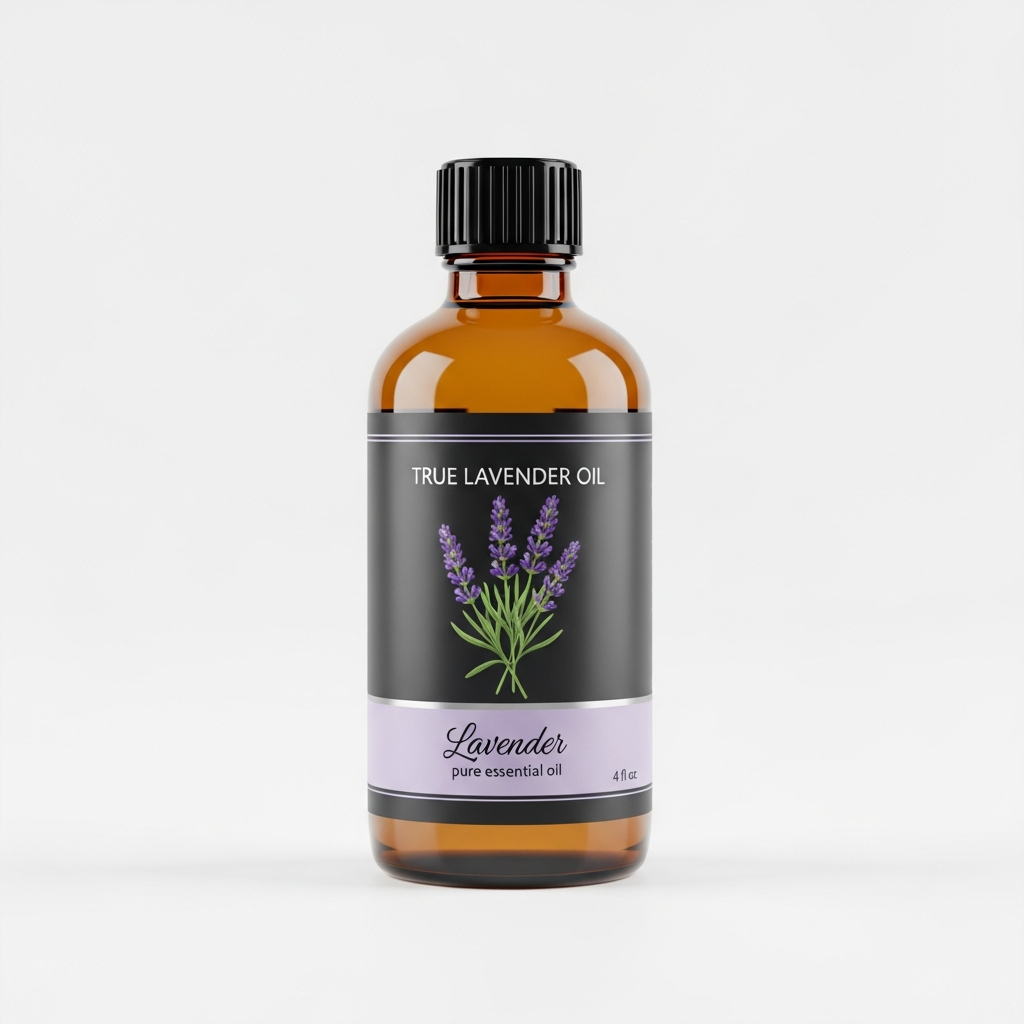
Lavender Essential Oil
Our own Lavender Essential Oil, in sizes from 0.5 oz to bulk.
From $12.99
Shop Now →Start with the sharp edge
If a lavender oil smells medicinal, camphor is the first thing to suspect. In a 2007 comparison of eleven lavender oils, Robert Adams and Tonya Yanke wrote that camphor gives lavender oil an undesirable medicinal and camphoraceous odor, and that two Kashmir oils with very low camphor had excellent fragrance (Adams and Yanke). That is the authors' judgement of their own samples rather than a sensory panel, but it fits the quality standards: a 2023 review lists ISO limits for true lavender that keep camphor below about 0.5 to 1.5 percent depending on origin (Crisan et al.).
Lavandin, the hybrid of true lavender and spike lavender, carries a lot more. A 2023 review gives its camphor at 2 to 33 percent, most often between 5 and 10, and says its sharper notes come from camphor, borneol and 1,8-cineole (Molecules, 2023). That is why lavandin smells fresher, brighter and more herbal, and why it carries so well through a room.
The floral middle
What makes lavender smell like lavender is a group of molecules called oxygenated monoterpenes. Crisan and colleagues say they are responsible for the characteristic scent, and name linalyl acetate in particular as responsible for the floral-woody character. A smaller cast adds detail: the lavandin review credits lavandulol and lavandulyl acetate with a herbal-rosy scent. We can tell you which molecules are in the oil, but not how a given percentage of any of them smells, because the papers we read report composition and not odour. Behind them sits a long tail of minor ingredients, which is why two honest oils can smell different side by side.
If you would like the full story of the two big molecules, our post on linalool and linalyl acetate goes through it.
Spike lavender smells like a different plant
Spike lavender, Lavandula latifolia, is not a rougher version of true lavender; its chemistry is its own. One study of leaf oil from an Egyptian nursery found 1,8-cineole at 29 to 46 percent and camphor at 15 to 30 percent, with very little linalool (El-Hefny and Hussien, 2025). That was leaf material from one site, not commercial flowering-top oil, so it is no definition of the species, but the contrast with the true lavender figures is large enough to explain why spike lavender comes across as camphoraceous and green.
How we describe our four
We sell four lavender-family oils and they do smell different, so here is how we describe each:
- Our steam-distilled true lavender, Lavandula angustifolia, is soft, floral and gently herbaceous with a clean, sweet finish, and sits as a middle note.
- Lavandin grosso is fresh, herbaceous and floral with a camphor-tinged lift, a top to middle note.
- Spike lavender is sharp, camphoraceous and herbaceous, with a green edge and little sweetness.
- 40/42 is smooth, sweet and floral-herbaceous. The exact species is not specified on its page, so contact us before ordering if identity matters for your formula.
Those are our descriptions of aroma, not laboratory results. The Certificate of Analysis we publish for one batch of our angustifolia oil lists density and refractive index but no constituents, so it cannot tell you the camphor level behind any of these words. If you need a constituent report for a particular oil, ask us in writing through our contact page.
How big is the camphor gap?
Put the figures side by side, each from a different kind of sample, so this is a rough comparison. True lavender is held under about 0.5 to 1.5 percent camphor by the ISO limits. Lavandin is usually 5 to 10 percent, several times more. The spike leaf oil sat at 15 to 30 percent. That gap is why a lavandin or spike oil does not melt into a delicate perfume the way true lavender does, and why adding one to a soft floral blend changes the whole picture. If a formula depends on the soft end, the species on the label is the first thing to check. Our guide to the four lavender types goes through them.
Finding words for what you smell
Describing a scent is a skill that comes with practice, and it helps to have a small vocabulary ready. Ask yourself whether the smell is sweet or dry, soft or sharp, floral or green, and whether anything in it feels medicinal, woody or fresh like cut stems. Write the words down as you go. After a few sessions you will find that you can tell the bright, camphor-like edge of the sharper oils from the rounder, sweeter heart of the angustifolia almost at once, and that your own favourite words start to repeat.
It also helps to remember that a scent changes over a few minutes, and that the first sniff is often the loudest. If you cannot decide, put the cap back on, drink a glass of water, and come back to it later.
Try it side by side
The best way to learn lavender's scent is to smell more than one kind in a row. Use a clean paper strip or the back of a wrist, do not rush, and rest your nose between oils; the first impression is the sharp, light top, and the sweeter middle comes through a few minutes later. Keep oils capped and away from skin undiluted. Our guide to lavender versus lavandin is a good companion when you are choosing.
Once you have smelled the soft and the sharp side by side, the word lavender never feels like one scent again.
Lavender Essential Oil
Lavender Essential Oil from our own shop, in sizes from 0.5 oz to bulk.
From $12.99
Shop Now →Sources & Further Reading
- Adams and Yanke, Kashmir Lavender Oil: A comparison of new Kashmir lavender oils with commercial lavender oils. Perfumer & Flavorist, 2007
- Crisan et al., Current Trends for Lavender (Lavandula angustifolia Mill.) Crops and Products with Emphasis on Essential Oil Quality. Plants, 2023
- Lavandula x intermedia-A Bastard Lavender or a Plant of Many Values? Part I. Biology and Chemical Composition of Lavandin. Molecules, 2023
- El-Hefny and Hussien, Enhancing the growth and essential oil components of Lavandula latifolia using Malva parviflora extract and humic acid as biostimulants in a field experiment. Scientific Reports, 2025