Lavender Oil and Hormones: The Case Reports Explained
Few lavender stories travel as far as the one about hormones, and few are as easy to overstate in either direction. The honest summary is that a small number of case reports in children, plus laboratory experiments on cells, have led doctors to ask a question. Nobody has shown that lavender oil, at a known dose, causes anything on its own. That is a good reason for care with children, and a poor reason for alarm about everyone else.
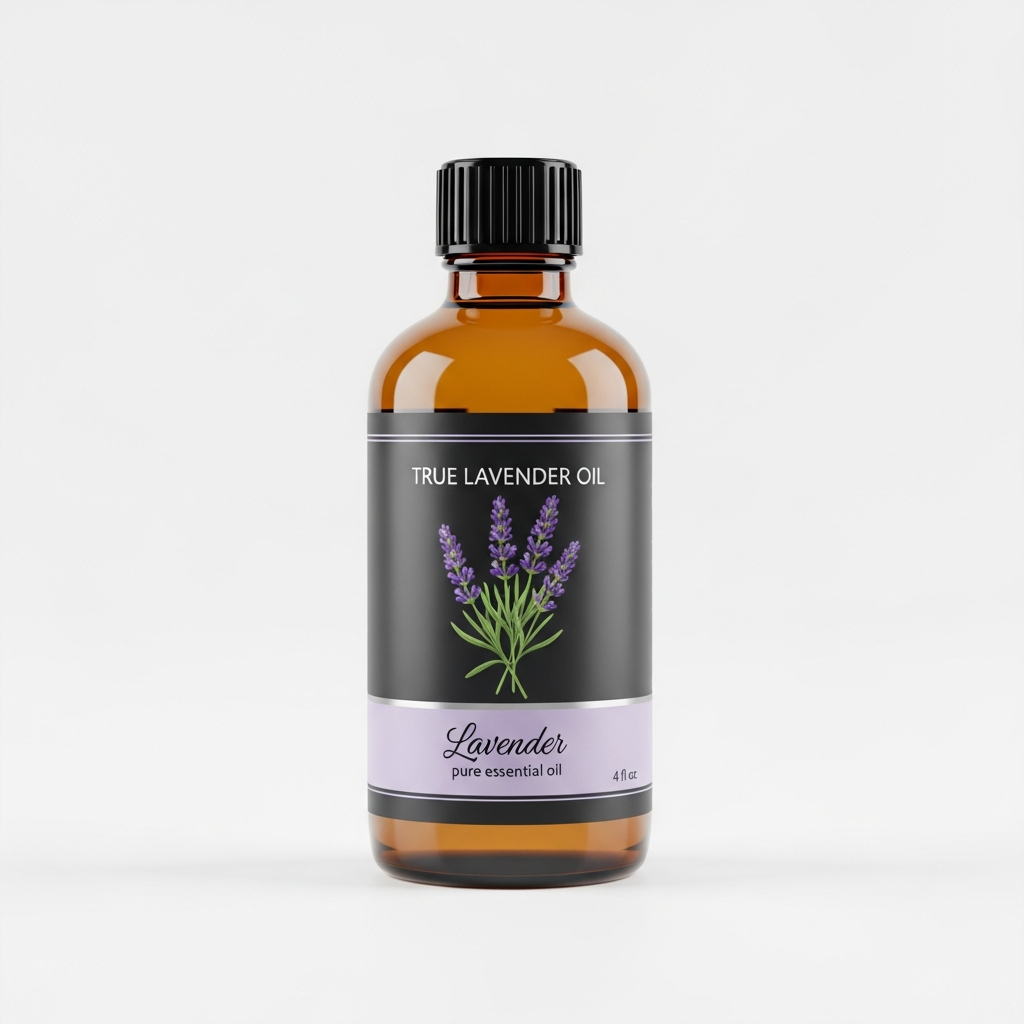
Lavender Essential Oil
Our own Lavender Essential Oil, in sizes from 0.5 oz to bulk.
From $12.99
Shop Now →Three boys in 2007
The report that started the conversation appeared in the New England Journal of Medicine. Henley and colleagues described three prepubertal boys who were otherwise healthy and had normal levels of their own steroid hormones. In each boy, breast enlargement coincided with the topical use of products that contained lavender and tea tree oils, and it resolved shortly after the products were stopped. The team also reported that, in human cell lines, the two oils showed estrogenic and antiandrogenic activity, and they concluded that repeated topical exposure probably caused the condition in these boys.
The European Medicines Agency's 2012 assessment adds useful detail. The boys were between 4 and 10 years old, and the exposures were a healing balm containing lavender, a styling gel and lavender-scented soap. The assessor noted that no re-application is mentioned, though causality was accepted. Put those details together and you can see the limits: both oils were present in the products, so no case is lavender alone, the amounts applied are unknown, and three children are too few to say how often anything like this happens.
Later reports, same pattern
In 2016, Diaz and colleagues described three more boys with prepubertal gynecomastia and chronic lavender exposure. Two used a cologne, and analysis of one sample showed it contained lavender. In 2019, Ramsey and colleagues reported three girls with premature breast development and one boy with gynecomastia, all with continuous exposure to lavender-containing fragrances, in whom breast growth faded once the products were stopped. Their lab tests of eight components of lavender and other essential oils found estrogenic and antiandrogenic properties of varying degrees. The authors say plainly that the developmental basis could be multifactorial and that whether lavender's estrogenic potency is enough to cause these effects is unknown.
Each of these papers adds a few cases and a reason for clinicians to ask about everyday products. None is a controlled study, and the exposure is described as "fragranced products" rather than as a measured dose of a defined oil.
Why dish results are hard to translate
The EMA's summary of the cell experiments reports that lavender oil was weakly estrogenic in one breast cell line at 0.01 and 0.03 percent by volume over 18 hours, and weakly antiandrogenic in another line at concentrations from 0.0001 to 0.01 percent over 24 hours. The assessor's comment is the right one to remember: it is difficult to judge the human relevance of the estrogenic effects seen in vitro.
That caution makes sense when you think it through. Cells in a dish sit bathed in the oil. Skin is a barrier that lets only some of what is applied through, and the body then clears what gets in. The experiments measure a receptor response in cells, not blood levels in a child, so they show that components of the oil can interact with hormone receptors in a laboratory setup and they cannot set an exposure threshold in either direction.
How the health authorities put it
The National Center for Complementary and Integrative Health, in its page on lavender updated in February 2025, says a few cases of swelling of breast tissue have been reported in children who used topical products containing lavender, and that it is unclear whether the lavender was responsible, since the condition has many causes. We think that is the right register: reported, unproven, worth asking about.
Keeping it in proportion
A story like this can sound alarming if you read only the headline. A better way to hold it is as a reason for ordinary, tidy habits rather than for panic. Keep bottles capped and stored high, pay attention to how many scented products touch a child's skin in a day, and ask a pediatrician before adding more. That is the whole message. Most of us use many scented things in a day, and the question the case reports raise is simply one for a clinician who knows the child.
What we do with this
We treat it as a precaution and not as a diagnosis. Association reports plus cell data are reason enough to keep leave-on lavender products, including our oils, away from children, and that is also our own guidance for all four oils. We give no dilution for children, babies or pregnancy, because that calls for a clinician's judgment. If a child has unexplained breast growth, the useful step is to see a pediatrician or pediatric endocrinologist and bring a list of every product the child is around: soaps, balms, gels, colognes and diffused scents. Whatever the cause turns out to be, that list is what the clinician will want.
The studies above do not say which lavender species or product was involved, so none can be matched to our four oils, which are true lavender, lavandin grosso, spike lavender and a trade-grade 40/42. They are sold as aroma and cosmetic materials, and we make no hormone-related claim of any kind for them. For the child-specific questions, see our article on babies and kids. The skin reaction guide and the wider research overview fill in the rest.
Good science will keep refining this picture, and in the meantime a little caution around children costs very little.
Lavender Essential Oil
Lavender Essential Oil from our own shop, in sizes from 0.5 oz to bulk.
From $12.99
Shop Now →Sources & Further Reading
- Henley DV, Lipson N, Korach KS, Bloch CA. Prepubertal gynecomastia linked to lavender and tea tree oils. N Engl J Med, 2007. europepmc.org/article/MED/17267908
- Diaz A, Luque L, Badar Z, Kornic S, Danon M. Prepubertal gynecomastia and chronic lavender exposure: report of three cases. J Pediatr Endocrinol Metab, 2016. europepmc.org/article/MED/26353172
- Ramsey JT, Li Y, Arao Y, Naidu A, Coons LA, Diaz A, et al. Lavender Products Associated With Premature Thelarche and Prepubertal Gynecomastia: Case Reports and Endocrine-Disrupting Chemical Activities. J Clin Endocrinol Metab, 2019. europepmc.org/article/MED/31393563
- European Medicines Agency. Assessment report on Lavandula angustifolia Miller, aetheroleum and Lavandula angustifolia Miller, flos (EMA/HMPC/143183/2010), 2012. ema.europa.eu
- National Center for Complementary and Integrative Health. Lavender: Usefulness and Safety. nccih.nih.gov/health/lavender