Lavender vs Chamomile Oil for Relaxation and Calm
Ask anyone to name an oil for winding down in the evening and the answer is nearly always lavender or chamomile. They sit together on the same shelf and in the same searches, yet they are very different when you look at what has actually been measured. This is the comparison we would walk a customer through if they asked us which one belongs in their evening routine.
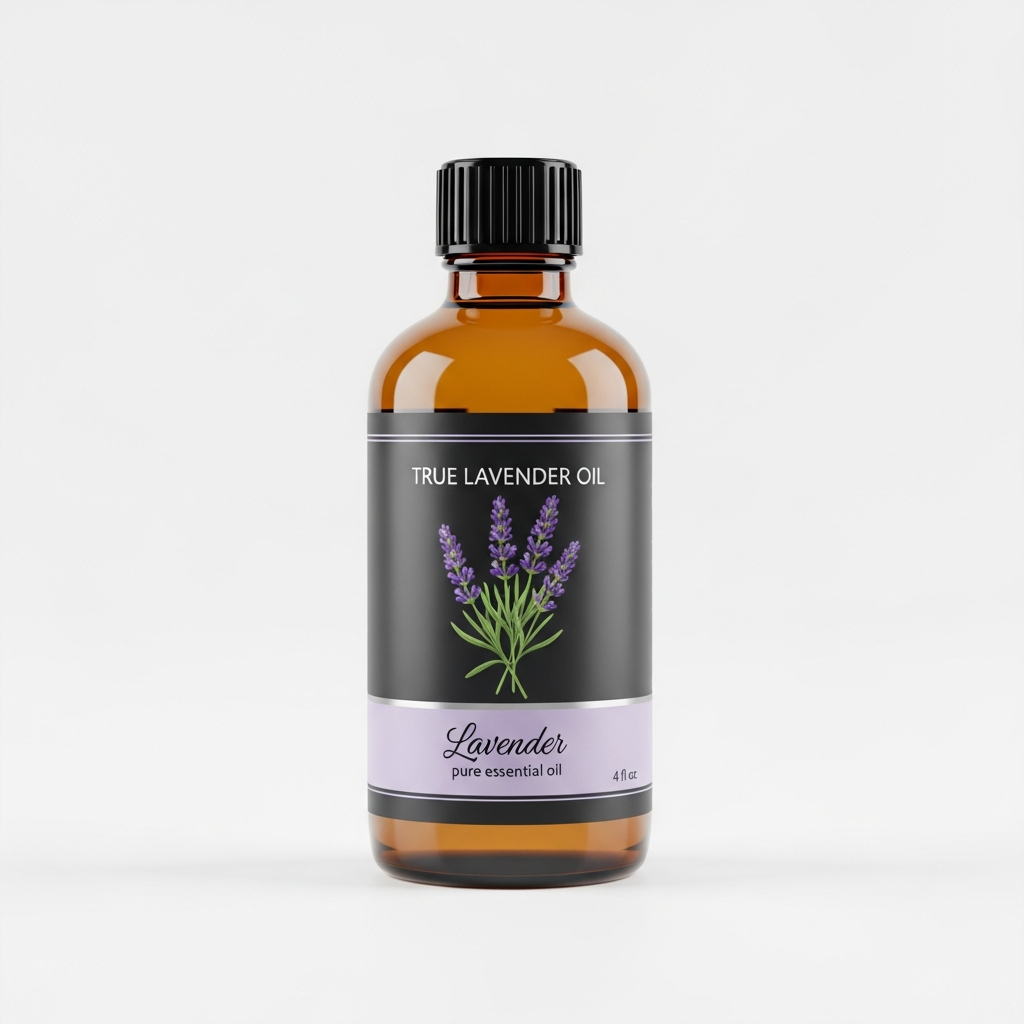
Lavender Essential Oil
Our own Lavender Essential Oil, in sizes from 0.5 oz to bulk.
From $12.99
Shop Now →What the lavender trials looked at
Lavender has the longer paper trail. A review of eleven clinical trials of lavender oil inhalation, covering 972 participants, found that ten of them reported lower anxiety afterwards, though the studies were small and varied in design, and the authors asked for better-quality trials (Yoo and Park, 2023). On sleep, a trial of 79 college students used a lavender patch worn at night for five nights; sleep hygiene teaching on its own also improved their sleep, which makes it hard to credit the scent alone (Lillehei and colleagues, 2015). The National Center for Complementary and Integrative Health sums it up carefully: it is unclear whether lavender aromatherapy helps with anxiety, and sleep is another uncertain area. Our guide to reading lavender studies and our sleep post go into why one trial, or even ten, is not a verdict.
What the chamomile oil trials looked at
For chamomile oil specifically the shelf is much barer. One randomised, double-blind trial gave 154 hospital patients with acute coronary syndrome either chamomile essential oil to inhale or a sesame oil placebo, and reported lower anxiety and lower systolic blood pressure in the chamomile group (Pourshaikhian and colleagues, 2024). That is a real result, but it is one trial, in a hospital setting, in people with a heart condition. It says little about a bedside diffuser in a healthy home. The big public health pages tell the same story: NCCIH discusses chamomile as a tea or supplement, finds only preliminary evidence for generalised anxiety and very little for sleep, and does not cover inhaled chamomile oil at all.
Same studies, different settings
It helps to notice where these two trials happened: a hospital ward for chamomile and a group of college students for lavender. A hospital patient is anxious for a specific reason and a scent may be one of the few comforts on offer. Your living room at nine o'clock is a different situation. That is the reason we stay cautious about turning any of this into a promise. We sell lavender oils as aromatic oils, not as a remedy, and what a trial found in a ward is not what a diffuser will do at home.
How they differ as scents
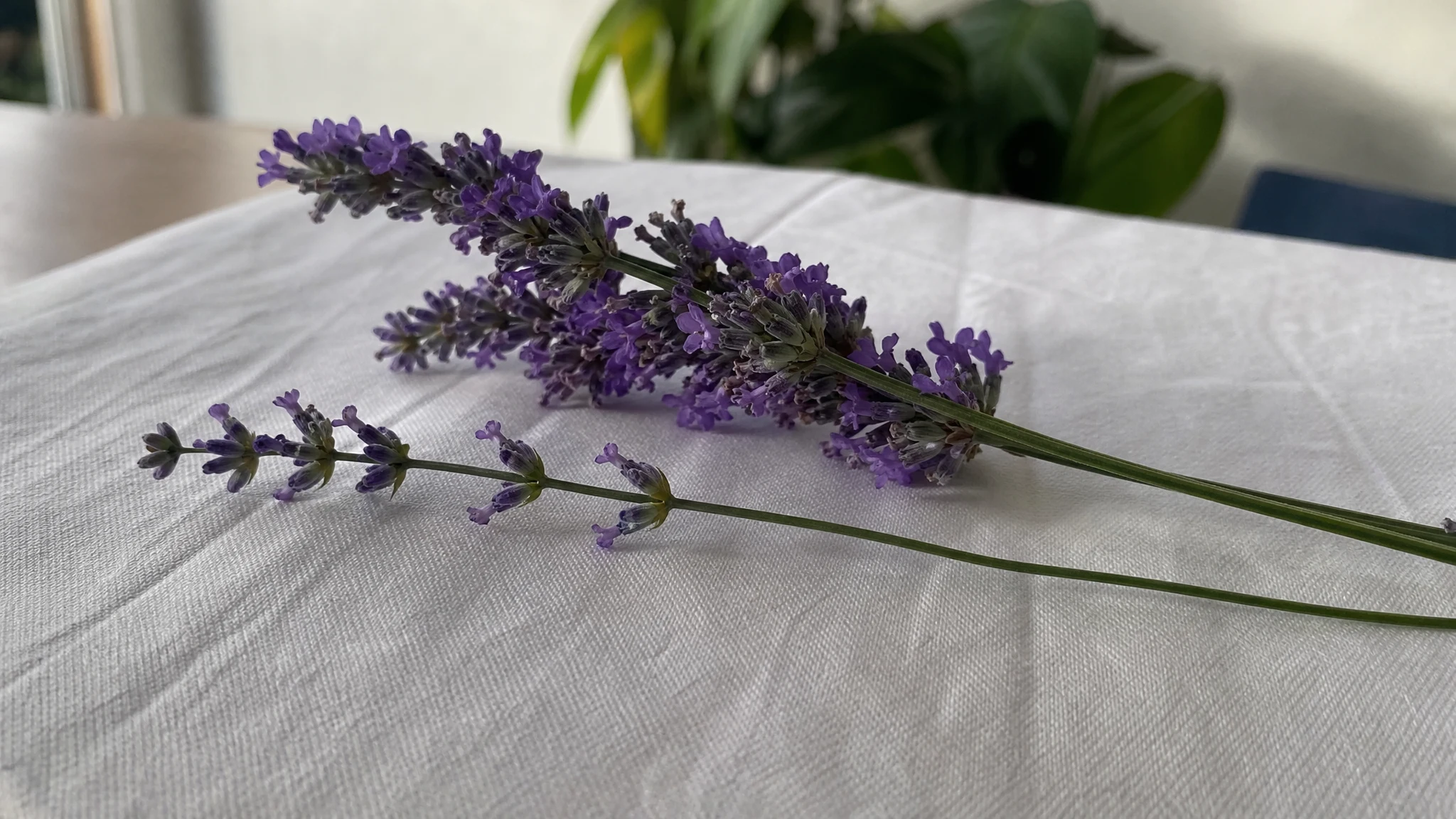
If you set the research aside and choose on aroma, the two are quite different. Lavender angustifolia, the one we think of as the classic, is soft, floral and gently herbaceous. Lavandin has a camphor-tinged lift, and spike lavender is sharper still, so check which species you are buying before you judge the scent. Chamomile oil comes from two plants: German chamomile gives the deep-blue oil, thanks to its chamazulene, while Roman chamomile is an ester-rich oil with an aroma of its own. In our judgment chamomile is the stronger personality, so start with very little. We do not sell chamomile, so you will find it at a craft or supply shop; look for the Latin name on the bottle. Our comparison of the two plants explains the labelling in more detail.
Choosing for an evening
Our straight answer is to pick the scent you like, because liking it is the one part of the experience you can be sure of. If you want something with a longer written record and plenty of blending partners, lavender is the easier place to start, and our diffusing guide covers drops and timing. If you react to ragweed, daisies or chrysanthemums, be careful with chamomile: NCCIH notes that people allergic to those relatives are more likely to react to it, and little is known about chamomile in pregnancy or while breastfeeding. For any oil, keep the diffuser out of reach of pets and children, and ask a physician or midwife first if you are pregnant or nursing.
If the evenings are hard because sleep or worry has become a problem, a diffuser is a pleasant extra but not a plan; that is a conversation for your doctor. For everything else, treat the scent as a small ritual you enjoy and let the studies be interesting reading rather than instructions.
Lavender Essential Oil
Lavender Essential Oil from our own shop, in sizes from 0.5 oz to bulk.
From $12.99
Shop Now →Sources & Further Reading
- Lavender: Usefulness and Safety. NCCIH.
- Chamomile: Usefulness and Safety. NCCIH.
- Anxiety-Reducing Effects of Lavender Essential Oil Inhalation: A Systematic Review. Yoo O, Park SA. Healthcare (Basel), 2023.
- Effect of Inhaled Lavender and Sleep Hygiene on Self-Reported Sleep Issues: A Randomized Controlled Trial. Lillehei AS, Halcón LL, Savik K, Reis R. J Altern Complement Med, 2015.
- Effects of aromatherapy with Matricaria chamomile essential oil on anxiety and hemodynamic indices in patients with acute coronary syndrome, 2021: a randomized controlled trial. Pourshaikhian M, Moghadamnia MT, Kazemnezhad Leyli E, Shafiei Kisomi Z. BMC Complement Med Ther, 2024.