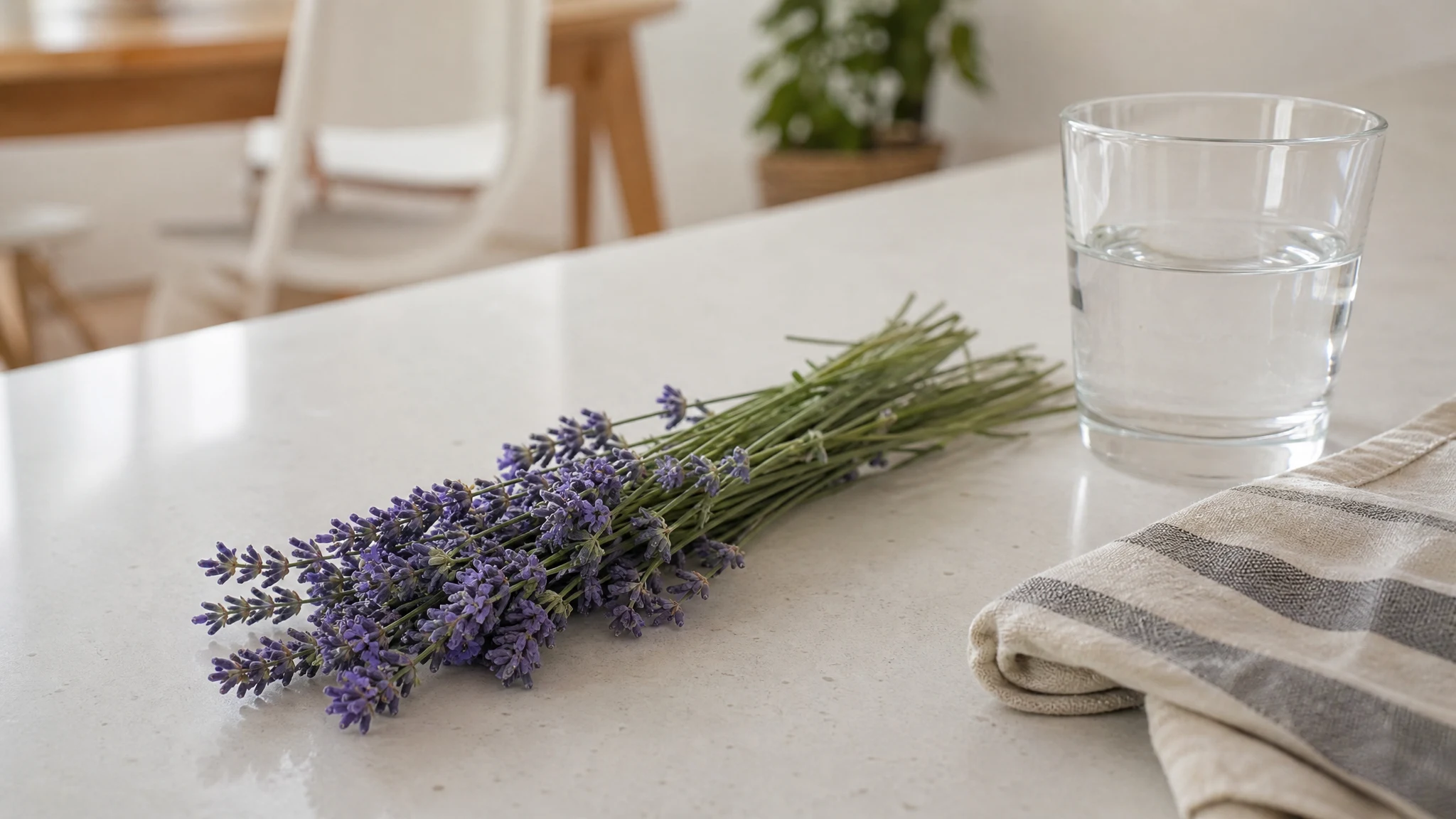
What Is Lavender Oil? What Goes Into One Bottle
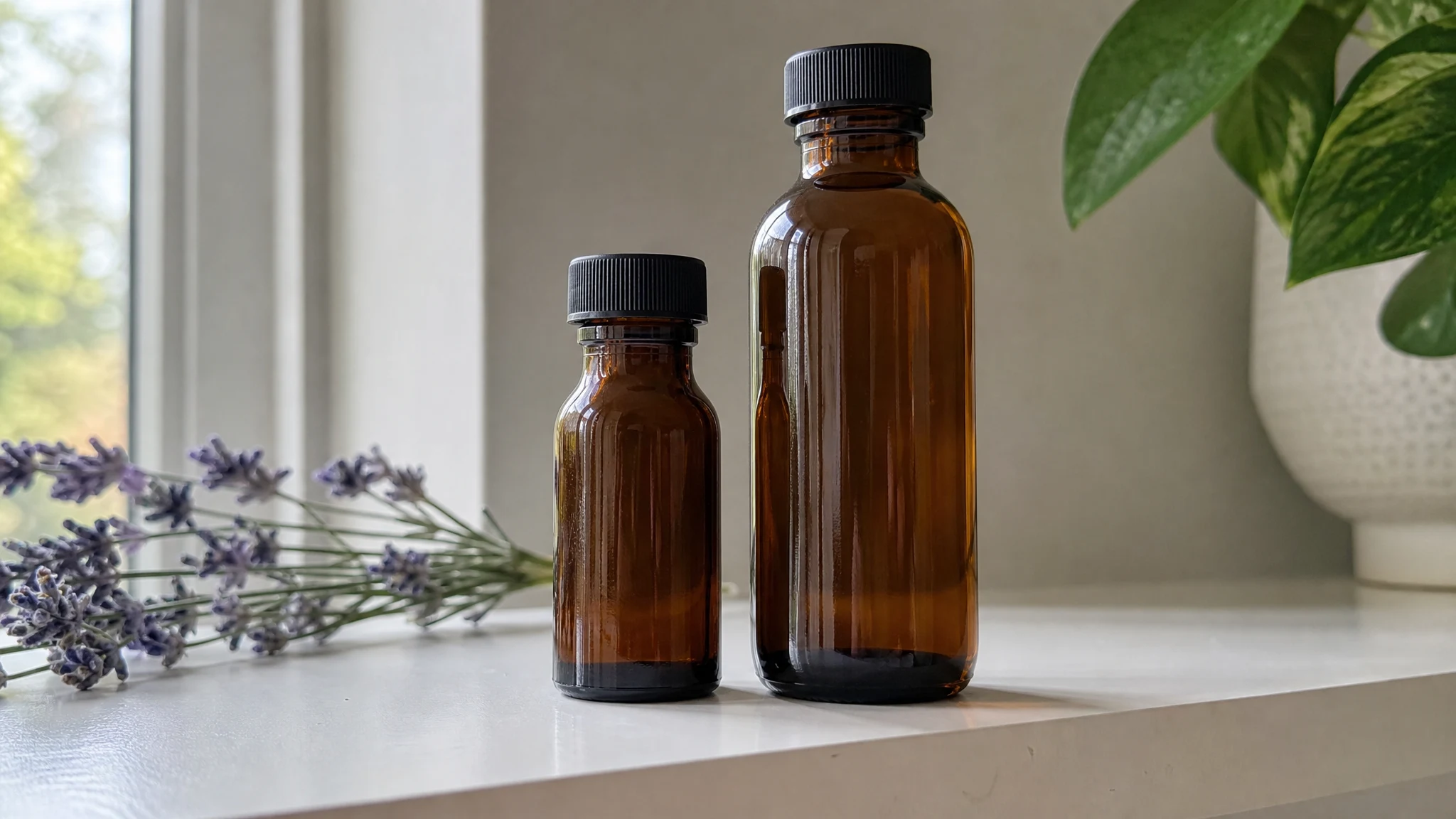
Hold a one-ounce bottle of lavender oil and you are holding the distilled scent of nearly six pounds of flowers. That is the first thing worth knowing about it, and it explains a lot: why the oil is concentrated, why a little goes a long way, and why a bottle labeled simply "lavender" can mean several different things.
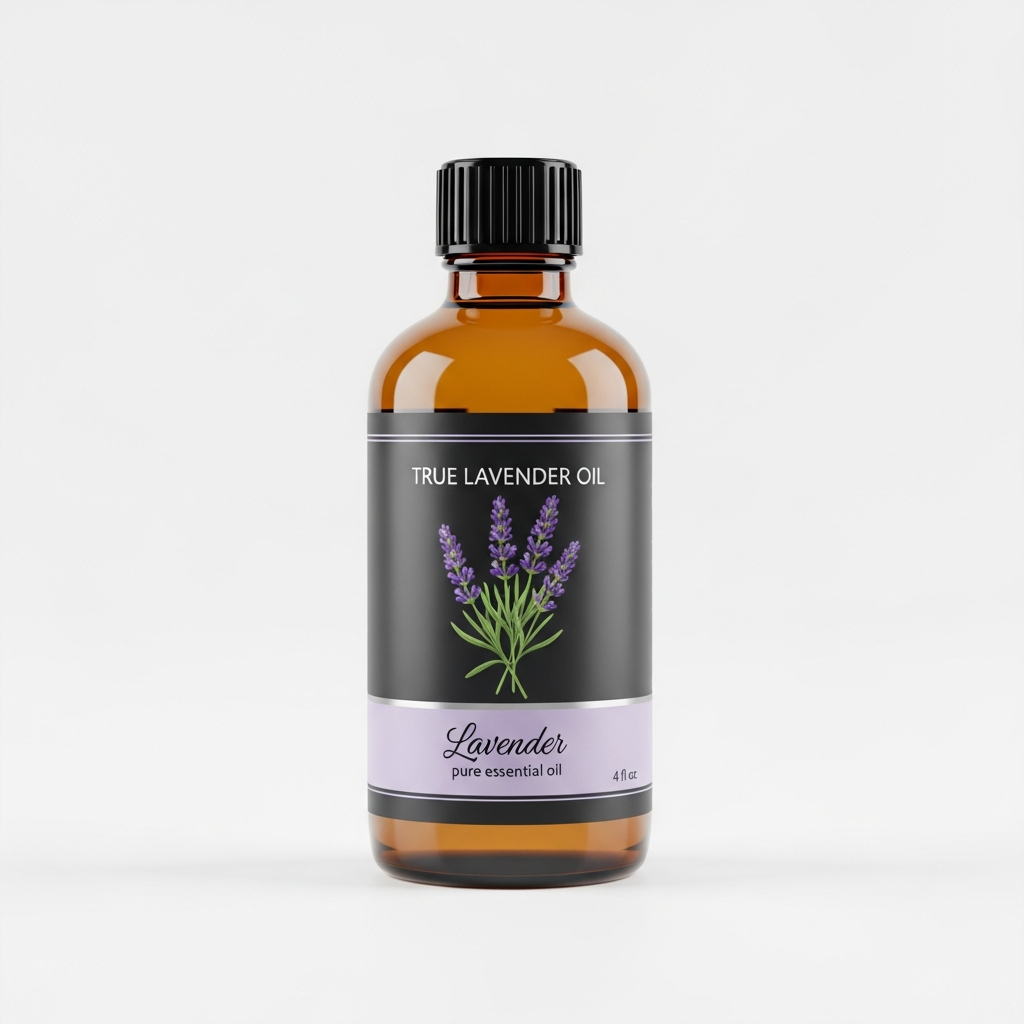
Lavender Essential Oil
Our own Lavender Essential Oil, in sizes from 0.5 oz to bulk.
From $12.99
Shop Now →From a field of blossom to a few grams of oil
Lavender oil is an aromatic liquid collected from the flowering tops of the plant, almost always by steam or water distillation. A 2023 review of lavender crops reports that fresh flowers hold about 0.7 to 1.4% volatile oil, and that a ton of fresh flower spikes gives on average about 10 kilograms of oil (Current Trends for Lavender (Lavandula angustifolia Mill.) Crops and Products with Emphasis on Essential Oil Quality).
Here is the arithmetic that makes it real. Ten kilograms from a thousand is 10 grams of oil per kilogram of flowers. A one-ounce bottle holds about 29.6 ml, and at a density near 0.89 g/ml (the figure on the certificate of analysis we publish for one batch of our angustifolia oil) that is roughly 26 grams, which works out to around 2.6 kilograms of flowers, close to six pounds. Real yields shift with the variety, the harvest and the season, so treat it as an order of magnitude. It still changes how you look at that little amber bottle.
Next time you open a bottle, pause for a moment and think about that arithmetic. Smell the oil slowly, and notice how it opens with a fresh note and then softens as the seconds pass. A scent that took several pounds of flowers to make deserves a slow sniff.
Four oils share one word
This is the part beginners are rarely told. "Lavender" is a family, and the oils from its members smell and behave differently. We sell four:
- Lavandula angustifolia, the classic English lavender. We describe the aroma as soft, floral and gently herbaceous with a clean, sweet finish, and the oil is described as steam-distilled from fresh flowering spikes.
- Lavandin grosso (Lavandula hybrida), a cross of true lavender and spike lavender. It is fresh, herbaceous and floral with a camphor-tinged lift.
- Spike lavender (Lavandula latifolia), a broad-leaved relative with a sharp, camphoraceous, green edge and little sweetness.
- 40/42, a trade grade name for lavender oil. Its species is not stated on the page, and if species matters to you, ask us before ordering.
The camphor is what mostly separates them in the nose. The standards literature treats them as distinct materials too: there is an ISO standard for true lavender (ISO 3515), another for spike lavender (ISO 4719), and lavandin is standardized cultivar by cultivar, with ISO 8902 covering 'Grosso' (Lavandula × intermedia-A Bastard Lavender or a Plant of Many Values? Part I. Biology and Chemical Composition of Lavandin). So when you shop, the botanical name matters more than the word "lavender". Our varieties post sets the three species side by side, and the scent profile post is the one to read if you are choosing by nose.
What people do with it
The everyday uses are about aroma and craft. A few drops go into a diffuser, a candle, a batch of soap, a linen spray or a body oil you make yourself. We sell our oils neat, so any dilution maths is yours to do, and our dilution guide walks through it. For skin, we recommend 0.5% to 2% in a carrier oil, about 3 to 12 drops per ounce, after a patch test; the low end is the comfortable place to begin, especially for anything on the face, and anyone formulating a product to sell should check the current IFRA standards for their own category and species. Carrier oils are at your craft or grocery store, as we do not sell them.
Lavender oil is a scent and craft ingredient, not a medicine. The FDA lists claims such as helping you sleep or easing anxiety as drug claims (Aromatherapy (FDA)), so you will not find us making them, and if you are pregnant, nursing or managing a medical condition, your own clinician is the right person to ask. The oil is for external, aromatic use. Keep it away from eyes, children and pets, and if anyone swallows some, call Poison Control at 1-800-222-1222 (Essential oils: Poisonous when misused (Poison Control)).
Keeping it fresh
A tightly capped bottle in a cool, dark cabinet keeps lavender oil at its best, and we describe our oils as typically stable for 2 to 3 years unopened. Air is the enemy: researchers found that lavender oil forms strong contact allergens when it is exposed to air (Lavender oil lacks natural protection against autoxidation, forming strong contact allergens on air exposure). So cap it promptly, and decant what you will use soon into a smaller bottle if you bought a big one. Our storage post has the details.
Asking for paperwork
A name on a label is a claim, and paperwork is how you learn more. The certificate we publish covers one batch of the angustifolia oil and lists appearance, smell, density and refractive index. If you need a GC-MS report, species confirmation, an allergen declaration or an SDS for a particular oil and lot, ask us in writing through the contact page and keep the reply. Our GC-MS guide shows you what to look for when one arrives.
Start with one oil, smell it before you plan around it, and let the plant do the talking. Once you have met a field's worth of lavender in a bottle, the rest is just finding the one you like.
Lavender Essential Oil
Lavender Essential Oil from our own shop, in sizes from 0.5 oz to bulk.
From $12.99
Shop Now →Sources & Further Reading
- Current Trends for Lavender (Lavandula angustifolia Mill.) Crops and Products with Emphasis on Essential Oil Quality, Plants, 2023
- Lavandula × intermedia-A Bastard Lavender or a Plant of Many Values? Part I. Biology and Chemical Composition of Lavandin, Molecules, 2023
- Aromatherapy (FDA)
- Essential oils: Poisonous when misused (Poison Control)
- Lavender oil lacks natural protection against autoxidation, forming strong contact allergens on air exposure, Contact Dermatitis, 2008